Customer service teams often struggle with chatbot platforms that can't scale beyond basic workflows or handle complex enterprise requirements. Many businesses using open-source platforms and low-code builders quickly encounter limitations in governance, integrations, and the need for human oversight in critical conversations. Finding a Botpress alternative requires evaluating platforms that deliver enterprise-grade scalability, reliability, and operational control without sacrificing automation flexibility.
Phone-based AI agents offer a more sophisticated approach to automated customer interactions, handling real conversations with natural language understanding and seamless handoffs to human agents when needed. These systems integrate deeply with existing CRM and business tools, enabling teams to move beyond prototype chatbots into production systems that actually reduce costs and improve satisfaction. For businesses ready to deploy enterprise-grade automation for appointment scheduling, lead qualification, or support triage, Bland's conversational AI platform provides the advanced capabilities and deployment options that scale with growing demands.
Summary
- Botpress markets itself as a flexible low-code platform, but 8 out of 10 users report needing developer support to implement custom logic or troubleshoot integration failures. The promise of drag-and-drop simplicity dissolves into JavaScript requirements and API complexity. Non-technical teams that expected autonomy end up stuck in ticket queues waiting for engineering resources to make basic changes.
- Self-hosting Botpress requires infrastructure expertise that most teams lack, including server management, security protocols, and ongoing maintenance. The open-source model gives control but creates responsibility for uptime, patches, and performance optimization. Enterprise cloud plans start at $2,000 per month with additional AI action costs layered on top, making budget predictability difficult as usage scales.
- The best alternative isn't the one with the most features; it's the one that reduces build complexity while improving deployment speed and scalability. Teams that chase "unlimited customization" discover the real expense isn't the subscription; it's the ongoing dependency on technical resources whenever they need to adjust a conversation flow or add a new integration. Production-grade infrastructure requires dedicated instances that guarantee performance isolation, latency guarantees (not averages), and compliance certifications that can't be retrofitted after deployment.
- Enterprises switching from custom-built platforms to solutions with pre-built industry templates report 80% reduction in engineering overhead. That time savings matter when speed to production determines competitive advantage. Platforms that control the entire stack (hardware, models, servers) rather than relying on third-party providers can guarantee sub-400ms latency and maintain SOC 2 and HIPAA compliance without architectural compromises.
- Per-resolution pricing models sound appealing until conversation volume scales unpredictably, creating budget uncertainty. Pay-per-minute voice pricing, per-editor seat costs, and credit-based systems introduce cost surprises that complicate financial planning. Cloud-only deployment limits data control for regulated industries where data sovereignty requirements are non-negotiable.
- Bland AI's conversational AI addresses this by controlling the entire infrastructure stack to guarantee sub-400ms latency and compliance certifications for mission-critical phone conversations in regulated industries.
Why People Look for a Botpress Alternative
Botpress markets itself as a flexible all-in-one chatbot platform with low-code simplicity, powerful integrations, and scalability. However, significant limitations emerge at larger scales and in advanced use cases, and they depend heavily on technical configuration.

🎯 Key Point: While Botpress promises seamless scaling, many businesses discover performance bottlenecks and technical constraints that weren't apparent during initial setup phases.
"Low-code platforms often hit walls when businesses need truly custom functionality or enterprise-grade performance at scale." — TechCrunch Analysis, 2024
⚠️ Warning: The apparent simplicity of low-code solutions can mask underlying complexity that emerges as your chatbot requirements become more sophisticated and your user base expands.

The Developer Dependency Problem
Botpress's architecture requires fluency in JavaScript and knowledge of APIs beyond basic flows. According to AI Flow Review, 8 out of 10 users need developer support to implement custom logic or troubleshoot integration failures. Non-technical teams hit walls quickly: what appears as a drag-and-drop builder becomes a coding exercise, and marketing teams cannot iterate without engineering resources.
Building takes longer than expected because the platform's modular design prioritizes flexibility over simplicity. You're assembling components rather than configuring a cohesive system. Every new integration introduces potential breaking points, and debugging requires understanding how data flows between modules, APIs, and third-party services.
Open Source Complexity Without Infrastructure Support
Botpress promotes its open-source nature as a benefit, but self-hosting requires expertise most teams lack: server infrastructure knowledge, security protocols, and ongoing maintenance. The platform grants control but also responsibility for uptime, security patches, and performance optimization.
Cloud-hosted alternatives remove this burden, but pricing reflects the complexity. Botpress Pricing shows enterprise plans starting at $2,000/month, exceeding most teams' conversational AI budgets. AI action costs layer on top, charging separately for response generation and knowledge base queries, which complicates budget predictability at scale.
Integration Friction in Production Environments
The real problem emerges when you need a chatbot that works reliably in production. Botpress integrations function during testing but fail under heavy traffic or unexpected conditions: CRM syncs lose data, handoffs to human agents cause delays, and phone-based interactions lack the sub-400ms response times required for natural conversation. For regulated industries like financial services or healthcare, these are compliance risks and customer experience failures where every call matters.
Why do teams struggle with real-world complexity?
Teams discover their prototype cannot handle real-world complexity. The platform wasn't designed for mission-critical operations where performance, security, and consistent execution are essential. But knowing what's broken matters only if you know what to look for instead.
Related Reading
- How to Use AI in Customer Service
- How Does AI Improve Customer Service
- How Can Ai Help Customer Service
- AI in Customer Communications For Telecommunications
- How Is Ai Improving Restaurant Customer Service
- AI in Customer Communications in the Insurance Industry
- Ai Agent Challenge In Customer Support
- Ai Appointment Scheduling Healthcare
- Benefits of AI in Customer Support
- Ai Customer Support Implementation Best Practices
What Makes a Good Botpress Alternative?
What should you actually look for?
The best Botpress alternative makes building easier while improving deployment speed and scalability. What matters is how quickly you can move from idea to production without sacrificing reliability as your user base grows.
Which five criteria matter most for evaluation?
Evaluate platforms on five criteria: (1) Ease of deployment: Can you test workflows without weeks of infrastructure setup? (2) Integration speed: connect to your CRM, support desk, and calendar in hours, not days. (3) Scalability: Does it maintain sub-second response times when call volume doubles? (4) Non-technical usability: can your operations team modify agent behavior without engineering tickets? (5) LLM compatibility: Are you locked into one model, or can you switch between GPT, Claude, and Gemini based on cost and performance?
Why flexibility becomes a trap
Platforms advertising "unlimited customization" sound appealing until you consider the cost. Powerful tools are difficult to set up, flexible architecture requires significant time to implement, and customizable workflows demand ongoing maintenance. According to Spur's research on Botpress alternatives, paid plans start around $89 per month, but this base cost excludes the engineering hours needed to build, test, and maintain custom logic. The real expense lies in the continuous technical resources required whenever you modify a conversation flow or add a new integration.
Why does platform architecture matter more than features?
When handling regulated phone calls where consistency is critical, platform architecture matters more than feature set. You need separate instances for performance isolation, control over data location and movement, and guaranteed speed rather than average performance. A platform delivering 90% of responses within a second still fails to meet the 10% experiencing delays. For enterprises in financial services, insurance, and healthcare, that inconsistency creates liability. Every call counts, and infrastructure that works "most of the time" undermines value.
How does full-stack control ensure mission-critical performance?
Platforms like Bland AI control the entire stack (hardware, models, servers) instead of relying on third-party providers, guaranteeing sub-400ms latency while maintaining SOC 2 and HIPAA compliance without architectural compromises. For regulated industries, this infrastructure-level difference matters more than configurability because performance and security cannot be added after deployment. The platform either handles mission-critical operations from day one, or it becomes a bottleneck.
The shift that changes everything
This is why many teams move toward platforms that prioritize simplicity, automation, and faster deployment over raw configurability. The question shifts from "what can this platform theoretically do?" to "how fast can we deploy something reliable that scales?" That reframe separates tools built for experimentation from infrastructure built for production. But knowing what to look for helps only if you know where to look next.
14 Best Botpress Alternatives for Enterprise Use Cases
Several platforms address specific Botpress limitations around deployment speed, technical dependency, or production scalability. The right choice depends on whether the platform solves the problem that prompted your search for an alternative.
1. Bland AI
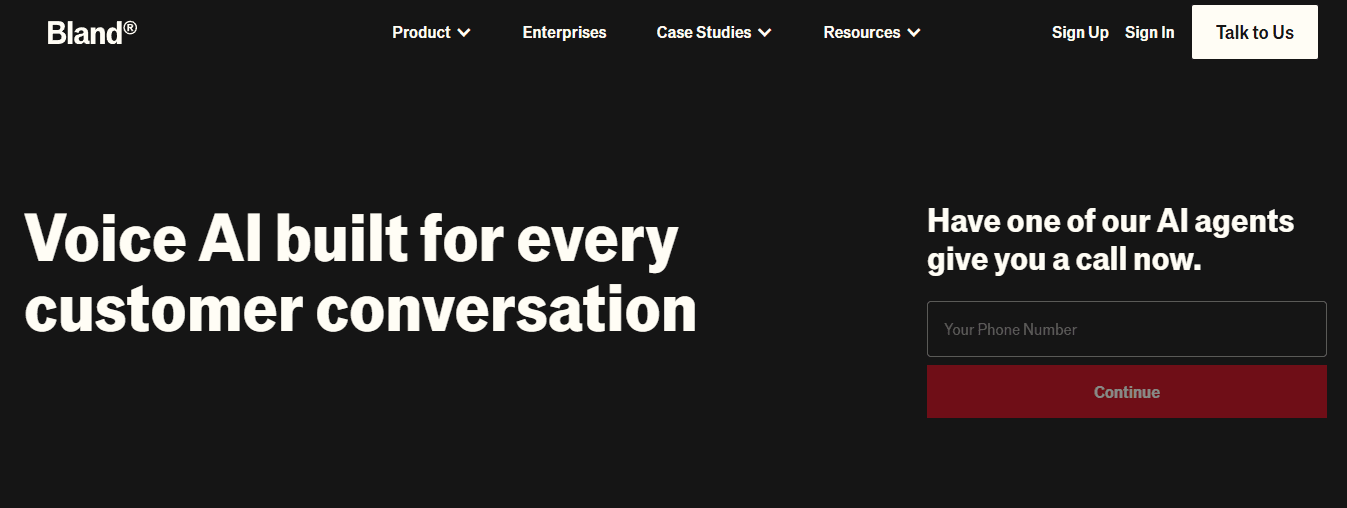
Bland's conversational AI replaces outdated call centers and IVR trees with self-hosted, real-time AI voice agents that sound human, respond instantly, and scale easily. For large businesses, the platform delivers faster, more reliable customer conversations while maintaining data control and compliance.
Where Botpress requires custom development for phone integrations, Bland AI provides production-grade voice infrastructure out of the box. Financial services, insurance, and healthcare organizations use our platform to automate high-volume regulated calls with sub-400ms latency and compliance certifications. We control the entire stack—hardware, models, and servers—rather than relying on third-party providers, guaranteeing speed and security for mission-critical use cases. Best for enterprises needing voice-first automation without building telephony infrastructure from scratch.
2. Voiceflow
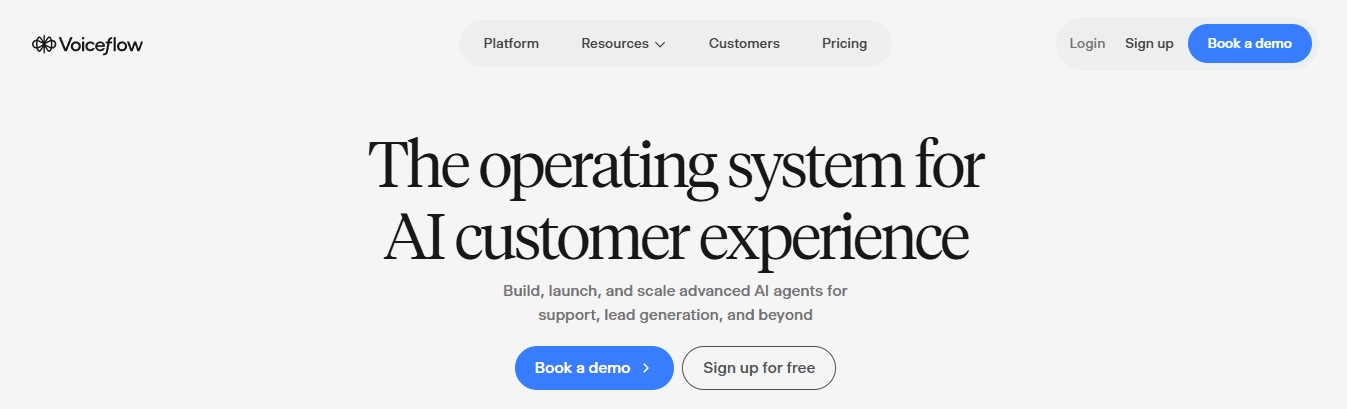
Best for product teams needing a visual drag-and-drop flow builder to design and test AI agent conversations before production. Voiceflow provides a visual canvas for designing conversation flows with branching logic, and supports voice via Twilio and Vonage integrations. More than 500,000 teams use the platform, which includes knowledge base integration for RAG and collaboration tools for cross-functional teams.
What makes Voiceflow different from other platforms?
Botpress requires JavaScript for custom logic, while Voiceflow enables non-technical teams to design multi-turn conversations using a visual tool. Voice support through Twilio and Vonage integrations lets teams test phone conversations without building their own phone system.
What are the main limitations to consider?
Per-editor pricing ($50/additional editor) increases for large teams. Credits deplete without an automatic top-up, halting agent activity. Cloud-only deployment limits data control. White-label capability requires the Enterprise tier. Capterra users report slow support response times.
How does Voiceflow perform in practice?
Good for making prototypes and collaborating on design. Credit walls and per-editor pricing can lead to surprise costs at scale. You cannot host it yourself or control agent behavior. It has a 4.7/5 rating on G2 (300+ reviews). Setting it up takes hours for basic prototyping and weeks for production deployment with integrations. A free plan is available with limits. The Plus tier costs $60 per editor per month, with custom Enterprise pricing available.
3. Dialogflow CX
Best for large Google Cloud companies that need conversational AI integrated with GCP services and phone calls via CCAI. Google's enterprise conversational AI platform features a state-based visual flow builder with Google-quality natural language understanding supporting 30+ languages. Phone integration is handled by Contact Center AI (CCAI). Pre-built agents for common scenarios accelerate development timelines.
How does Dialogflow CX compare to alternatives?
Dialogflow CX offers Google's intent recognition accuracy out of the box, while Botpress requires building NLU models from scratch. The visual flow builder simplifies conversation design compared to Botpress's code-first approach. Telephony integration via CCAI enables voice-channel connectivity without custom development.
What are the main limitations?
Google Cloud makes switching to a different service difficult and expensive. The interface is designed primarily for developers, making it inaccessible to business users. A 256-character limit on queries prevents long, complex conversations. You also cannot run it on your own servers.
What's the overall assessment and pricing?
Strong natural language understanding and cloud infrastructure for Google Cloud Platform teams, though platform lock-in limits flexibility and governance controls for regulated industries. 4.5 out of 5 on Capterra (36+ reviews). Setup takes hours for basic bots and weeks for complex multi-turn deployments with phone support. You pay as you go, with a free tier for text. Customer experience pricing is based on sessions and audio minutes.
4. Intercom Fin
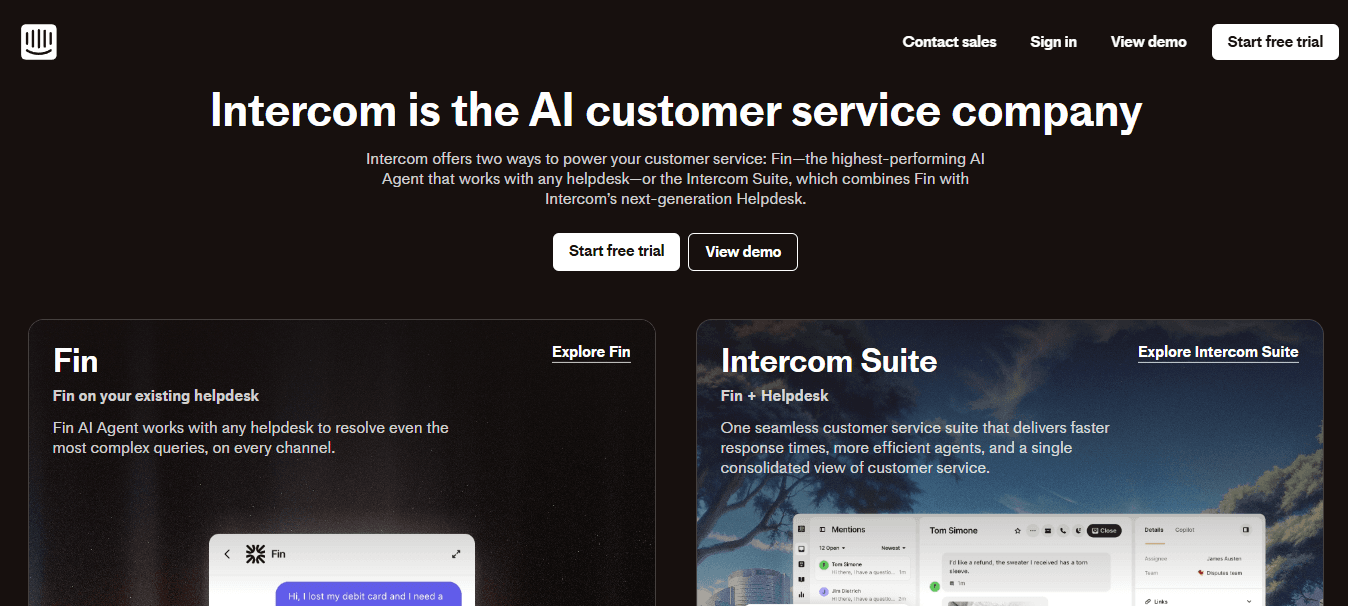
Best for SaaS and digital-first companies seeking high independent resolution rates from a managed AI agent within a full helpdesk. Fin resolves conversations across chat, email, WhatsApp, and phone by learning from help center content and past conversations. Resolution-based pricing ($0.99/resolution) aligns cost with results, while Fin AI Copilot assists human agents with response suggestions.
How does Intercom Fin compare to other platforms?
Unlike Botpress, which keeps conversational AI separate from helpdesk infrastructure, Intercom Fin combines both into a single product, eliminating the need to integrate a chatbot and a ticketing system. Per-resolution pricing rewards automation success rather than charging for infrastructure regardless of performance.
What are the potential drawbacks?
Pricing based on each conversation becomes hard to predict when you have many conversations. Using only cloud-based systems means you have less control over your data, which is a problem for industries that have strict rules. Switching to a different system costs a lot of money because you're locked into using one company's tools. You also can't customize the agent's behavior as much as you can with other platforms that let you see and modify the conversation logic.
What should you know about implementation and pricing?
Works well for teams already using Intercom's helpdesk. Per-resolution pricing rewards automation but creates budget uncertainty when scaling up. No on-premise deployment available. 4.5/5 Capterra (1,100+ reviews). Setup takes under one hour for basic deployment and 1–2 weeks for full production with custom training. Requires an Intercom seat plan: Essential ($29/seat/mo), Advanced ($99/seat/mo), or Expert ($132/seat/mo).
5. Gorgias
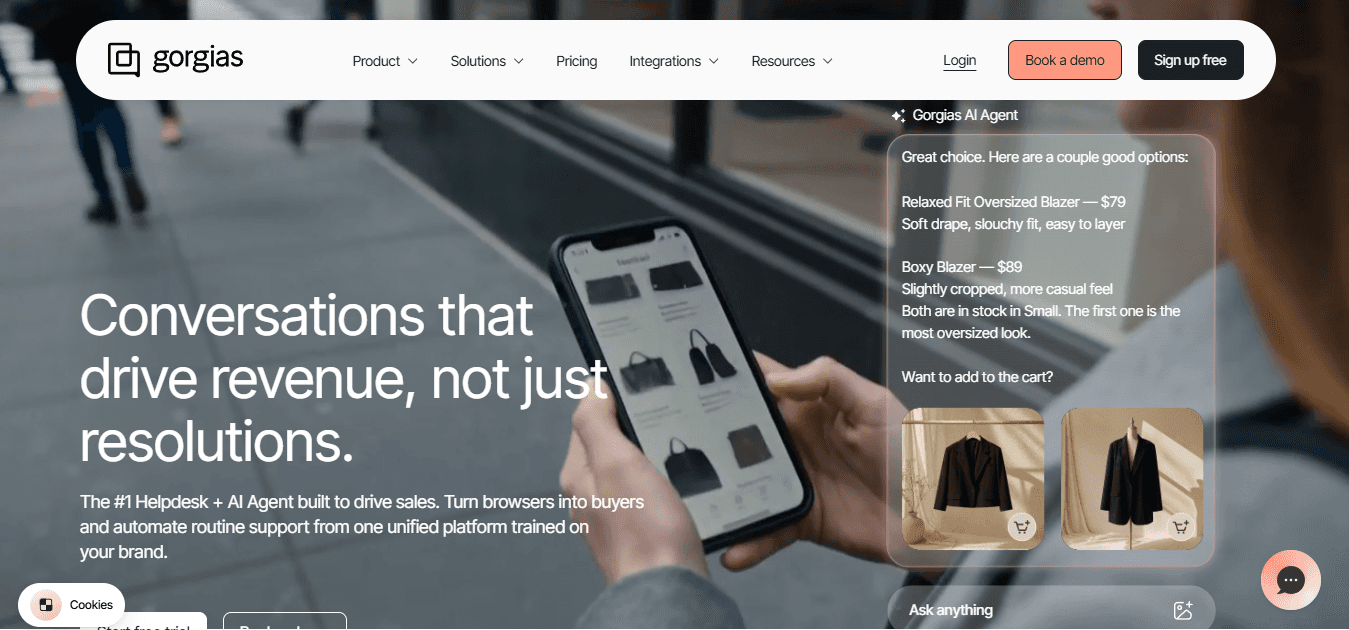
Best for Shopify, BigCommerce, and WooCommerce merchants who need conversational AI integrated with order management. Built specifically for online stores, Georgia’s agents can view, edit, and refund orders without leaving the conversation. Revenue attribution tracks sales from support interactions. Social media DMs are handled natively within the same platform.
What makes Gorgias ideal for ecommerce integration?
Gorgias integrates deeply with Shopify, BigCommerce, and WooCommerce from the start. Support agents can process refunds, update shipping addresses, and change orders directly in the conversation interface. Revenue tracking shows which support interactions drive sales, making ROI measurement straightforward.
What are the main limitations of Gorgias?
Built only for ecommerce, it excludes other business types. Starting costs are high for small stores ($300 per month). It lacks voice capability and cannot be self-hosted.
How does Gorgias compare overall, and what does it cost?
The strongest ecommerce-specific platform for merchants on supported platforms. Limitations include no voice support, no self-hosted option, and a narrow focus outside retail. It has a 4.6/5 rating on G2 (500+ reviews). Setup takes days for Shopify stores and weeks for multi-store configurations. The Starter plan costs $300/month (50 tickets), with Pro, Advanced, and Enterprise tiers reaching $5,000/month.
6. Tidio
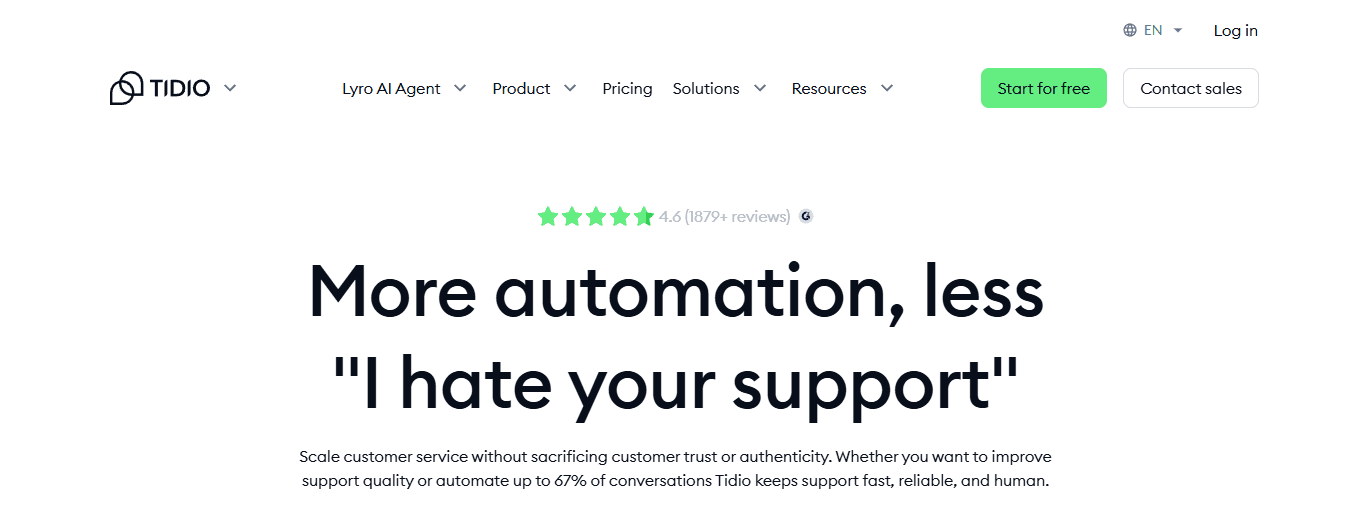
Best for small businesses needing affordable live chat with AI automation to handle common customer questions. Combines live chat, chatbot automation, and Lyro AI agent in one platform. Lyro automates FAQs from help center content. Includes Shopify, WordPress, and WooCommerce integrations. More than 300,000 businesses use the platform.
What are Tidio's key advantages?
You can set it up in minutes with one piece of code and no developer needed. A free plan lets you test it first. It integrates with most online shopping platforms, simplifying setup.
What are Tidio's main limitations?
Lyro AI is limited to FAQ-level questions and cannot handle complex, back-and-forth conversations. High-tier plans ($749–$2,999/month) cost as much as enterprise pricing without enterprise features. There is no voice capability or self-hosted deployment option.
How does Tidio perform overall?
Best entry-level option for small businesses starting with conversational AI, though Lyro hits capability limits quickly for complex use cases. 4.7/5 Capterra (900+ reviews). Setup takes minutes. Free plan (50 conversations/month). Starter $29/month. Growth $59/month. Plus from $749/month.
7. ManyChat
Best for small businesses and creators generating leads through Instagram, Facebook, WhatsApp, and SMS. Automates direct message conversations on Instagram, Messenger, WhatsApp, and SMS using a Visual Flow Builder to create conversation sequences. Comment automation initiates conversations from post engagement. Pre-built templates support lead generation and sales funnels.
How does ManyChat compare to other platforms?
ManyChat specializes in social media marketing automation, while Botpress focuses on complex conversational AI. Both require no coding, making them accessible for creators and small business owners. ManyChat's Pro plan costs $15/month, which is affordable compared to enterprise conversational AI platforms like Bland.
What are ManyChat's limitations?
Rule-based automation has limits. It cannot handle tasks requiring conversational AI with natural language understanding, is designed for marketing rather than customer support, and lacks voice capability or self-hosting options.
What is ManyChat best suited for?
Best for generating leads through social media and marketing. Not designed for enterprise support or complex AI conversations. 4.6/5 on Capterra (72 reviews). Setup takes a few minutes, with your first automation working in under 10 minutes. Free plan (limited). Pro $15/month. Elite $99/month. Enterprise custom.
8. Chatbase
Best for small teams needing a knowledge-base chatbot that can be set up in minutes without building flows. Upload documents, paste URLs, or connect Notion/Zendesk. Chatbase automatically creates an AI chatbot trained on your content, supporting 17+ LLMs. Deploy it to the web, WhatsApp, Messenger, and Slack.
What makes Chatbase different from other platforms?
Chatbase creates chatbots directly from knowledge base content, eliminating the need to build flows as required on platforms like Botpress. This streamlines setup and lets you deploy simple FAQ bots faster. You can choose from multiple LLMs, giving you flexibility in selecting the right model.
What are the main limitations to consider?
Limitations include the inability to handle multi-turn conversations beyond simple questions and answers, a lack of voice capability, limited customization compared to flow-based platforms, and no self-hosted deployment option.
How does Chatbase perform for different use cases?
You can set up FAQ bots in minutes without technical skills. However, the tool has limits when handling complex conversations that require context management. It has a 4.3/5 rating on Capterra based on 73 reviews. Getting started takes minutes. A free plan offers limited features; the Hobby plan costs $19 per month, the Standard plan $99 per month, and the Pro plan $399 per month.
9. Kore.ai
Best for large companies that need to build agents without coding and want pre-built solutions for banking, healthcare, and HR. An Experience Optimization Platform featuring no-code bot building, multi-engine NLP, and pre-built industry agents. It's a Gartner Magic Quadrant Leader supporting voice, chat, email, and social channels, with on-premises deployment available for regulated industries.
What are the key advantages of Kore.ai?
Kore.ai offers ready-made industry agents that reduce development time compared to building from scratch. On-premises deployment meets data privacy requirements, and Gartner Leader recognition demonstrates trust among large organizations. According to the ReplyCX Blog, enterprises report an 80% reduction in engineering overhead when switching to solutions with pre-built industry templates.
What are the potential drawbacks?
Integration setups can be messy, according to Capterra reviewers. Unclear enterprise pricing makes budgeting difficult, and advanced features require training time and investment. Strong enterprise capability with analyst recognition. Integration quality is inconsistent, and pricing lacks clarity. 4.4/5 Capterra (17 reviews). Setup takes weeks for pre-built agents and months for custom deployments.
10. Retell AI

Best for developer-led teams building voice-first AI agents with low-latency phone conversations. API-first voice AI platform for building phone agents with sub-second latency that enables natural conversation flow and human-like voice quality. Handles inbound and outbound calls, integrating with Twilio and custom SIP.
How does Retell AI compare to other platforms?
When Botpress needs custom phone system integration, Retell AI offers voice APIs built for developers. Low-latency conversations (under one second) enable natural phone interactions, and pay-per-minute pricing means you pay only for what you use.
What are the key limitations and setup requirements?
Limitations: This is a voice-only platform with no chat or messaging channels. It operates exclusively in the cloud with no self-hosting option. There is no way to enforce standardized conversation controls for regulated industries. Setting up takes hours to connect to the API. You pay based on minutes used, with pricing varying by provider and call volume.
11. StackAI
Best for enterprise teams in finance, legal, healthcare, or security that need AI workflows with built-in compliance and data governance. AI agent platform built for enterprise companies. Create multi-step AI workflows in a visual drag-and-drop interface with enterprise-grade security (HIPAA, SOC 2, GDPR) built in from day one. Industry-specific templates for finance, legal, and healthcare come pre-configured for common use cases.
How does StackAI compare to other platforms?
StackAI includes enterprise security and compliance features from the start, unlike Botpress, which requires manual security configuration. The visual workflow builder suits non-technical teams in regulated industries, and pre-configured templates reduce setup time. Built for companies requiring strict data residency and privacy controls, this platform runs in a secure, governed environment with templates organized by industry, department, and integration.
What are the main limitations and benefits?
The constraint shows in the target market fit. Built for larger companies, it's not ideal for startups needing transparent pricing. Governed workflows can increase setup times and are less developer-friendly than code-first platforms. Strong enterprise security (HIPAA, SOC 2 Type II, GDPR). Easy-to-use interface for building AI workflows and agents. Free trial available. Custom pricing for enterprise.
12. Claude Code
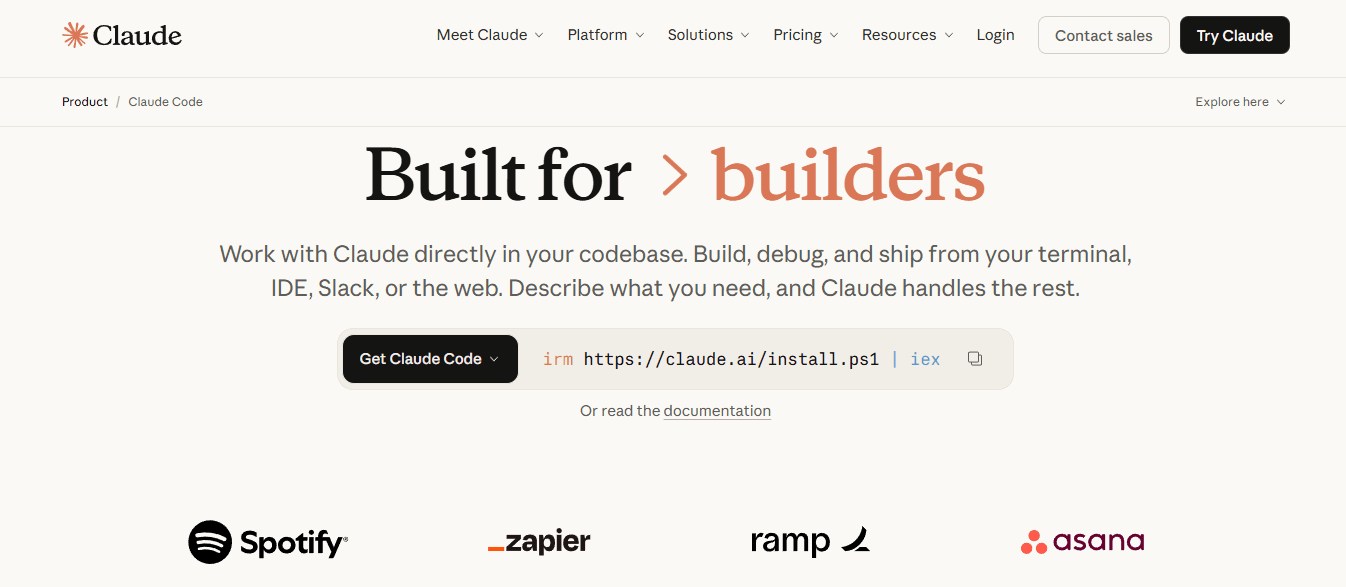
Best for developers and technical teams looking to build custom AI workflows and agents using natural-language coding. An agentic coding tool developed by Anthropic that uses Claude AI to build AI workflows or agents through natural language. It works in a terminal or IDE like Cursor or VS Code and can connect to any API or MCP server, with documentation provided.
How does Claude Code compare to other platforms?
Unlike Botpress's node system, Claude Code gives you complete freedom to build custom AI agents without platform limitations. It suits technical teams that want full control over security, code execution location, and system architecture. You can connect it to any API or MCP server, offering more flexibility than preset-integration marketplaces.
What are the tradeoffs and pricing considerations?
The tradeoff: all custom code requires security mindfulness. It can get expensive and hit rate limits easily. Custom solutions lack platform guardrails and built-in integrations, requiring hard-coded API connections. Free to start, then $20 per month or usage-based pricing through the Claude API, scaling with API calls and model usage.
13. n8n

Best for developers and technical teams who want to host their AI workflow automations with full control over infrastructure and data. AI automation workflow builder with a low-code drag-and-drop interface for multi-agent systems. Write JavaScript and Python directly in workflows. Built-in integrations with LLMs, embeddings, RAG, vector DBs, and MCP servers.
How does n8n compare to other platforms?
Unlike Botpress's cloud-only deployment, n8n offers self-hosting, giving you complete control over data privacy and security. It suits technical teams that write custom code directly in workflows and manage backend automation and app integration (CRM, billing, internal tools).
What are the main limitations?
The tradeoff: steep learning curve and a UI/UX that feels more like a developer tool than a business platform. You must bring your own API keys for AI models (not included in the n8n plan). It functions more as a workflow builder than a fully independent agent platform.
What features and pricing does n8n offer?
A large group of community templates and tutorials is available. The debugging tools are easy for developers to use. Teams concerned about security can host it themselves. Pricing: Starter $24/month, Pro $60/month, Business $960/month, Enterprise custom.
14. Lindy AI
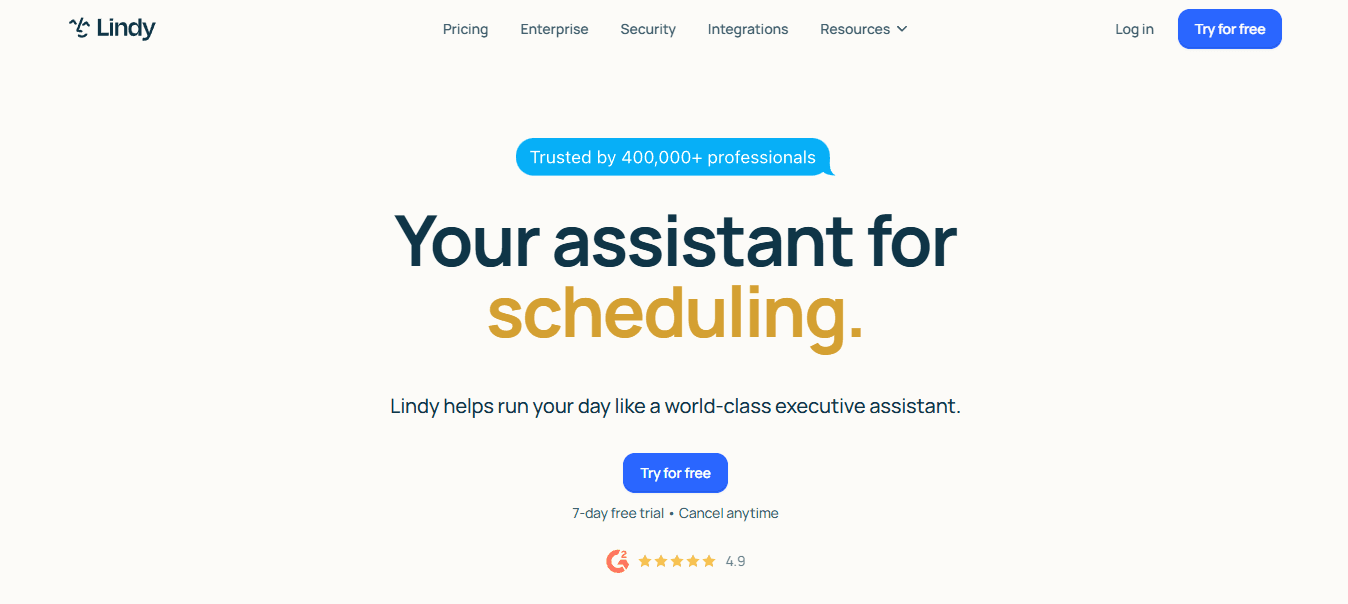
Best for teams who want AI employees to handle operational work: email sorting, meeting scheduling, CRM updates, and sales outreach. No-code AI agent platform for building "AI employees." Agents handle operational work across email, meetings, phone calls, and core business tools like HubSpot, Salesforce, and Slack, while maintaining memory through an internal knowledge base. Model-agnostic platform.
How does Lindy AI compare to other platforms?
While Botpress focuses on conversational chatbots, Lindy AI builds multi-channel "AI employee" automation across email, meetings, phone, and CRMs. Agents can join calls, send email sequences, and update business systems like actual teammates. It suits non-technical teams seeking to create agents using natural-language descriptions. Built-in memory and knowledge bases make it ideal for agents who need to reference past conversations and internal documents. Natural language setup and a no-code builder make it accessible to non-technical users.
What are the limitations and pricing considerations?
There are limits to workflow depth. It's not ideal for custom or detailed workflow logic compared to developer-focused platforms, and app connectivity isn't as strong as dedicated automation tools. Pricing is higher than some alternatives, especially if you don't use all AI agent features. A free plan is available. Paid plans start at $49.99 per month. Complex workflows may require careful prompt design and monitoring.
Related Reading
- How To Improve Call Center Customer Service
- How to Use AI for Customer Service Call Center
- Best Ai Tools For Customer Support In Healthcare
- Ai Customer Support Automation In Telecom
- Best Ai Customer Support Tools For It Teams
- It Helpdesk Automation
- Patient Support Services Automation
- Best Ai Customer Service For Hotels
- How To Use Ai To Improve Customer Service Kpis
Replace Botpress With Real-Time AI Agents Built for Scale
The shift from chatbot builders to real-time AI systems occurs when your use case demands more than scripted paths can deliver. If Botpress requires excessive engineering effort to maintain conversation logic or customization has become a bottleneck, you're ready for infrastructure without flow-based constraints. The question becomes whether your workflows need AI agents that handle dynamic, unscripted interactions at production scale.
💡 Tip: If you're spending more time maintaining conversation flows than building new features, consider real-time AI infrastructure.
"Traditional chatbot builders become bottlenecks when customization and engineering effort outweigh the benefits of scripted conversation paths."

Bland is built for teams moving beyond traditional chatbot structures into real-time voice and conversational AI at enterprise scale. Our platform deploys AI agents that respond dynamically to natural language, integrate directly into existing workflows, and maintain sub-400ms latency across high-volume interactions. For regulated industries like financial services, insurance, and healthcare, we control the entire stack (hardware, models, servers) to guarantee performance without relying on third-party providers.
🎯 Key Point: Sub-400ms latency and full-stack control make Bland ideal for mission-critical conversations in regulated industries.
Book a demo with Bland to see how your current Botpress use case would perform in a real-time AI agent system built for mission-critical conversations.
Related Reading
- How Is Ai Helping In The Healthcare Industry
- Lindy Ai Vs Zapier
- Best Ai Tools For Insurance Customer Service
- Botpress Alternative
- Lindy Ai Alternative
- Best Ai Voice Agents For Insurance
- Best Ai For Insurance Agents