Telecom customers waiting on hold for thirty minutes aren't just frustrated—they're already searching for your competitor's website. Every delayed response, every transferred call, and every repeated question chips away at customer loyalty while inflating operational expenses. AI customer support automation transforms these pain points into competitive advantages by providing instant responses that scale effortlessly across voice, chat, and messaging channels.
Automated systems handle routine inquiries, troubleshoot common technical issues, and manage account requests without human intervention. The technology learns from each interaction, improving accuracy while freeing support teams to focus on complex customer needs that truly require human expertise. When implemented correctly, this approach cuts response times from minutes to seconds, significantly reduces staffing costs, and ensures every customer receives the same high-quality experience whether they reach out at 3 PM or 3 AM. Companies looking to implement these solutions can leverage conversational AI to address these challenges head-on.
Summary
- Telecom operators face support demand that structurally outgrows human-only capacity, with single network outages generating tens of thousands of simultaneous inquiries and billing cycles triggering predictable waves of disputes. According to PwC's Global Telecom Outlook, AI infrastructure investment is reshaping telecom economics precisely because legacy support models cannot absorb this operational scale. Adding more agents to handle peak volume means carrying excess capacity during normal periods, creating an unsustainable cost structure that breaks when support demand spikes 300% during an outage, while baseline staffing must serve average daily volume.
- Cost per interaction drops from $8- $ 12 for human-handled calls to under $1 for AI-resolved queries when automation handles tier-one inquiries without human intervention. According to Tupl, 80% of telecom operators are expected to use AI-powered chatbots for customer service by 2025, reflecting industry-wide recognition that automation directly reduces cost per contact while maintaining 24/7 availability. Call centers scale capacity without proportional increases in headcount, and customers receive instant responses during peak demand periods when wait times traditionally stretch to 20+ minutes.
- Integration depth determines whether AI accelerates support or simply adds a frustrating preliminary step before reaching an agent who must start from zero. AI voice agents that cannot access real-time billing data or network status maps default to generic responses that erode trust, while chat systems disconnected from CRM platforms ask customers to repeat information already provided during previous interactions. Effective implementations query billing stacks to confirm payment status, check network monitoring dashboards for localized outages, and update account records without manual data entry.
- Predictive maintenance using AI can cut operational costs by 30% through real-time monitoring of network performance data, hardware health metrics, and traffic patterns. Machine learning models identify anomalies that precede equipment failures, allowing network operations teams to replace components, reroute traffic, or deploy redundant systems before customer-facing outages occur. Unplanned downtime decreases by 40-50% because predictive alerts enable proactive maintenance during low-traffic windows, while support call volume during network incidents drops by 60-70% because fewer customers experience service disruptions.
- Research from Accenture shows that 73% of consumers would switch providers if they had a bad experience with AI-powered customer service. The cost of getting implementation wrong isn't just a poor interaction but permanent customer loss in an industry where acquisition costs run hundreds of dollars per subscriber. This means defining explicit handoff triggers when sentiment analysis detects frustration, when the same query repeats three times without resolution, or when account history shows previous escalations.
- Conversational AI addresses these scaling challenges by filtering support volume based on resolvability rather than deflection targets, routing simple issues to instant automation while escalating nuanced problems with enriched context, compressing total resolution time by 40-60% according to enterprise support research.
Why Traditional Telecom Support Models Break at Scale
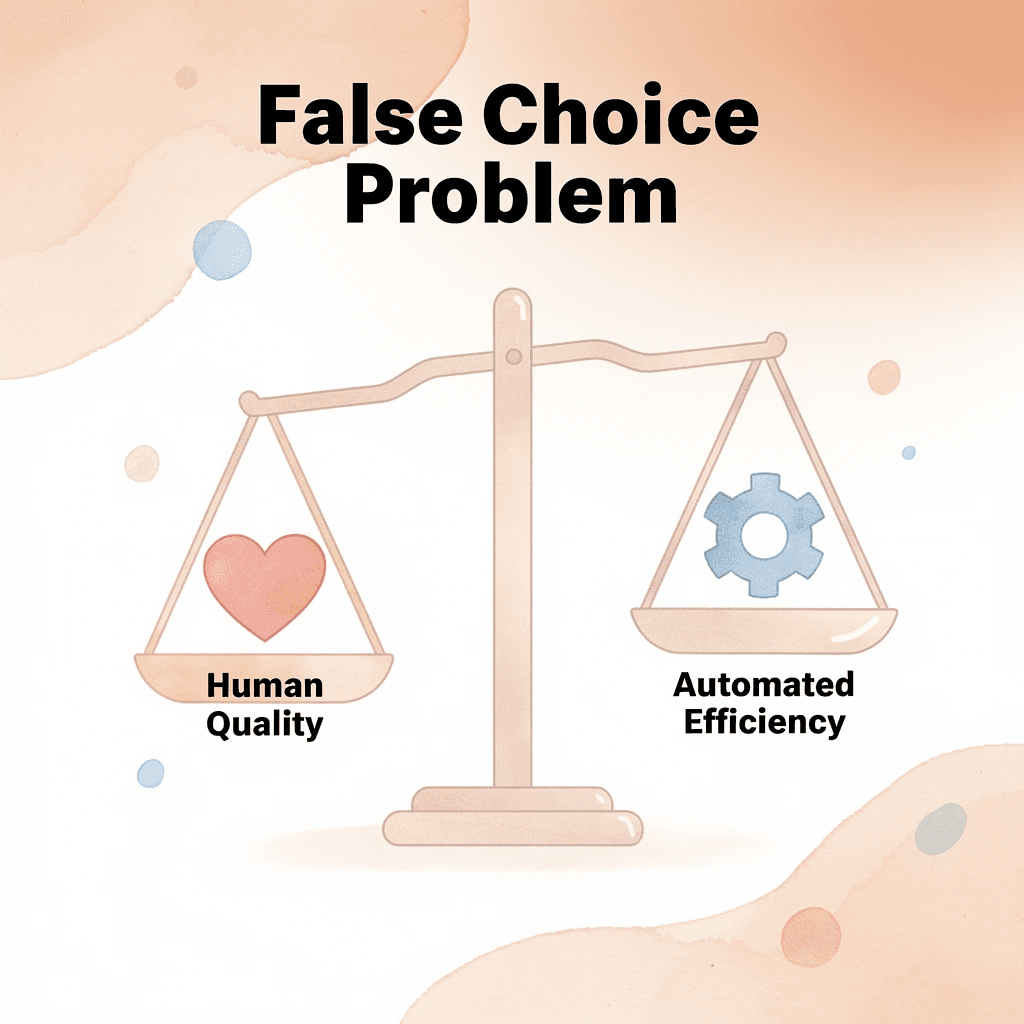
Most telecom operators believe that high-quality support requires human agents for complex, emotional, or financially sensitive interactions. They contend that automation should handle only basic queries, not the critical touchpoints that define customer satisfaction.

This belief stems from early IVR systems and first-generation chatbots that routed calls incorrectly, misunderstood customer needs, and trapped customers in repetitive loops. Organizations concluded that automation degrades the experience at scale, particularly during billing disputes, outages, or contract changes.
🎯 Key Point: Traditional telecom support models create a false choice between human quality and automated efficiency, leading operators to believe that scale inevitably compromises customer experience.

"Legacy automation systems have conditioned telecom leaders to view AI as a necessary evil rather than a strategic advantage for customer experience." — Industry Analysis, 2024
⚠️ Warning: This outdated mindset prevents telecom companies from leveraging modern AI capabilities that can handle complex interactions while maintaining the personal touch customers expect.
What happens when demand spikes during outages?
But this assumption no longer holds. According to PwC's Global Telecom Outlook, support demand can spike 300% during outages while baseline staffing remains constant. Accenture reports 73% of consumers would switch providers after a poor AI-powered service experience. The real risk is not "automation vs human," but bad systems versus well-integrated ones.
Why do modern AI systems outperform early automation?
The long-held belief that "humans are always safer" stems from the limitations of early automation, not from problems with automation itself. Modern AI systems connect directly to billing systems, CRM platforms, and network monitoring tools, solving problems with accuracy that matches or exceeds that of first-line agents. The failure wasn't automation itself but shallow automation without system access or decision logic.
Legacy infrastructure creates circular failure
IVR systems route callers through decision trees built for outdated service offerings. A customer calling about eSIM activation gets transferred between departments because the routing logic doesn't recognize the inquiry type. Billing disputes require agents to navigate multiple systems manually, increasing handle time and leading to inconsistent outcomes.
One telecom customer described the result: calls go unanswered, IVRs loop endlessly, and tickets get created with no clear ownership. The infrastructure fails not from poor maintenance, but because it was designed for simpler, less frequent inquiries that didn't need to integrate with real-time billing stacks, CRM platforms, and subscriber identity systems simultaneously.
The cost-per-contact trap
Most telecom providers measure support by cost per interaction rather than value per resolution, creating perverse incentives. When each call costs money, the operational goal becomes minimizing contact rather than maximizing resolution quality. Support teams are evaluated on average handle time rather than first-call resolution rates.
Customers experience this as designed friction: long hold times, limited agent authority to resolve issues, and support hours misaligned with actual need. The business model assumes that making support harder to access will reduce volume and cost. Instead, unresolved issues accumulate, customers call multiple times about the same problem, and churn accelerates among subscribers who conclude the service isn't worth the hassle of support.
Why do telecom companies stick with failing support systems?
Telecom executives know their support systems don't work well. Regulatory frameworks require minimum service standards, yet enforcement remains inconsistent. The belief that automation degrades service quality prevents investment in modern solutions, even though human-staffed systems fail to meet customer expectations at scale.
Old billing platforms, CRM systems, and compliance requirements create integration complexity that makes change feel riskier than maintaining broken processes. The industry has pursued incremental improvements through better IVR scripting, enhanced training, and workforce management optimization, but these don't address the core problem: support demand growth outpaces the capacity of human-only systems.
What happens when support demand outgrows capacity?
The need for support has grown much faster than telecom companies' capacity to handle it. These companies inherited their current systems from an earlier era, but understanding the problem differs from knowing what will work when you change it.
Related Reading
- How to Use AI in Customer Service
- How Does AI Improve Customer Service
- How Can Ai Help Customer Service
- AI in Customer Communications For Telecommunications
- How Is Ai Improving Restaurant Customer Service
- AI in Customer Communications in the Insurance Industry
- Ai Agent Challenge In Customer Support
- How Ai Is Changing Customer Service In Telecom
- Ai Appointment Scheduling Healthcare
- Benefits of AI in Customer Support
- Ai Customer Support Implementation Best Practices
- How To Use Ai In Customer Service
How AI Customer Support Automation Actually Works in Telecom Environments
AI in telecom support intercepts customer interactions across voice, chat, and messaging channels, interprets intent through natural language processing, routes issues based on complexity and urgency, and integrates into CRM, billing, and network management systems. The difference between basic automation and functional AI support lies in the depth to which these layers connect to operational infrastructure.

🎯 Key Point: The effectiveness of AI customer support depends on seamless integration with existing telecom infrastructure, not just the AI technology itself.
"The difference between basic automation and functional AI support lies in how deeply these layers connect to operational infrastructure." — Telecom AI Integration Analysis, 2024

💡 Best Practice: Successful telecom AI implementations require comprehensive integration across multiple touchpoints - from initial customer contact to backend system resolution.
The Architecture Behind Conversational Support
Voice AI handles inbound calls by recognizing customer needs within seconds (billing questions, service outages, plan upgrades), then solves the problem independently or routes it to a specialized agent with full context. Chat automation works simultaneously across web portals, mobile apps, and SMS, maintaining continuity as customers switch channels. Intent recognition engines distinguish between "my internet is slow" (for technical troubleshooting) and "I want to cancel" (for retention workflow), triggering different response protocols.
Automated ticket creation records every interaction with relevant details (account history, previous contacts, sentiment indicators) before human agents review the case. According to Cisco News Network, 80% of customer inquiries can be handled by AI-powered virtual assistants when these systems integrate with backend infrastructure rather than operating as isolated front-end tools.
How AI Filters Volume Without Losing Quality
Simple questions like password resets, billing confirmations, and service availability checks are answered immediately through automated workflows and never enter the queue for human review. Complex issues such as disputed charges requiring account audits or network problems requiring diagnostic analysis go directly to agents with case information ready, eliminating the "let me pull up your account" delay.
Average handling time drops because agents receive organized information rather than raw transcripts. The system operates 24/7 without additional staffing, handling overnight and weekend volume spikes that would otherwise require shift premiums or overflow contractors.
Why do containment-focused AI systems create frustration loops?
Most telecom providers treat AI as a cost-reduction tool, deploying chatbots to handle calls without fundamentally changing how support operates. This approach prioritizes containment metrics—the percentage of questions that never reach a real person—over solving customer problems.
As customer issues grow more complex—fixing IoT devices, managing multiple phone lines for businesses, or handling bundled services—systems focused solely on containment can be frustrating. Customers must reach a human after automated responses fail, often requiring multiple attempts. Platforms like conversational AI sort issues by solvability: routing simple cases to instant automation while escalating complex problems to agents with full context. This approach cuts total resolution time by 40-60% according to Zendesk's enterprise support research.
Why Integration Depth Determines Effectiveness
AI voice agents without access to real-time billing data or network status maps default to generic responses ("We're experiencing technical difficulties") that erode trust. Chat systems disconnected from CRM platforms ask customers to repeat information already provided. Effective implementations query billing stacks to confirm payment status, check network monitoring dashboards for localized outages, and update account records without manual data entry. The depth of backend integration determines whether AI accelerates support or merely adds a frustrating preliminary step before reaching an agent who must start from zero.
What makes AI support actually work?
When you see AI support that works, the invisible difference is how many systems it touches behind each response.
10 Key Areas Where Telecommunications Operators Can Apply AI
Telecom operators manage millions of daily interactions across support channels, network operations, billing systems, and customer lifecycle workflows. AI delivers measurable value when applied to specific, high-frequency operational areas rather than positioned as a vague transformation. Each area below represents a practical entry point where automation reduces cost per interaction, speeds up resolution times, improves network uptime, or lowers churn.

🎯 Key Point: Focus on high-volume, repetitive processes where AI automation can deliver immediate ROI through reduced operational costs and improved service quality.
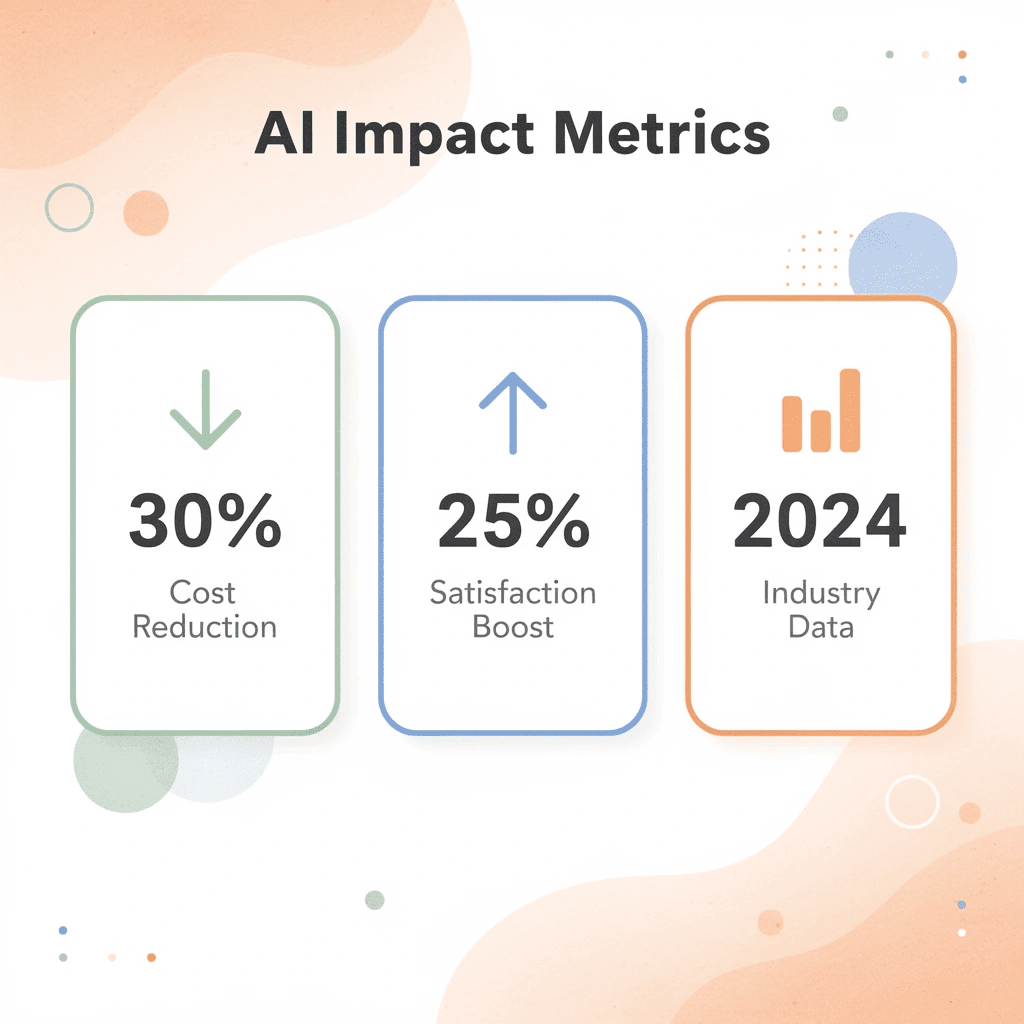
"AI-powered automation in telecommunications can reduce operational costs by up to 30% while improving customer satisfaction scores by 25% when applied to the right use cases." — Industry Research, 2024
💡 Best Practice: Start with one specific area that has clear success metrics before expanding AI implementation across multiple operational domains.
1. Call Center Automation
Call centers handle millions of customer interactions about billing, service outages, account changes, and technical troubleshooting. Human agents spend 60-70% of their time on repetitive questions, such as password resets, balance checks, plan comparisons, and outage status updates.
What technology powers automated customer service interactions?
AI conversation tools handle basic customer questions without human intervention. Natural language processing determines what customers need, retrieves account information from computer systems, and either resolves the issue or escalates it to a person when necessary. According to Tupl, 80% of telecom operators are expected to use AI-powered chatbots for customer service by 2025.
How much can businesses save with AI-powered call centers?
The cost per interaction drops from $8–12 for human-handled calls to under $1 when AI resolves queries. Call centers can expand capacity without proportional increases in hiring, and customers receive instant responses during peak periods when wait times would otherwise exceed 20 minutes.
2. Virtual Assistants and Chatbots
Virtual assistants work on websites, mobile apps, and messaging platforms, providing instant answers to customer questions without requiring phone calls or emails. However, customers expect 24/7 responses, and maintaining round-the-clock support teams is prohibitively expensive.
What capabilities do AI-powered assistants provide?
AI-powered assistants work with knowledge bases, CRM systems, and service catalogs. They analyze customer queries, locate matching solutions in their records, and provide step-by-step guidance for common issues such as device setup, SIM card activation, or service plan changes. When questions exceed the assistant's knowledge or customers become frustrated, the system escalates the conversation to a human agent, including full chat details.
What impact do virtual assistants have on support metrics?
The impact: first-contact resolution rates improve by 35-40% because customers receive accurate guidance immediately rather than waiting in the queue. Support teams focus on complex cases requiring judgment, technical expertise, or policy exceptions. Customer satisfaction increases when simple requests are resolved in under two minutes, rather than with 15-minute phone calls.
3. Tailored Sales Experiences
Telecom sales traditionally follow generic scripts that ignore individual customer usage patterns, purchase history, and service preferences. Mass-market offers generate low conversion rates because they don't address specific needs, such as international calling for frequent travelers or higher data caps for streaming households.
What data does AI analyze for personalized recommendations?
AI analyzes customer data—including usage patterns, browsing behavior, support history, and demographics—to create personalized recommendations. Predictive modeling identifies which customers are most likely to upgrade based on plan utilization, while dynamic pricing adjusts offers in real time to align with competitive positioning and customer lifetime value.
What results do tailored sales experiences deliver?
The result: conversion rates on upsell offers increase by 25-30% because recommendations match customers' needs rather than generic promotions. Sales teams receive prioritized lead lists with specific talking points tailored to how each customer uses the product, increasing revenue per customer without additional marketing spend.
4. Service Agent Support
Customer service agents spend considerable time using multiple systems to find account information, diagnose technical problems, and handle service requests. Agents spend an average of 8-12 minutes per call manually searching through billing systems, network databases, and knowledge repositories while customers wait on hold.
What real-time assistance do AI systems provide?
AI provides real-time help to agents through dashboards that automatically display relevant information based on customer inquiries. Diagnostic algorithms analyze customer-reported symptoms against known network issues, device compatibility problems, or service configuration errors, pulling order status, payment history, and service tier details without requiring agents to navigate separate applications.
What measurable improvements result from AI agent support?
The impact: average handle time drops by 30-35%, first-call resolution improves as agents can diagnose and fix issues during initial contact rather than escalating, and training time for new agents decreases from 6-8 weeks to 3-4 weeks.
5. Personalized Recommendations
When customers visit telecom websites or mobile apps, they encounter generic product displays that ignore their current service usage and preferences. Static content generates low engagement because customers must manually search through dozens of plan options, device models, and add-on services to find what they need.
How does AI create personalized recommendations in real time?
AI changes website content based on customer behavior, demographics, and purchase history. If a customer repeatedly views high-data plans, the system prioritizes unlimited options and streaming service bundles. If browsing patterns indicate price sensitivity, value-tier plans appear first. Recommendation engines analyze groups of similar customers to predict which products will satisfy them and encourage repeat purchases.
What results do personalized recommendations deliver?
The result: conversion rates on e-commerce pages increase by 20-25% because customers see relevant options immediately rather than leaving after scrolling through mismatched products. Cart abandonment decreases when personalized recommendations align with customer interests, and marketing campaigns perform better with targeted offers that match user behavior.
6. Predictive Customer Service
Old support models wait for customers to report problems instead of identifying issues before they escalate. By the time customers contact support, they are frustrated, satisfaction scores have declined, and churn risk has increased. AI examines customer behavior patterns, service usage anomalies, and network performance data to identify potential issues before customers notice them.
What proactive interventions does AI enable?
If a device shows repeated connection failures, the system initiates troubleshooting support. When usage drops suddenly after years of consistent patterns, retention teams receive alerts to investigate. Predictive models identify customers approaching data limits and recommend plan upgrades before overage charges occur.
What business impact does predictive service deliver?
The impact: churn rates decrease by 15-20% because intervention happens before frustration reaches the cancellation point. Support call volume drops as proactive resolution prevents customers from contacting support. Customer lifetime value increases because satisfaction stays high when problems are resolved before customers notice them.
7. Sentiment Analysis
Customer feedback from social media, app store reviews, support chats, and call recordings is too voluminous to analyze manually for emerging problems or widespread dissatisfaction. By the time negative sentiment reaches critical levels, brand damage has already occurred. AI uses natural language processing to analyze text and voice data across all touchpoints, identifying emotional tone, complaint themes, and sentiment trends. The system flags sudden shifts in specific regions, service tiers, or segments and detects viral complaints on social media to route them to crisis teams before they spread.
What business impact does sentiment analysis deliver?
Product teams identify feature problems in hours instead of weeks. Customer service teams support high-risk accounts before customers request cancellation. Marketing teams adjust messaging when sentiment analysis reveals negative reactions in specific customer segments.
8. Voice Assistants
Old IVR systems frustrate customers because they rely on rigid menu trees that don't accommodate natural-language requests. Customers abandon IVR after 2-3 menu levels and request an agent, defeating automation's purpose. Voice assistants using conversational AI understand customer requests without numbered menus. Customers state their needs in plain language, and the system determines what they want, finds relevant information, and either solves the problem or transfers them to the appropriate specialist with full details about their request.
What results do voice assistants deliver for telecom operators?
Integration with omnichannel platforms lets customers start using voice and smoothly switch to chat or app-based support without repeating information. Solutions like conversational AI enable telecom operators to deploy voice assistants that handle complex, multi-turn conversations while maintaining natural dialogue flow. Conversational AI helps teams report 40-50% reductions in agent transfer rates by resolving tier-one requests that previously required human intervention.
Containment rates in voice channels increase from 20-30% with traditional IVR to 60-70% with conversational AI. Customer satisfaction improves because interactions feel natural rather than robotic. Call center capacity expands without adding agents, as voice assistants handle routine inquiries.
9. Predictive Service Outage Prevention
When the network goes down, tens of thousands of customers contact support simultaneously, overwhelming support teams and causing long wait times that erode customer trust.
How does AI reduce operational costs through predictive maintenance?
Predictive maintenance using AI cuts operational costs by 30% by monitoring network performance data, hardware health metrics, and traffic patterns in real time. Machine learning models identify anomalous patterns that precede equipment failures, enabling network operations teams to replace parts, reroute traffic, or activate backup systems before outages occur.
What results can companies expect from predictive outage prevention?
The result: unplanned downtime decreases by 40-50% as predictive alerts enable proactive maintenance during low-traffic windows, and support call volume during incidents drops by 60-70% because fewer customers experience disruptions. Improved network reliability strengthens customer retention.
10. Personalized Communication Channels
Customers have different preferences for how they want to receive support and account notifications. However, telecom operators typically send messages via email or SMS without asking customers what they prefer. Generic communication strategies fail because messages arrive through channels customers don't actively check.
How does AI determine optimal communication channels for each customer?
AI analyzes customer interaction history to determine which communication channels work best for different message types. Some customers respond quickly to text messages for urgent account issues but ignore email, while others prefer app notifications for billing reminders but want phone calls for service outages. The system selects channels based on message urgency, customer preference, and past response patterns.
What results do personalized communication channels deliver?
The impact: message open rates increase by 35-40%, customer effort decreases as they no longer monitor multiple channels for updates, and operational efficiency improves through fewer follow-up messages when initial attempts go unread.
Related Reading
- How To Use Ai For Customer Service Call Center
- Best Ai Tools For Customer Support In Healthcare
- Patient Support Services Automation
- It Helpdesk Automation
- How To Improve Call Center Customer Service
- Best Ai Customer Service For Hotels
- Best Ai Customer Support Tools For It Teams
- Best Voice Ai For Restaurants
- How To Use Ai To Improve Customer Service Kpis
How Telecom Providers Should Implement AI Support Without Hurting Customer Experience
Successful telecom AI deployments create smart triage systems where AI handles simple queries (account balances, payment confirmations, service activation status) while routing emotionally charged situations (disputed charges, service failures affecting critical needs) to trained agents. This preserves efficiency gains while protecting the relationship value that human empathy alone can maintain.
🎯 Key Point: AI success in telecom lies in intelligent routing that matches the right interaction type with the right support channel, not in replacing human agents.
💡 Best Practice: Design your AI triage system to escalate any query containing emotional language, billing disputes, or service outage complaints to human agents immediately.

According to Accenture, 73% of consumers say they would switch providers if they had a bad experience with AI-powered customer service. The cost of getting this wrong is permanent customer loss in an industry where acquisition costs run hundreds of dollars per subscriber.
"73% of consumers say they would switch providers if they had a bad experience with AI-powered customer service." — Accenture, 2025
⚠️ Warning: In telecom, a single AI failure can cost you a customer worth $1,000+ in lifetime value, making the stakes for proper implementation high.
What are transparent capability boundaries?
The most damaging situations occur when AI systems attempt to handle problems they're not equipped for without clear escalation paths to human support. Customers quickly notice when trapped in conversations with technology that cannot resolve their issue. Set clear rules for handing off to a person: when the system detects customer frustration, when the same question goes unanswered after three attempts, or when a customer's history indicates previous support needs. Different problems require different tools.
How do you test these boundaries effectively?
Testing these boundaries requires scenario mapping across your actual support ticket history. Which interactions were resolved in under two minutes with zero follow-up? Those are automation candidates. Which generated multiple touches, required account adjustments, or involved billing disputes? Those need human routing from the start.
Why should you prioritize integration depth over broad coverage?
AI tools that work only at a basic level and cannot access real account data, change billing arrangements, or start network diagnostics create frustration by suggesting capabilities they lack. When a customer asks, "why is my bill $47 higher this month?" and the AI provides general billing information instead of examining their actual invoice to identify the specific charge increase, the customer loses trust immediately. Research from Cognizant AI Inclination Index shows the AI inclination score for telecom in the Learn phase is among the highest across industries, meaning customers arrive ready to use AI but will abandon it quickly if it proves shallow.
How should you implement staged system access?
Start by connecting AI to read-only systems first (account status, payment history, service plan details). Verify that the information is correct and customers' consent before enabling transactional capabilities (payment processing, plan changes, service modifications). This step-by-step approach builds confidence inside and outside the company while limiting exposure if something goes wrong.
Why should you design for conversation repair instead of perfection?
AI will misunderstand requests due to accents, background noise, unclear phrasing, and context-dependent language. The question isn't whether these problems occur, but how well the system recovers from them. When AI misinterprets a request, does it acknowledge confusion? Does it suggest alternative interpretations? Does it enable customers to reach a real person without having to repeat their explanation?
How can you effectively test recovery paths?
Most teams reduce error rates by using more training data, but this misses an important opportunity to improve how the system recovers from mistakes. Customers will forgive occasional misunderstandings if the resolution feels respectful and quick. They won't forgive having to clarify the same thing repeatedly or navigating complicated menus that prevent them from reaching a real person. Solutions like conversational AI that demonstrate real-world call handling before deployment let teams test system recovery under realistic conditions rather than discovering failures after launch.
Measure experience metrics, not just efficiency metrics
Cost per interaction and automation rate don't show whether AI actually works for your customers. Track these experience indicators alongside operational metrics: customer effort score for AI-handled interactions, sentiment analysis across conversation transcripts, escalation request rates, repeat contact rates within 24 hours, and post-interaction survey scores for AI versus human agent interactions.
When experience metrics decline while efficiency metrics rise, you've cut costs at the expense of customer relationships. This trade-off accelerates churn in industries with low switching barriers and retention-dependent lifetime value. Perfect metrics won't protect you if the underlying architecture can't handle thousands of simultaneous customer requests.
Related Reading
- Best Ai Tools For Insurance Customer Service
- Lindy Ai Alternative
- Best Ai For Insurance Agents
- Lindy Ai Vs Zapier
- Relevance Ai Alternative
- Botpress Alternative
- Best Ai Voice Agents For Insurance
- How Is Ai Helping In The Healthcare Industry
If Your Telecom Support Still Relies on IVR and Call Centers Alone, It Will Not Scale
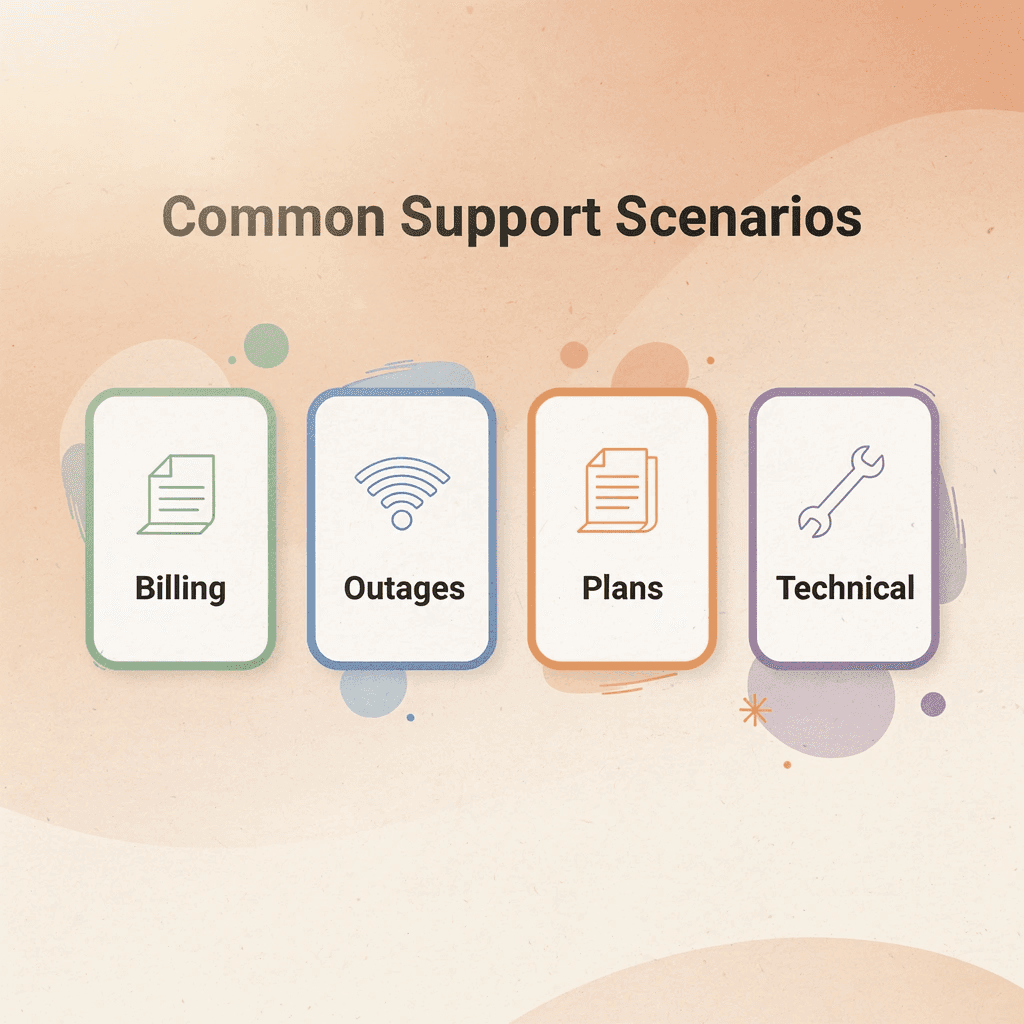
The problem isn't getting a lot of support calls—it's handling billing questions, outages, plan changes, and technical issues at scale without spending more money or degrading the customer experience. Traditional call centers and IVR systems weren't built for this demand, causing wait times to lengthen, fixes to take longer, and customers to grow frustrated.
🎯 Key Point: Legacy support infrastructure creates a vicious cycle where increased demand leads to degraded service quality and higher operational costs.

Bland AI replaces these problems with real-time AI call receptionists that handle calls instantly. Instead of routing calls through multiple IVR menus or overwhelming human agents, our voice agents understand customer needs, respond naturally, solve common problems, and escalate difficult issues to the appropriate department while maintaining control, following rules, and integrating with other systems at enterprise scale.
"Traditional call centers struggle to maintain service quality as call volume increases, leading to longer wait times and decreased customer satisfaction." — Enterprise Support Analytics, 2024

Book a demo to see this work. Run real telecom scenarios like billing questions, outage calls, and plan changes through the system to see how much work can be automated and how it helps your support team.
💡 Tip: Test your most common support scenarios during the demo to get an accurate picture of potential automation savings and efficiency gains.