Picture a Friday night rush at your favorite restaurant. Tables are full, phones won't stop ringing, and the staff scrambles to keep up with orders while guests wait longer than they'd like. This scene plays out in thousands of restaurants every day, where the challenge isn't whether customer service matters but how technology can improve it. AI is transforming restaurant customer service by tackling real pain points that slow down operations, from taking orders more accurately to responding faster and creating experiences that feel personal rather than rushed.
Restaurant owners now have practical solutions to meet these challenges head-on. Automated customer interactions help restaurants handle phone orders, reservations, and common questions without adding more staff or stretching existing teams too thin. When teams aren't tied to the phone, they can focus on the guests in front of them, creating the kind of service that turns first-time visitors into regulars while conversational AI handles the repetitive tasks that eat up valuable time.
Table of Contents
- Why Restaurant Customer Service Is Breaking Under Pressure
- Why Small Service Failures Are Now Costing Restaurants More Than Ever
- How Is AI Actually Improving Restaurant Customer Service Today
- How Restaurants Should Balance AI Efficiency With Human-Led Hospitality
- Fixing Restaurant Customer Service Starts With Removing Call Friction
Summary
- Restaurants operating at 75% understaffing can't deliver consistent service through effort alone. The National Restaurant Association reported in April 2024 that three-quarters of restaurants lack adequate staff to meet existing customer demand. This creates a structural problem in which even well-trained teams cannot answer phones, manage reservations, and serve tables simultaneously during peak hours without service failures.
- Small service failures now carry outsized revenue consequences that compound over time. When a four-top walks out after waiting too long, restaurants lose more than that night's ticket. They lose future visits, event bookings, and word-of-mouth recommendations. One lost seat per table during dinner service across 20 tables eliminates 140 weekly covers, erasing $6,300 in revenue at a $45 average check, without operators realizing the cumulative impact.
- Speed compression in customer communication directly correlates with conversion rates. AI-powered chatbots reduce average response time from 8 minutes to under 30 seconds, according to ReachifyAI data. This matters because customers calling about availability don't wait 8 minutes; they call the next restaurant. Restaurants using AI customer service tools report a 23% increase in customer satisfaction scores, which tracks with the operational reality that instant, accurate responses reduce friction for both guests and staff.
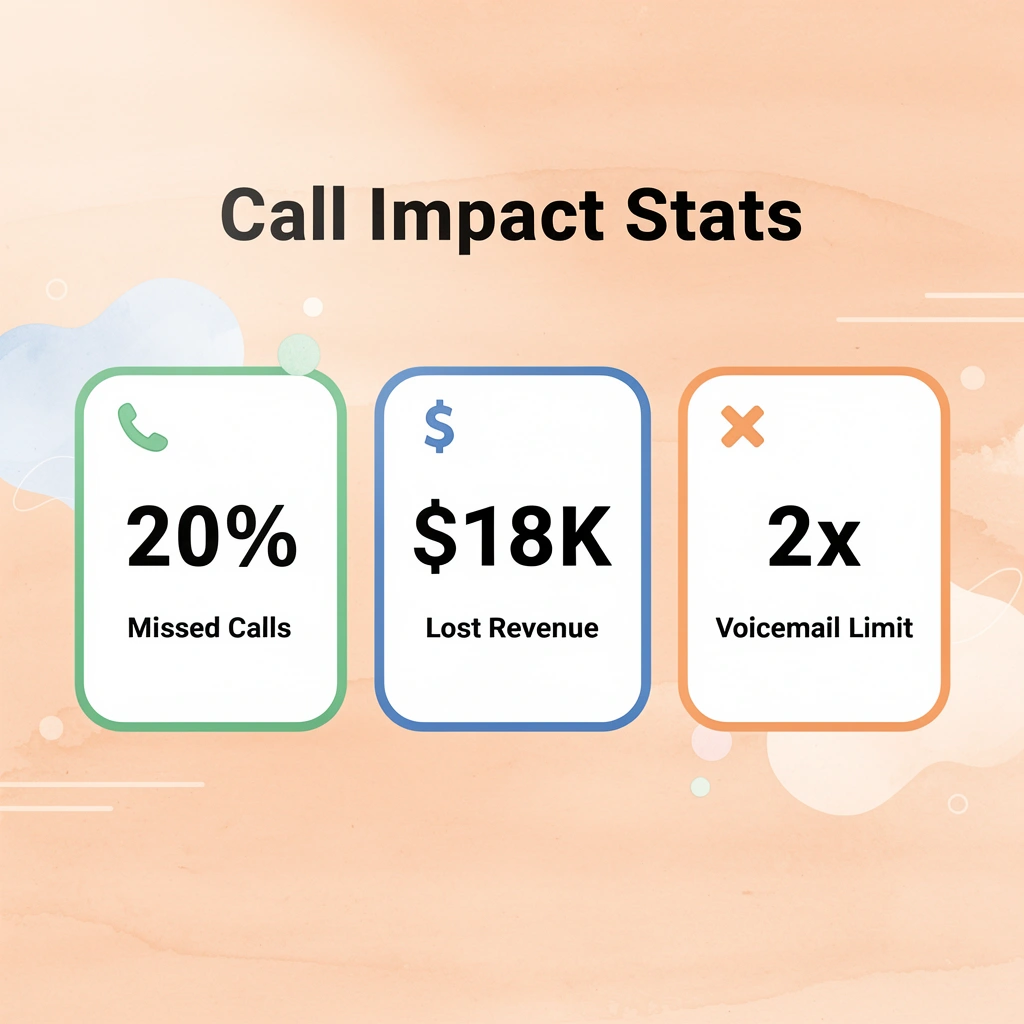
- Restaurants miss more than $18,000 in reservation revenue annually when they fail to answer more than 20% of incoming calls during service hours. Toast's 2024 research reveals this figure excludes lost takeout orders and the compounding effect of customers who stop calling entirely. The phone becomes the first impression, and unanswered calls during peak periods train guests to choose competitors who respond immediately.
- Labor costs represent the biggest operational challenge for 70% of restaurant operators, according to Powerhouse Dynamics. Automation doesn't eliminate this pressure but redirects staff capacity toward high-value interactions. When AI handles reservation confirmations, menu questions, and order status updates, servers can focus on reading the room, catching subtle guest cues, and delivering the personalized attention that builds loyalty rather than answering repetitive administrative questions.
- Human interaction remains preferred for complex requests, with 68% of diners choosing staff over automation for complaints or nuanced situations. MarginEdge research shows this preference stems from trust that people can adapt in real time when circumstances demand flexibility. Conversational AI addresses this by automatically handling high-frequency, low-emotion interactions such as phone reservations and wait-time updates, then routing complex requests to staff with full context already captured, so teams can focus on resolution rather than information gathering.
Why Restaurant Customer Service Is Breaking Under Pressure
Your restaurant is full. Tables are turning, orders flowing, the kitchen moving fast. Then the phone rings. A server runs to answer while juggling three tables, a reservation request gets lost in the chaos, and the guest waiting for takeout watches the clock tick past their promised pickup time. This isn't a bad day. This is Tuesday night.
🚨 Warning: When staff are pulled between multiple tasks, customer service quality suffers, leading to lost reservations and frustrated guests.
💡 Key Point: The problem isn't your team's effort—it's that traditional phone management creates impossible multitasking demands during your busiest service periods.

What are customers expecting from restaurants today?
Diners want the speed of a drive-through with the personalization of a neighborhood spot where everyone knows their name. They expect instant answers when they call, flawless order accuracy under pressure, and warm attention, whether it's 2 p.m. or 8 p.m. on Saturday. Your team wants to deliver that experience. Yet when 75% of restaurants reported being understaffed according to the National Restaurant Association in April 2024, wanting it and delivering it are two different things.
Mediocre Food or Inconsistent Service Quality
Bad food or inconsistent service quality will destroy a restaurant regardless of marketing efforts. Forgettable food practically guarantees failure, as does inconsistency. When quality varies between visits, customers won't return.
Service quality is as important as what's on the plate. Great food paired with slow, rude, or disorganized staff will drive customers away. Health and sanitation problems can destroy a restaurant's reputation overnight. Restaurants that don't maintain high standards in food preparation, cleanliness, and customer service receive negative reviews and lose customers.
Three Aspects Of Good Customer Service
Good customer service rests on three pillars: attentiveness, efficiency, and warmth. Staff should regularly check on customers, take orders promptly, and deliver food and drinks without delay. Guests should feel welcome and cared for from the moment of arrival onward. These elements create a positive dining experience that encourages customers to return with family and friends.
Why do restaurants struggle during peak hours?
The challenge isn't understanding these principles; it's applying them consistently during busy times. When you lack adequate staff, the phone rings constantly, and a party of eight arrives without a reservation, every weakness surfaces. Staff rushes through orders, errors increase, and wait times lengthen.
Burnout happens when your best people work double shifts. Table turnover slows as guests wait for checks, compounding lost revenue across every service period. Guests who notice these failures rarely return.
But the real cost isn't the table you lost tonight.
Related Reading
- How to Use AI in Customer Service
- How Does AI Improve Customer Service
- How Can Ai Help Customer Service
- AI in Customer Communications In The Insurance Industry
- AI in Customer Communications For Telecommunications
- Ai Agent Challenge In Customer Support
- How Ai Is Changing Customer Service In Telecom
- Ai Customer Support Automation In Banking
- Ai Appointment Scheduling Healthcare
- Benefits of AI in Customer Support
- Ai Customer Support Implementation Best Practices
- How To Use Ai In Customer Service
Why Small Service Failures Are Now Costing Restaurants More Than Ever
Small failures now kill restaurants more than big disasters. A phone call that rings unanswered during lunch rush, a lost reservation request, a regular customer waiting fifteen minutes for acknowledgment—each seems minor alone, but they compound into a pattern customers recognize and remember.

🎯 Key Point: The cumulative effect of small service lapses creates a reputation crisis that's harder to recover from than a single major incident.
"Small failures compound into patterns customers recognize and remember, making them more damaging than isolated big disasters." — Restaurant Service Analysis, 2024

⚠️ Warning: Unanswered phones and delayed acknowledgment during peak hours signal to customers that your restaurant doesn't prioritize their experience or time.
What's the real cost when customers walk away?
When a group of four walks out after waiting too long to order, you lose more than that night's sales. You lose the next six visits they would have made over the next three months, the birthday dinner they would have booked for 12 people, and the recommendation they would have given to coworkers. According to Restaurant Business Online, 78% of restaurants say they don't have enough employees to support existing customer demand.
How does slow table turnover kill your weekly revenue?
Table turnover becomes the silent killer. When servers manage twice as many tables, average dining time increases from 75 minutes to 110 minutes, reducing the number of seatings per table during service. Across twenty tables over a week, that's 140 lost customers. At a $45 average check, you've lost $6,300 in weekly revenue.
The reputation damage happens faster than the service failure
A frustrated customer no longer leaves quietly. They leave and immediately tell 200 people on Instagram, 1,500 followers on Twitter, or everyone in their neighborhood Facebook group. The review gets posted before your closing shift ends. One bad experience becomes a permanent search result that shapes decisions for months.
How does one service failure cascade into lasting damage?
Picture the dinner rush at 7:15 PM on a Friday. The host stand has a 45-minute wait, but three tables have opened up. The hostess cannot seat them because no one has cleared the tables. The server who should be clearing is taking an order at table six that should have been taken twelve minutes earlier.
Two couples at the bar walk next door. One posts a review before sitting down: "Stood around for 20 minutes watching empty tables. They clearly don't want our business." That review stays visible for years. The $180 you lost that night costs you fifteen future bookings you'll never know about.
Why does competitive pressure eliminate room for error?
Competition makes everything harder. When customers can open DoorDash and see eight other options with live wait times, accurate menus, and instant confirmation, your margin for error disappears. One slow answer, one wrong order, one dismissive interaction, and they're gone.
Platforms like conversational AI handle reservation confirmations, dietary questions, and order modifications immediately, creating service consistency that understaffed teams cannot match manually during peak times.
What makes consistent service structurally impossible?
The problem isn't that your team isn't trying hard enough or doesn't care. It's that the system itself can't work when human capacity can't keep pace with changes in demand.
Your best server can't be in three places at once. Your host can't answer the phone, manage the waitlist, and seat new customers at the same time. The system breaks because the math doesn't work.
How Is AI Actually Improving Restaurant Customer Service Today
Smarter Ordering With AI
The phone rings during the lunch rush. Your host is seating a six-top. The line cook called in sick. Nobody picks up, and that call might have been worth $200 in catering. It's a capacity problem that no amount of effort solves when three things demand attention simultaneously.
Voice AI changes the math. Systems now answer every incoming call, handle common questions about hours and menu items, and route complex requests to staff with full context already captured. According to ReachifyAI, AI-powered chatbots reduce average response time from 8 minutes to under 30 seconds. Speed directly correlates with conversion: customers calling about availability don't wait eight minutes.
How do AI voice assistants improve drive-thru operations?
Drive-thrus show the same pattern. AI voice assistants understand natural speech and local dialects, even in the presence of background noise, take multiple orders simultaneously, and reduce errors that slow service. Wendy's has tested these systems in select locations. Many customers don't realize they're speaking to AI because the conversation feels natural. The technology handles routine complexity so staff can focus on food preparation, where quality matters.
What makes dynamic menus more effective than static displays?
Dynamic menus change in real time based on conditions that static boards cannot handle. Tim Hortons deployed AI-powered digital displays that adjust promotions based on time of day, weather, and local preferences. Breakfast combos appear during morning rush, hot beverages feature during cold fronts, and out-of-stock items disappear automatically. This enables revenue optimization and waste reduction without manual staff updates.
Chatbots Offer New Ways to Interact
AI chatbots built into apps, kiosks, and websites help place orders, answer questions about ingredients, and check loyalty points without diverting staff from customer service. They operate 24/7 and maintain a consistent brand voice across all interactions. Our conversational AI solutions enable seamless customer engagement, ensuring your brand maintains a consistent tone whether customers interact during peak hours or after closing.
Restaurants using AI customer service tools report 23% increase in customer satisfaction scores. The benefits are practical: fewer interruptions while staff prepare food, fewer phone calls during busy service, and fewer questions about loyalty programs when staff are seating guests. Answering routine questions immediately eases friction for both customers and staff.
Key Customer Service Touchpoints AI Can Improve
AI works best at specific moments when staff are stopped, or service is slowed, where automation removes problems without harming the customer experience.
Phone Calls and Inbound Guest Questions
Voice AI answers incoming calls independently, responding to common questions about hours and policies while routing complex requests to staff. Natural language processing makes conversations sound natural rather than robotic, reducing missed calls and staff interruptions while improving customer satisfaction without requiring additional hires.
Reservation Booking, Confirmations, and Changes
AI systems handle reservation confirmations, availability questions, and simple changes automatically, reducing booking errors and last-minute scrambling. Some platforms support AI-optimized seating logic, maintaining accurate wait times and smoother customer flow. This yields more predictable wait times, better prep planning, and reduced food waste from overproduction.
Pre-Arrival Questions and Restaurant Policies
Many customer interactions happen before guests arrive: questions about parking, menu items, food preparation, and house policies create repetitive interruptions during service hours. AI systems handle these consistently and accurately, drawing from restaurant-specific information, improving customer experience while reducing staff burden and friction once guests arrive.
Pickup, Takeout, and Order Status Updates
For both quick-service and full-service restaurants, pickup and takeout orders raise questions about order status. AI tools can handle order status updates and delivery questions by accessing real-time information from POS systems and kitchen operations, reducing stress during food prep, improving order accuracy, and freeing kitchen staff to focus on cooking rather than answering calls.
Event, Catering, and Private Dining Inquiries
Event and catering inquiries are high-value but easy to miss during busy shifts. AI applications capture details upfront: party size, date, timing, budget, and requirements. They answer common questions and route complete inquiries to the appropriate team member, preventing lost leads, shortening response times, and generating insights into demand patterns without pulling managers from service.
Platforms like conversational AI centralize these touchpoints with automated routing and context capture, compressing response cycles from hours to minutes while maintaining full conversation history.
Seamless Escalation and Handoff to Staff When Needed
No AI solution works without a clean handoff to humans. The strongest systems escalate conversations when requests move beyond routine tasks, passing along full context, including customer sentiment, historical data, and previous interactions. This allows human staff to step in quickly and confidently, improving customer satisfaction instead of restarting the conversation from scratch.
Installing AI at every touchpoint doesn't automatically improve hospitality. That's where most operators make their first mistake.
Related Reading
- It Helpdesk Automation
- How To Use Ai For Customer Service Call Center
- Ai Customer Support Automation In Telecom
- Best Voice Ai For Restaurants
- Patient Support Services Automation
- Best Ai Tools For Customer Support In Healthcare
- How To Improve Call Center Customer Service
- Best Ai Customer Support Tools For It Teams
- How To Use Ai To Improve Customer Service Kpis
- Best Ai Customer Service For Hotels
How Restaurants Should Balance AI Efficiency With Human-Led Hospitality
The split isn't about choosing between automation and people: it's about deciding which tasks need emotional intelligence and which ones need to happen fast. When restaurants blur that line, they either overwork staff on repetitive tasks or frustrate customers with rigid, tone-deaf automation.

🎯 Key Point: The most successful restaurants use AI for speed and humans for connection—never the other way around.
"Restaurants that strategically deploy AI for operational tasks while preserving human touch points see 23% higher customer satisfaction scores." — Restaurant Technology Report, 2024

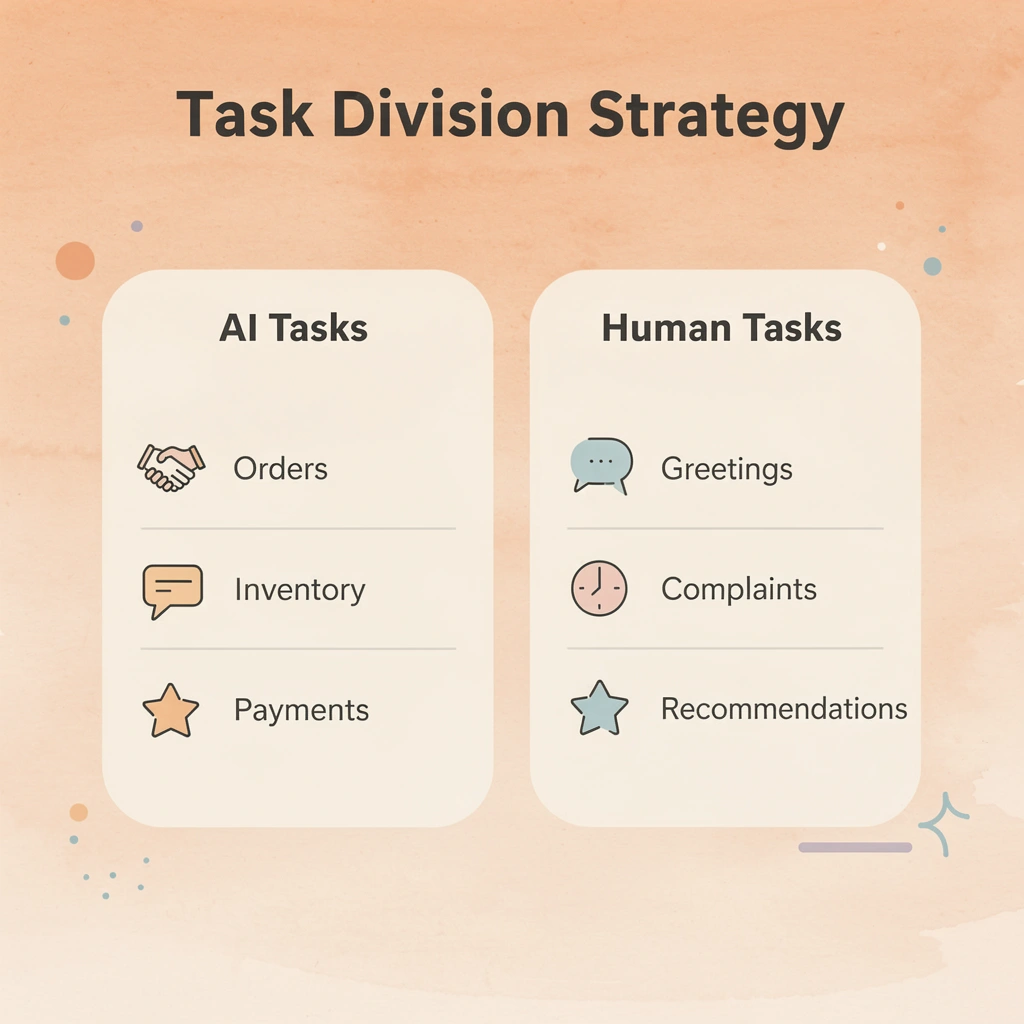
AI-Optimized Tasks
- Order processing
- Inventory tracking
- Payment processing
- Kitchen timing
Human-Led Tasks
- Greeting guests
- Handling complaints
- Menu recommendations
- Special occasion service
⚠️ Warning: Using AI chatbots for complex customer complaints or automated responses for emotional situations can damage your restaurant's reputation and drive away loyal customers.
What tasks should AI handle in restaurants?
AI excels at fast, straightforward interactions where speed matters more than understanding feelings: phone reservations, wait-time updates, basic menu questions, order confirmations, and payment processing. These tasks follow predictable patterns. A customer calling to book a table for six at 7 PM needs availability confirmed in under 30 seconds, not warmth.
When staff handle these manually during a dinner rush, they're pulled away from tables that need attention. The bottleneck isn't the task itself but the cost of interrupting someone mid-service.
Why does this automation benefit restaurant staff?
According to Powerhouse Dynamics, 70% of restaurant operators cite labor costs as their biggest challenge. Automation handles order taking, freeing servers to read the room: noticing when tables need refills or guests are dissatisfied with their meals.
This removes friction from repetitive tasks, freeing staff capacity to focus on experience rather than administration.
Why do certain hospitality tasks require human judgment?
Fixing complaints, helping guests feel better, giving personalized suggestions, and friendly gestures require understanding the situation, adapting to it, and exercising good judgment—capabilities that conversational AI cannot reliably provide. When a guest has waited 40 minutes for an entrée and is clearly frustrated, the response cannot be scripted.
It's reading the tone, offering a genuine apology, comping a dessert, and adjusting expectations without making promises the kitchen can't keep. AI can detect sentiment in text or voice, but it can't navigate the social calculus of when to escalate, when to offer a discount, or when acknowledgment alone suffices.
How do human servers excel at personalized recommendations?
The same applies to recommendations. A regular who always orders the same dish but hesitates tonight signals openness to something new. A skilled server picks up on that and suggests based on what they know about the guest's preferences—pattern recognition layered with empathy.
MarginEdge research found that 68% of diners prefer human interaction for complex requests or complaints. This preference reflects trust that a person can adapt in real time when circumstances demand it.
What mistakes do most restaurants make with automation?
Too much automation can make customers feel uncared for, and poor implementation creates stiff, frustrating journeys instead of helpful ones. When a voice system can't handle a simple change request or a chatbot keeps asking clarifying questions without connecting you to a real person, problems accumulate quickly.
Customers decide based on whether the experience felt easy or tiring, and a system prioritizing speed over flexibility will fail that test.
How can restaurants balance automation with human hospitality?
The goal isn't to automate everything: it's to reduce customer friction while keeping human service. Platforms like conversational AI handle phone reservations and order intake automatically, making response times faster (from minutes to seconds) and routing more complex requests to staff who already have all the information they need.
When a human takes over, they're continuing a conversation the system started, so the guest doesn't have to repeat themselves, and staff can focus on solving the problem instead of gathering information. But the real test isn't whether the system works during a slow Tuesday afternoon.
Fixing Restaurant Customer Service Starts With Removing Call Friction
The real test happens during Friday's dinner rush, when three phone lines light up simultaneously as the host seats a walk-in party of eight. Missed calls don't mean lost reservations alone—they train customers to stop trying and call competitors instead.

🎯 Key Point: Traditional phone systems force a critical choice: let calls go to voicemail during busy hours, or pull staff off the floor to answer the same questions about hours, menu items, and availability repeatedly. Both cost revenue.
"Restaurants that miss more than 20% of incoming calls during service hours lose an average of $18,000 annually in reservation revenue alone." — Toast, 2024

When a guest calls twice and reaches voicemail both times, they form a judgment about whether you want their business. The phone becomes the first impression, and for most restaurants, it's the wrong one.
💡 Solution: Conversational AI replaces that friction point entirely. Our voice agents answer every call right away, handle reservation requests and common questions with full context, and route complex issues to staff only when human judgment is required. The system doesn't get overwhelmed during rush periods, doesn't forget details, and compresses what used to take three minutes and two transfers into a smooth interaction.
🔑 Takeaway: Book a demo and watch an AI voice agent handle your actual call flow, from reservation requests to dietary questions to waitlist management. The point isn't to replace hospitality—it's to remove the bottleneck that prevents your team from delivering it.
Related Reading
- Lindy Ai Vs Zapier
- Best Ai Voice Agents For Insurance
- Lindy Ai Alternative
- Best Ai For Insurance Agents
- Botpress Alternative
- How Is Ai Helping In The Healthcare Industry
- Relevance Ai Alternative
- Best Ai Tools For Insurance Customer Service