Insurance customers expect instant answers when they file a claim at midnight or need policy clarification before a weekend trip. Most insurers still struggle with long wait times, overwhelmed call centers, and support teams buried under repetitive questions about coverage details and billing. The right AI tools can transform how insurers handle customer interactions by automating routine inquiries, delivering personalized responses around the clock, and freeing teams to focus on complex cases that truly need human expertise.
Modern AI platforms engage customers in natural conversations about policy questions, claim status updates, and payment processing, and learn from each interaction to improve accuracy. These solutions integrate with existing insurance systems to access policy data instantly, meaning customers get accurate answers without transfers or callbacks. Support teams reclaim hours previously spent on routine inquiries by implementing conversational AI that handles customer calls and messages with genuinely human-like understanding.
Summary
- Insurance customers make 60-80% of their calls for routine inquiries such as claim status checks, payment confirmations, and coverage verification, which don't require human judgment. AI-powered chatbots can handle up to 80% of these routine customer inquiries according to CloudTalk's research, yet most insurers still route every call through the same queue, creating 15-30 minute wait times while trained agents waste expertise on repetitive questions. This capacity mismatch means complex cases requiring empathy and decision-making get delayed because agents are buried in volume that systems could resolve instantly.
- AI can reduce insurance claim processing time by up to 70% and cut operational costs by 25% when deployed to address specific workflow bottlenecks rather than deployed generically across all touchpoints. The gains are concentrated in high-volume, repetitive processes where automation directly replaces manual effort. Regional carriers that identified their three most common inquiry types and deployed targeted AI solutions saw 40% drops in call volume to human agents within 90 days, demonstrating that matching tools to precise operational problems delivers measurable impact faster than broad transformation initiatives.
- Regulatory requirements eliminate most consumer-grade AI tools from insurers' consideration before feature comparisons even begin. HIPAA compliance for health insurance, state-specific regulations, audit trail requirements, and data residency restrictions aren't optional features but infrastructure decisions that separate production-ready systems from demos. Tools without tamper-proof interaction logs, dedicated instances to prevent data cross-contamination, or sub-second latency under real call volume create legal exposure that exceeds any efficiency gains, making compliance readiness the first filter rather than the last checkpoint.
- The fatal mistake in insurance AI deployment is treating automation as a replacement for agents rather than as a means of intelligent escalation. Complex cases involving coverage disputes, fraud investigation, or emotionally distressed customers require human judgment that AI cannot replicate. The best systems recognize their capability limits and route to humans with full conversation context, providing agents with interaction transcripts, identified intent, and relevant policy information before they pick up the call. This hybrid model preserves relationship quality in an industry where trust determines retention and switching costs are low.
- Integration capability matters more than technical innovation when existing insurance workflows depend on real-time access to policy management platforms, claims systems, billing databases, and CRM records scattered across multiple systems. A voice agent that requires screen switching or manual information lookup after calls hasn't reduced the agent workload; it's added steps. Omnichannel support fails when email, chat, and phone operate independently, creating silos instead of eliminating them. The gap between demo and production often spans six months of integration work, making the real evaluation question not what a tool can do but how long it will take to function in your specific environment.
- Conversational AI handles high-volume routine inquiries instantly and maintains smooth handoff protocols that give receiving agents the full conversation history, customer policy details, and suggested next steps, reducing what used to take five minutes of context-gathering to immediate action.
Why Traditional Insurance Customer Service Is Breaking Down Under Modern Demand
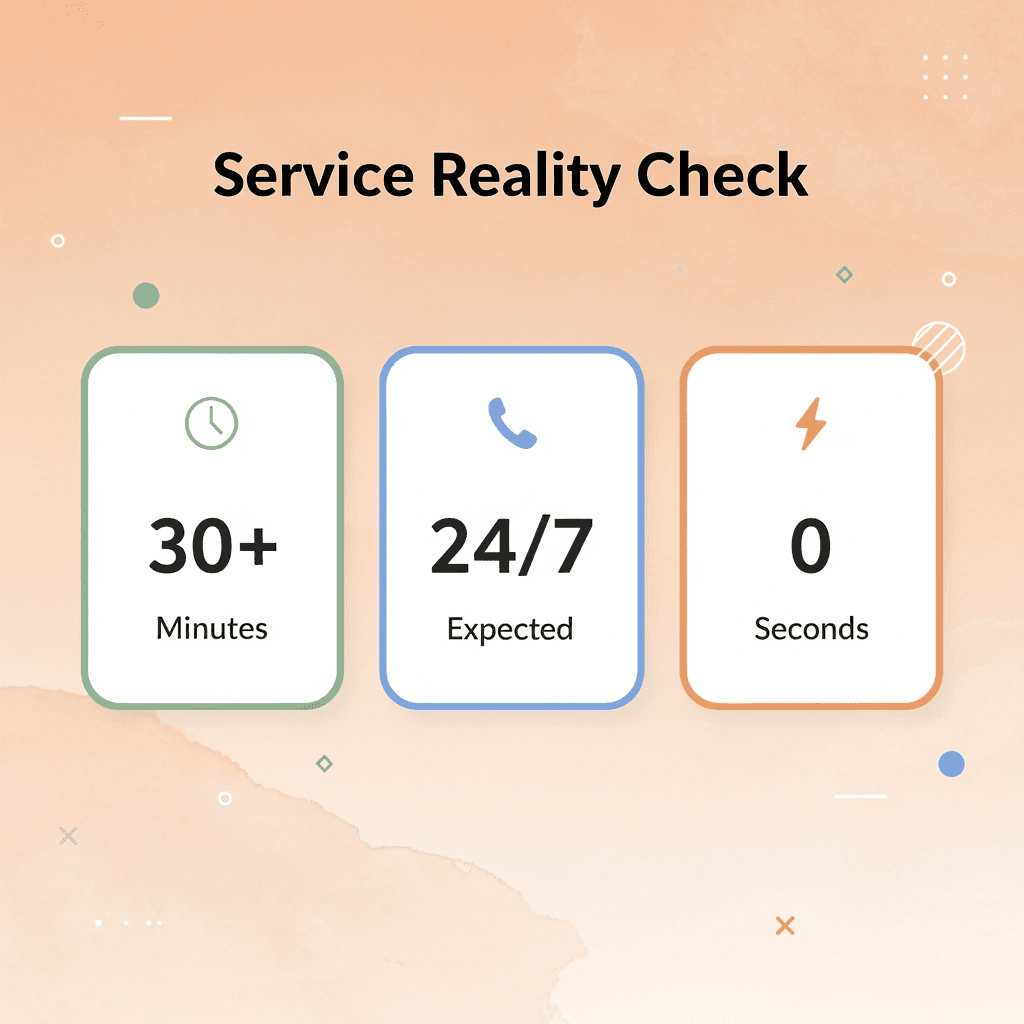
Insurance call centers handle thousands of repeated inquiries daily about policy details, claim status, and payment questions while customers wait 15 to 30 minutes on hold. Agents spend most of their time answering basic questions rather than handling complex cases that require human judgment. This approach worked when inquiries were predictable, and customers accepted wait times, but those conditions no longer exist.
🎯 Key Point: Traditional insurance customer service models are fundamentally misaligned with modern customer expectations for instant responses and 24/7 availability.

"Customers now expect immediate answers to simple questions, but traditional call centers force them to wait 30+ minutes for information that could be delivered instantly." — Industry Analysis, 2024
⚠️ Warning: Insurance companies that continue relying on outdated call center models risk customer churn and decreased satisfaction scores as competitors adopt AI-powered solutions for faster service delivery.
Why does hiring more agents fail to solve the problem?
When hold times lengthen and customer satisfaction scores drop, the instinct is to hire more agents. Insurance companies expand call centers and invest in training programs. But inquiry volume grows faster than staffing plans can accommodate. Each new policy generates ongoing service requests, and claims seasons create spikes that overwhelm capacity. According to Vega IT Global, the insurance industry is projected to reach $362 billion in 2025, driven by customer experience expectations that traditional support infrastructure cannot meet at scale.
What happens when skilled agents handle routine tasks?
The real problem isn't the number of workers. Skilled agents waste hours on repetitive tasks that don't require their expertise. Someone capable of handling complex multi-policy coverage questions or emotionally charged claims disputes spends their day explaining deductibles and confirming payment dates. This creates two failures: customers wait longer for simple answers, and complex cases receive less attention because agents are buried in routine inquiries.
What makes insurance operations more complex than other industries?
Insurance customer service has operational complexity that most industries never encounter. Every conversation requires access to detailed policy documentation, claims history, and compliance requirements. Agents must navigate emotional interactions where customers are stressed, confused, or grieving. A single claim can involve multiple stakeholders, require verification across systems, and demand adherence to strict regulatory standards.
How do multi-step processes create customer service challenges?
Insurance processes involve multiple steps that complicate customer interactions. A customer calling about a claim may need status updates, clarification on coverage limits, and guidance on next steps within one conversation. Traditional support systems require agents to switch between screens, place customers on hold to verify information, and transfer calls when inquiries cross departmental boundaries. One person described fighting for a year to get a basic claim resolved, facing repeated document requests and constantly changing case numbers with no continuity in file handling. This fragmentation erodes trust in both the company and its support model.
What operational damage do consistency failures create?
When customers have different experiences, it creates problems beyond a single interaction. Conflicting information from different agents about the same policy prompts repeated calls for verification. Claims communication that spans weeks without proactive updates drives additional inquiries due to customer anxiety. These systemic failures multiply support costs while eroding customer relationships. The traditional model relies on institutional knowledge distributed across hundreds of agents, but this knowledge fragments as staff turnover increases and inquiry complexity grows.
How can conversational AI maintain consistency across interactions?
Platforms like conversational AI solve this problem by maintaining consistent policy knowledge across conversations, accessing documentation immediately, and delivering accurate answers on first contact or follow-up calls. These systems integrate with existing insurance infrastructure, eliminating transfers and callbacks that frustrate customers while freeing agents to handle cases requiring human judgment and empathy. But even with better tools, the core question remains: what distinguishes AI handling demo calls from systems managing millions of real conversations in regulated environments?
Related Reading
- How to Use AI in Customer Service
- How Does AI Improve Customer Service
- How Can Ai Help Customer Service
- AI in Customer Communications For Telecommunications
- How Is Ai Improving Restaurant Customer Service
- AI in Customer Communications in the Insurance Industry
- Ai Agent Challenge In Customer Support
- Ai Appointment Scheduling Healthcare
- Benefits of AI in Customer Support
- Ai Customer Support Implementation Best Practices
- How Ai Is Changing Customer Service In Telecom
15 Best AI Tools for Insurance Customer Service
The best AI customer service tools for insurance don't replace agents completely. They remove specific operational bottlenecks, such as intake friction, routing delays, knowledge retrieval overhead, and capacity constraints during volume spikes. Each tool targets a precise workflow chokepoint rather than offering generic automation.
1. Bland
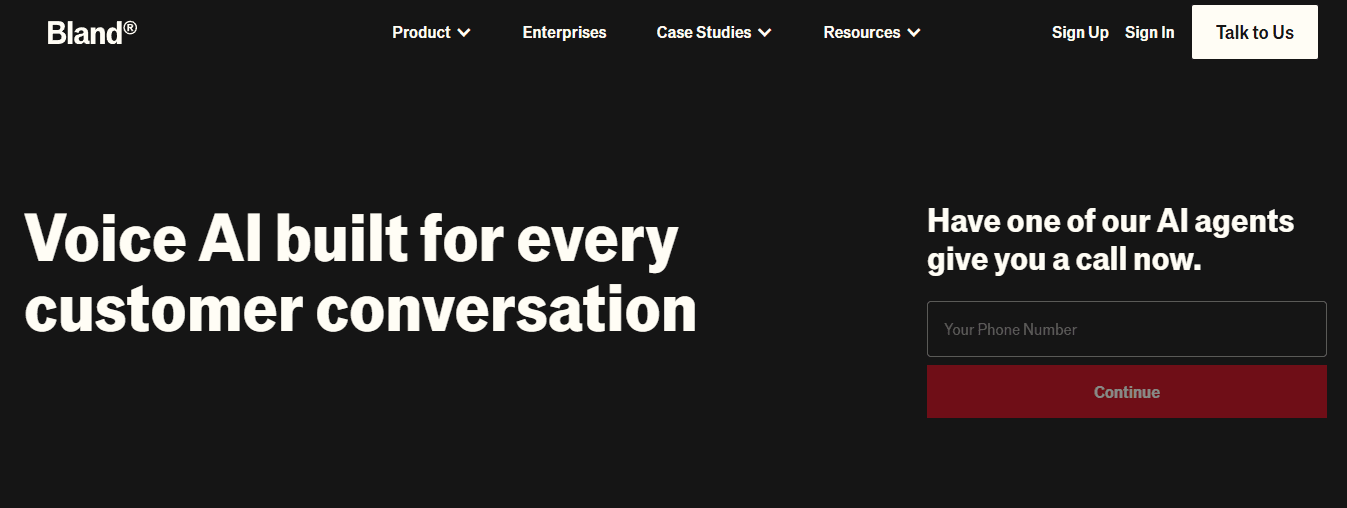
Insurance call centers operate on a decades-old model: a customer calls, waits on hold, reaches an agent, and hopes the agent has the right information. The problem is that routine calls—policy questions, claim status checks, appointment scheduling—consume the same human resources as genuinely complex cases. Bland replaces that model with self-hosted, real-time AI voice agents that handle routine call volume at scale, with sub-400ms response times and HIPAA-compliant infrastructure. Complex or emotionally charged calls route to human agents, freeing them from calls that didn't require them in the first place.
Key Strengths
- Real-time voice AI with human-sounding conversation quality
- Self-hosted architecture that keeps sensitive policyholder data inside your infrastructure
- Scales to call volume spikes without adding staff
- Removes the IVR tree entirely: customers speak naturally and get routed correctly.
Best Fit
Large insurers and carriers with high inbound call volume are seeking to modernize their phone infrastructure without sacrificing data control or compliance.
2. Crescendo.ai
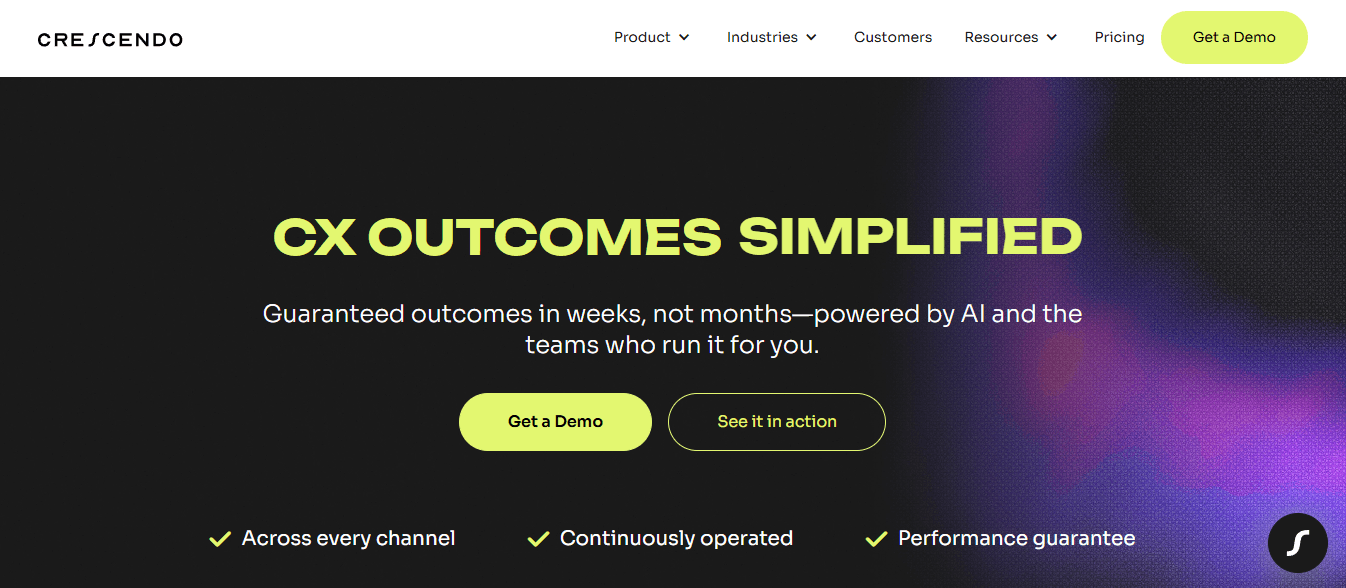
Insurance customer service spans multiple channels: chat, voice, email, and SMS. Policyholders expect consistency across all of them. Traditional systems handle this with separate tools, creating inconsistent experiences and forcing agents to context-switch constantly.
Crescendo.ai deploys AI agents across all four channels simultaneously with a unified backend. Its claims intake capability guides customers through the process, validates the completeness of information, and either resolves straightforward claims automatically or routes complex ones to human handlers with structured data. It also converts customer interactions into Voice of Customer insights, turning feedback into structured data on sentiment, recurring complaints, and process gaps.
Key Strengths
- 24/7 support across chat, voice, email, and SMS in 50+ languages
- Claims intake triage with auto-resolution for straightforward cases
- VoC analytics that convert interactions into operational insights
- Sub-60-day deployment with fully managed CRM and ticketing integrations
Best Fit
Mid-to-large insurers handling high volumes across multiple support channels, particularly those with multilingual policyholder bases.
3. Sonant Voice AI
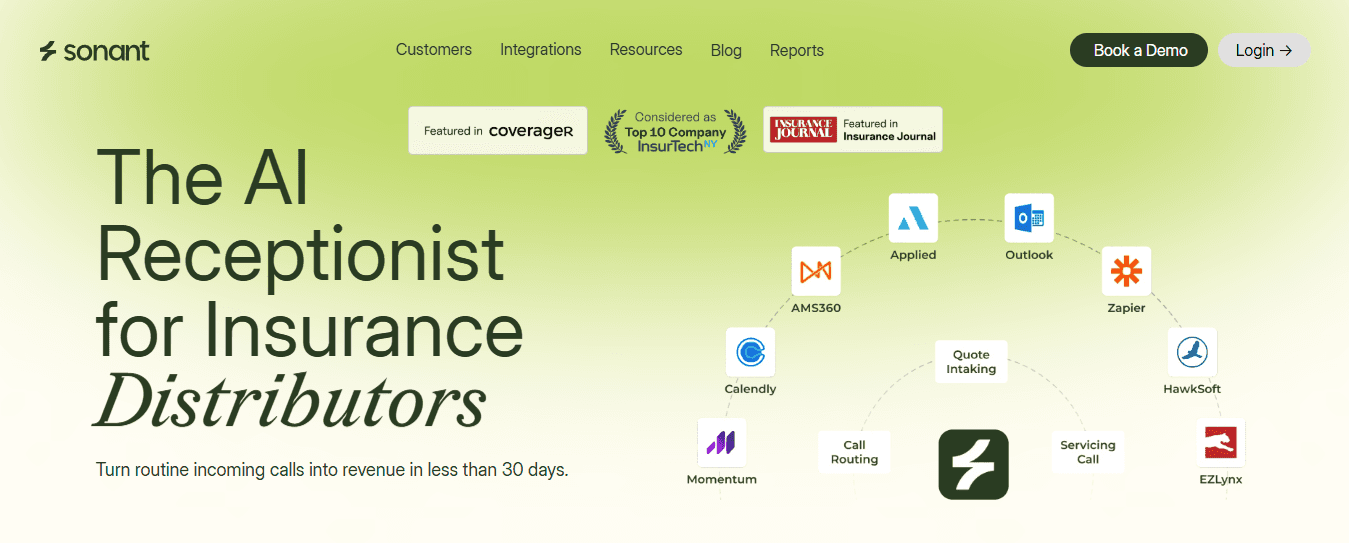
Phone-based insurance interactions have a well-documented failure mode: calls go unanswered, leads don't get qualified, and the receptionist function becomes a bottleneck that quietly costs revenue. Sonant handles inbound and outbound calls, qualifies leads, routes clients to the appropriate department, and schedules routine appointments without human intervention. Data captured during calls flows directly into existing workflows, eliminating manual entry.
Key Strengths
- Natural-sounding voice interactions that maintain brand consistency across every call
- Intelligent routing based on caller intent, not menu selection
- Lead qualification with warm transfer to human agents for high-value prospects
- Native integration with agency management systems
Best Fit
Insurance agencies with high inbound call volume and significant missed opportunity costs, particularly those seeking to optimize receptionist and outbound functions without expanding staff.
4. Kenyt.AI
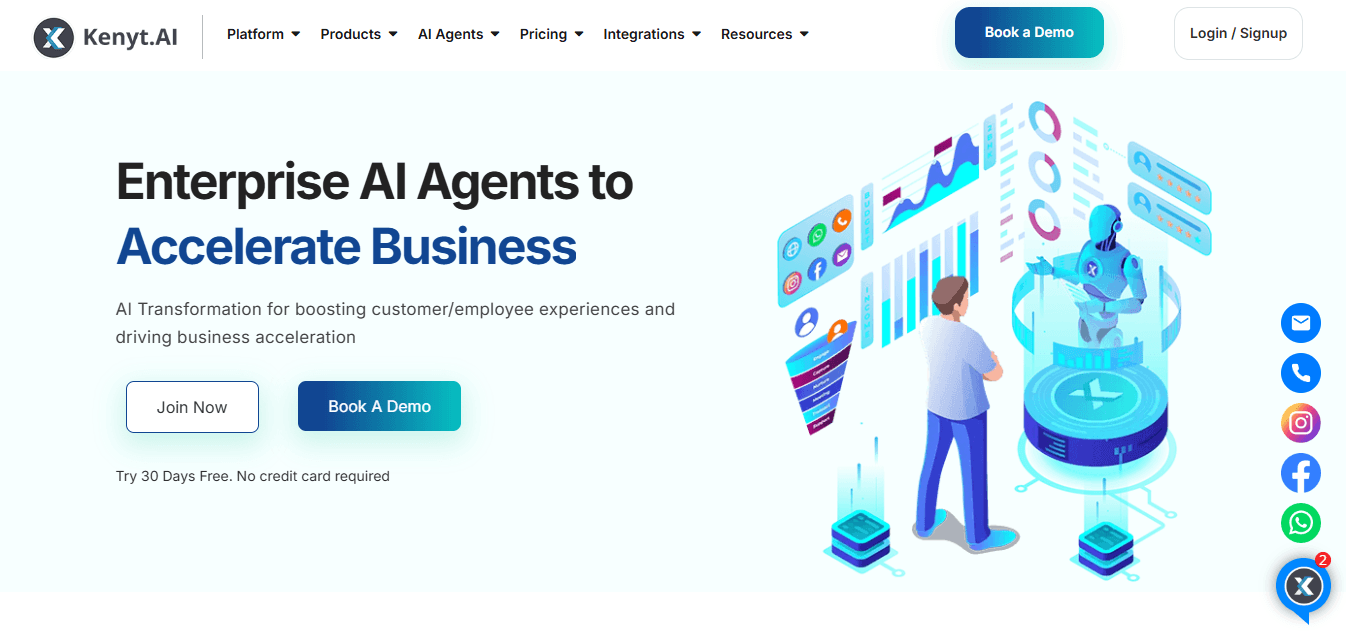
Routine policyholder inquiries—coverage questions, policy explanations, renewal reminders—consume significant agent time in most insurance agencies. These low-complexity, high-volume interactions cause skilled agents to waste time on questions that don't require their expertise.
Kenyt.AI removes that bottleneck through intelligent chatbots trained on insurance-specific queries, automated lead qualification, and claims processing automation. Its analytics layer provides structured data on customer inquiries, interaction outcomes, and process breakdowns.
Key Strengths
- High-accuracy chatbots trained specifically for insurance policy inquiries
- Automated lead qualification that filters and prioritizes prospects before agent involvement
- Claims processing automation that reduces manual handling and response times
- Actionable analytics on customer interaction patterns
Best Fit
Agencies are seeking to reduce agent workload on routine inquiries, improve response times, and gather data on customer behavior.
5. IBM watsonx Assistant
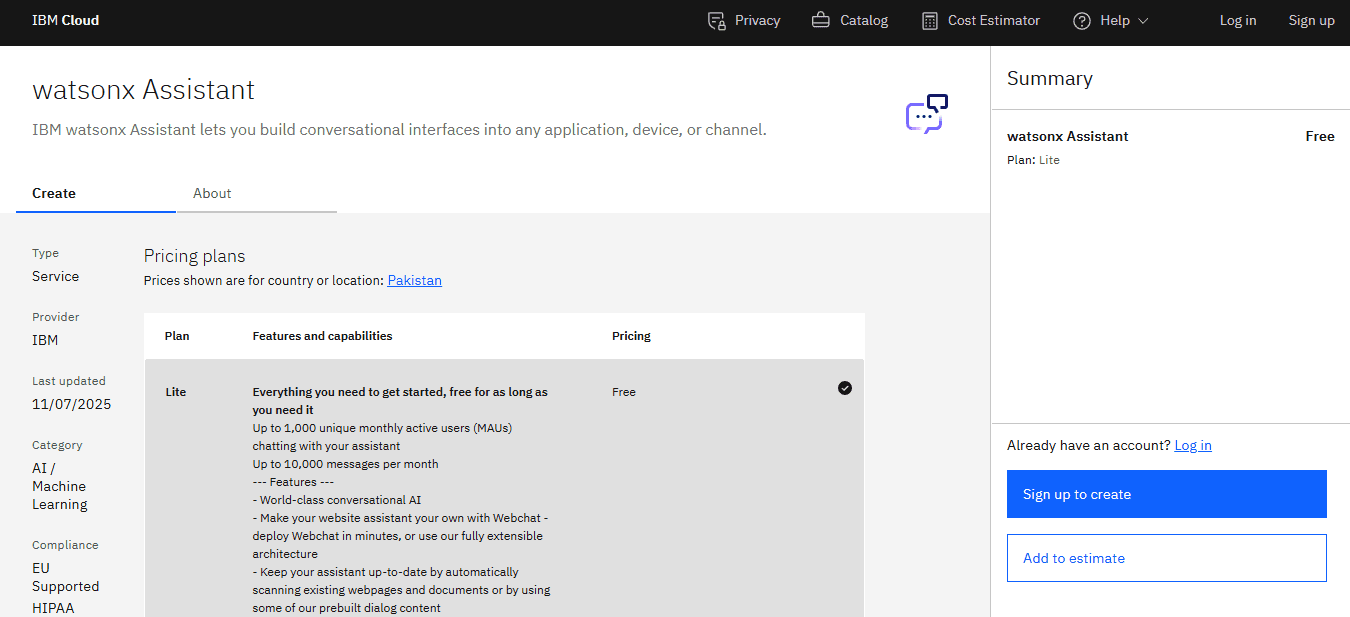
Enterprise insurers struggle with complex queries at scale. A carrier managing millions of policyholders across product lines, geographies, and channels needs a system that accurately interprets nuanced, industry-specific language, integrates with legacy systems, and delivers consistent experiences across mobile, web, and phone. Off-the-shelf chatbots built for generic customer service fall short.
IBM watsonx Assistant is built for that environment. Its natural language understanding, trained on insurance-specific terminology, reduces misinterpretation errors on technical policy language. The integration layer connects to existing insurance systems without requiring infrastructure rebuilds. Allianz Taiwan Life Insurance deployed it to handle 80% of frequent customer requests automatically.
Key Strengths
- Insurance-specific NLU that correctly interprets industry terminology
- Pre-built insurance templates that reduce deployment time
- Robust integration with legacy insurance systems
- Omnichannel delivery across web, mobile, and voice with consistent output
Best Fit
Mid-to-large insurance carriers with complex needs, legacy infrastructure, and IT resources for enterprise-grade deployment.
6. CloudTalk
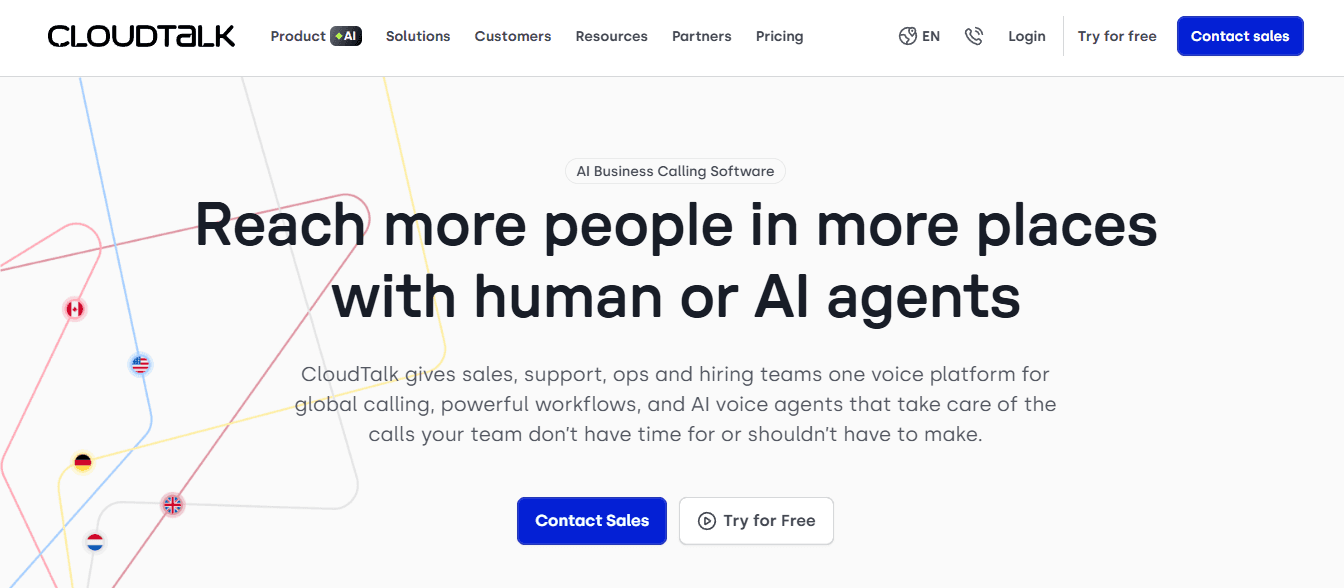
Outbound insurance sales are driven by call volume. Agents encounter voicemails, wrong numbers, and gatekeepers: productive conversations represent a fraction of total dials. Manual dialing, unstructured call notes, lack of real-time visibility, and call-quality issues lead to operational inefficiency.
CloudTalk automates dial sequences, skipping unproductive numbers and maximizing agent conversation time. Conversation intelligence captures and analyzes call content, reducing documentation burden. Real-time analytics provide managers with visibility into performance without waiting for end-of-day reporting.
Key Strengths
- Crystal-clear call quality across 160+ countries
- Power and Smart Dialer that maximizes productive call time
- Conversation Intelligence AI for automated call analysis and documentation
- Strong CRM and helpdesk integrations
- Accessible pricing starting at $19 per user/month
Best Fit
Insurance agents and SMB agencies focused on sales productivity and client outreach, particularly those with cross-border or international policyholder bases.
7. AlphaChat
Claims filing is friction-heavy for customers. It requires structured information gathering when customers are stressed and unfamiliar with the process, leading to errors that delay resolution. Traditional systems rely on human agents reading scripts: a slow, inconsistent, and expensive approach to scale.
AlphaChat automates intake through a no-code AI chatbot platform that handles claims filing, tracking, and multilingual support. Its self-learning capability improves accuracy over time, while secure authentication protects policyholder data during automated interactions.
Key Strengths
- No-code setup that doesn't require dedicated technical resources to deploy
- Claims filing and real-time tracking automation
- Secure policyholder authentication built into conversation flows
- Multilingual support for global insurance operations
- Self-learning NLU that improves accuracy with use
Best Fit
Mid-to-large insurance companies seeking to automate claims intake and customer service without lengthy technical implementation.
8. LivePerson

High-volume insurance customer service creates a constraint: agents handle one call at a time, while customers across SMS, WhatsApp, web, and voice ask questions simultaneously. This results in queuing, delays, and degraded customer experience. Scaling human capacity to match peak demand is expensive and inefficient.
LivePerson enables AI-powered messaging and voice bots to handle simultaneous inquiries across all channels, with human agents brought in only for complex cases. Sentiment analysis provides real-time visibility into customers' emotional state, enabling intelligent routing to escalate distressed or high-value interactions. Agents arrive with a fully structured interaction context.
Key Strengths
- Simultaneous multi-inquiry handling across SMS, WhatsApp, web, and voice
- Real-time sentiment analysis for intelligent escalation routing
- Seamless integration with existing insurance platforms
- Automated appointment scheduling across channels
Best Fit
Large insurance agencies with high customer interaction volume across multiple digital channels, particularly those where real-time sentiment routing reduces churn risk.
9. Zendesk Answer Bot
Insurance support teams using ticket-based systems face a compounding problem: routine questions (policy inquiries, billing questions, coverage clarifications) sit in the same queue as complex cases, slowing resolution times across the board.
Zendesk Answer Bot removes routine ticket volume by intercepting common queries before they reach an agent and resolving them through knowledge base integration, escalating only when the inquiry falls outside automated resolution capability. Its Flow Builder enables custom conversation paths for insurance-specific workflows without requiring engineering resources. Smart ticket routing ensures cases requiring human handling arrive at the right agent with context already attached.
Key Strengths
- Automated resolution of routine policy inquiries directly from the knowledge base
- Flow Builder for custom insurance-specific conversation paths
- Smart ticket routing with priority and category detection
- Real-time analytics dashboard for support performance visibility
- Integrates with existing support infrastructure
Best Fit
Insurance agencies using ticket-based customer service systems that want to reduce response times and agent workload for routine inquiries.
10. Botsify
Small and mid-sized insurance agencies handle the same range of customer inquiries as large carriers: lead qualification, policy questions, claims initiation, and renewals. Yet they lack the infrastructure to automate them. Botsify makes automation accessible at that scale. Pre-built insurance templates reduce setup time, multichannel support covers web, WhatsApp, and SMS, and the human handover function ensures complex queries don't dead-end in a bot loop. Lead qualification automation filters and prioritizes prospects before agents are involved.
Key Strengths
- Pre-built insurance chatbot templates for faster deployment
- Automated lead qualification with structured handover to human agents
- Multichannel support across web, WhatsApp, and SMS
- Policy management software integration
- Accessible pricing starting at $49/month
Best Fit
Small to mid-sized insurance agencies needing to automate routine interactions and lead qualification without an enterprise-level investment.
11. Cognigy

Identity verification and document collection are operational choke points in insurance claims workflows. Manual ID&V processes require agent time, introduce inconsistency, and create compliance exposure. Cognigy addresses this with pre-trained, insurance-specific AI agents built for ID&V, document collection, and claims processing—workflows that generic conversational AI platforms require extensive customization to handle. Its Gartner Leader recognition reflects deployment maturity at enterprise scale. The trade-off is cost: enterprise pricing starting above $300,000 annually puts it out of reach for most mid-market insurers.
Key Strengths
- Pre-trained insurance-specific agents for ID&V and document collection
- Enterprise-scale tested across high daily interaction volumes
- Gartner Leader recognition for conversational AI
- Reduces compliance exposure in structured verification workflows
Best Fit
Large insurance enterprises with dedicated AI teams, substantial implementation budgets, and complex claims workflows that generic platforms cannot address.
12. Yellow.ai
Phone-based insurance support in high-volume, multilingual environments is expensive and difficult to staff consistently. Yellow.ai's multilingual voice bot addresses this directly. Its deployment with a major insurer achieved 85% containment, meaning 85% of voice interactions were resolved without human escalation, with measurable reductions in per-call cost and response time. Its VoiceX platform handles the natural-language complexity of real insurance conversations across languages and accents, which many voice AI systems struggle with.
Key Strengths
- Multilingual voice AI with strong performance in emerging market deployments
- 85% containment rate was demonstrated in live insurance environments
- Automated phone-based claims and policy inquiry handling
- Strong presence in markets where voice remains the dominant support channel
Best Fit
Insurers with high voice support volume in multilingual or emerging market environments, where automating phone interactions offers the largest operational cost opportunity.
13. Forethought AI
Insurance support teams using human agents for every interaction face a straightforward math problem: agent capacity is finite, ticket volume is not, and resolution costs scale linearly with volume. The sustainable response is to deflect tickets that don't require human judgment before they reach the queue.
Forethought is built for ticket deflection. Its multi-agent system automatically handles plan comparison, coverage review, benefits management, and claims submission, with reported deflection rates of 60–80%. For escalated tickets, Dynamic Autoflows adapt in real time to provide contextual support that reduces time-to-resolution by up to 30%.
Key Strengths
- 60–80% ticket deflection rates reported across insurance deployments
- Dynamic Autoflows that adapt in real time based on interaction context
- Up to 30% improvement in time-to-resolution for escalated tickets
- Omnichannel coverage with human oversight is preserved on complex cases
Best Fit
Insurance companies seek to reduce support costs through deflection while maintaining human oversight on sensitive or complex cases.
14. Salesforce Einstein
Insurers running operations on Salesforce face a specific inefficiency: AI capabilities and CRM data live in separate systems, forcing agents to context-switch and manually transfer data. Salesforce Einstein eliminates this overhead by embedding AI natively into Service Cloud. Claims management automation, interaction summaries, and NLP-driven workflows operate directly within the environment agents already use. However, advanced AI features require expensive tier upgrades.
Key Strengths
- Native AI integration within Service Cloud — no additional vendor or platform
- Claims management automation within the existing Salesforce workflow
- Automated interaction summaries that reduce post-call documentation
- Familiar interface that requires no retraining for existing Salesforce users
Best Fit
Insurance enterprises already invested in Salesforce CRM that want native AI capabilities without introducing additional vendors or data pipelines.
15. Sprinklr
Large insurers operate across multiple customer touchpoints—chat, voice, email, social media—each captured by separate tools, creating fragmented customer profiles and inconsistent routing. Sprinklr removes this fragmentation with a unified CXM platform covering all channels from a single backend. Its AI-powered routing detects urgency and churn signals in real time, escalating high-risk interactions before customer disengagement. A digital insurance agency in the Middle East deployed Sprinklr to achieve 360-degree customer insights while reducing support costs. The trade-off is complexity: pricing is layered, and value scales with the number of channels consolidated.
Key Strengths
- Unified omnichannel coverage across chat, voice, email, and social media
- Intelligent sentiment-based routing with urgency and churn signal detection
- Strong social media integration for insurers active on digital channels
- Consolidated customer profile across all touchpoints
Best Fit
Mid-to-large insurers need a single platform to manage customer experience across all digital channels, particularly those where social media serves as a significant customer service touchpoint.
Related Reading
- How To Improve Call Center Customer Service
- How to Use AI for Customer Service Call Center
- Best Ai Tools For Customer Support In Healthcare
- Ai Customer Support Automation In Telecom
- Best Ai Customer Support Tools For It Teams
- It Helpdesk Automation
- Patient Support Services Automation
- Best Ai Customer Service For Hotels
- How To Use Ai To Improve Customer Service Kpis
How to Choose the Right AI Customer Service Tool for an Insurance Business
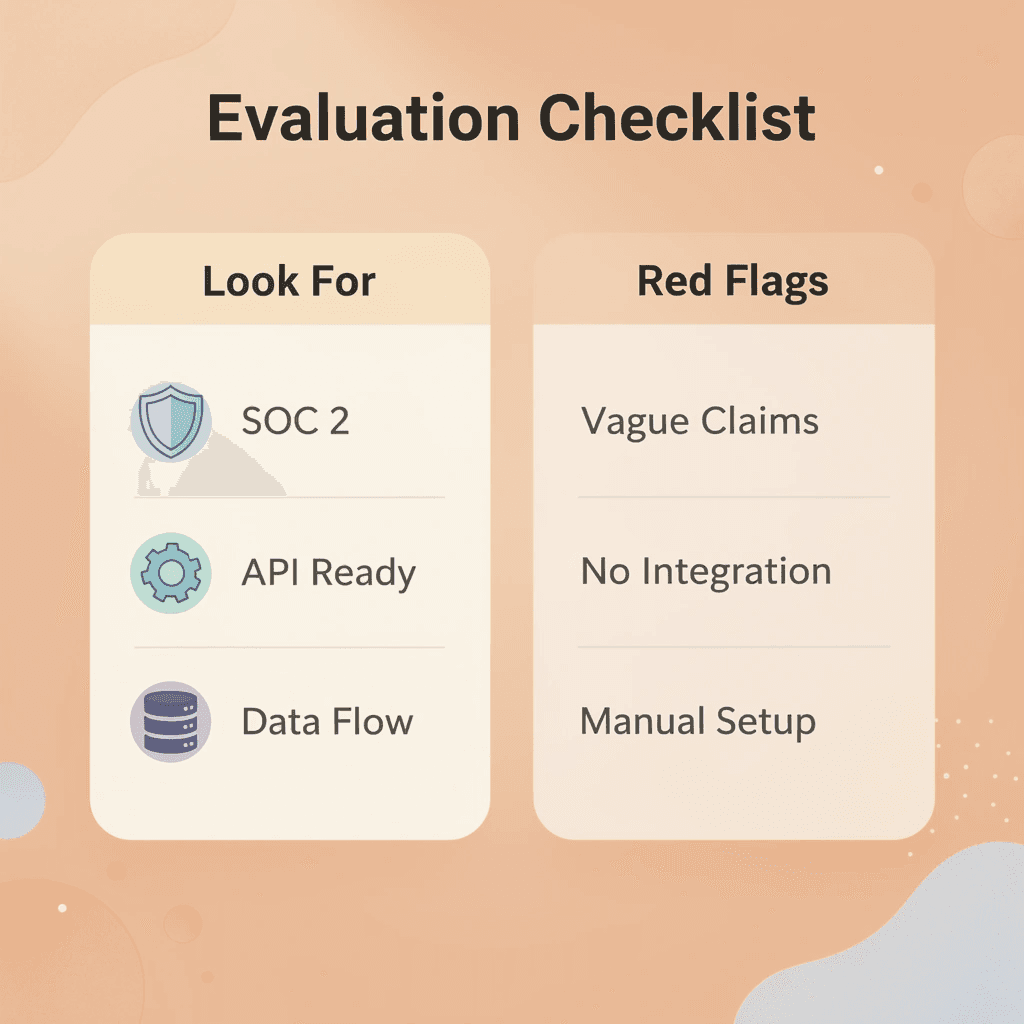
The right AI tool for insurance solves your most expensive operational problem while meeting compliance requirements and integrating with your existing workflow. Start with the bottleneck, not the technology.

🎯 Key Point: The best AI tool addresses your biggest pain point first—whether that's claim processing delays, customer wait times, or compliance documentation. Don't get distracted by flashy features that don't solve your core problems.
"Insurance companies that prioritize operational bottlenecks over technology features see 3x higher ROI from AI implementations." — McKinsey Insurance Technology Report, 2024
⚠️ Warning: Avoid the shiny object syndrome. Many insurance companies choose AI tools based on impressive demos rather than actual business needs, leading to poor adoption and wasted investment.

How do you identify the right operational bottleneck to address?
Most insurance companies evaluate AI tools by comparing feature lists, but they miss the critical question: what specific process is breaking under volume? Prior authorization delays require different solutions than claims status inquiries and overwhelming phone lines. A voice AI platform handles real-time conversations to address capacity constraints during peak periods.
A knowledge retrieval system addresses agent inefficiency when policy details vary across hundreds of products. Automating routine inquiries won't fix routing delays, nor will speeding up claims processing reduce call wait times.
What results can you expect when tools match operational problems?
According to CloudTalk's analysis, insurance companies using AI see a 25% reduction in operational costs, with the largest gains occurring in workflows where automation replaces manual effort. When a regional carrier found that 60% of inbound calls asked three questions (claim status, payment due dates, coverage verification), they deployed a voice agent for those inquiries. Call volume to human agents dropped 40% within 90 days. The tool worked because it matched the problem geometry.
Why do compliance requirements eliminate most AI tools?
Insurance operates under regulatory constraints that immediately eliminate most consumer-grade AI tools. HIPAA compliance for health insurance interactions, state-specific insurance regulations, and audit trail requirements are infrastructure decisions, not optional features. A system that cannot log every interaction with tamper-proof records creates legal exposure exceeding any efficiency gain. Data residency matters when policies prohibit customer information from crossing state or national borders. Sub-second latency separates production-ready tools from demos that fail under real call volume.
How does enterprise infrastructure differ from standard platforms?
Enterprise-grade infrastructure differs from standard AI platforms in key ways. Dedicated instances isolate one client's data from another's. Owning the full technology stack (hardware, models, servers) enables faster response times and control over security updates. CloudTalk reports that AI can reduce claims processing time by up to 80%, but only when the system integrates with claims platforms, CRM tools, and policy databases without creating data silos. A voice AI tool requiring manual data entry after each call hasn't automated the workflow.
Why should AI complement rather than replace human agents?
The biggest mistake when using AI in insurance is thinking it can replace workers. Hard cases involving coverage disputes, fraud detection, or upset customers require human decision-making. The best AI tools understand their limitations and route these cases to human workers with complete information: prior interactions, policy details, and AI recommendations.
How do effective handoff protocols preserve customer relationships?
Platforms like conversational AI handle large volumes of routine questions while maintaining smooth handoffs for complex cases. Our system provides receiving agents with conversation transcripts, identified customer intent, and relevant policy information, compressing what previously took five minutes of context-gathering into immediate action.
This hybrid model lets AI handle volume while humans handle value, preserving the relationship quality that determines retention in an industry where switching costs are low, and trust is everything.
Why does system integration matter more than features?
The most technically impressive AI tool fails if it can't connect to your existing systems. Insurance customer service depends on real-time access to policy management platforms, claims systems, billing databases, and CRM records. A voice agent that requires switching between screens or manually looking up information after the call hasn't reduced agent workload; it's added steps.
Omnichannel support matters because customers start conversations via email, continue them through chat, and escalate to phone calls. If each channel operates independently without shared context, you've automated the silos instead of eliminating them.
How long does a real deployment actually take?
How hard it is to set up the system depends on how much you want to customize it. Large insurance companies with hundreds of different products need systems that handle complicated policy language and state-specific rules. Smaller insurance companies need faster implementation with standard workflows.
The difference between a demo and using the system in your business is often six months: connecting everything together, moving data, and training agents. Tools that promise readiness in 30 days typically mean 30 days to basic features, not a complete replacement of your current system. The real question to ask isn't "what can this tool do?" but "how long until this tool works in our business?" Knowing which tool fits your workflow is only half the equation. The other half is understanding which calls currently consume your team's time.
Stop Letting Repetitive Insurance Calls Overwhelm Your Support Team
The capacity problem in insurance support isn't about hiring more agents. Most calls don't require human judgment: policy lookups, claims status updates, payment confirmations, and appointment scheduling consume hours of trained-agent time without leveraging their expertise. When your team spends 60% of their day answering questions that a system could handle, you waste resources and create longer wait times for customers who need help.
🚨 Warning: Your trained agents spend the majority of their time on tasks that don't require their specialized skills.
Conversational AI handles this repetitive volume instantly. Conversational AI answers calls in real time, guides customers through claims intake or coverage verification, and routes complex cases to human agents only when judgment or empathy becomes necessary. Our platform reserves human capacity for conversations that matter: faster resolution for routine requests and more attention for sensitive cases where trust determines outcomes.
💡 Tip: AI voice agents can handle up to 80% of routine insurance inquiries, freeing your human agents for high-value interactions.

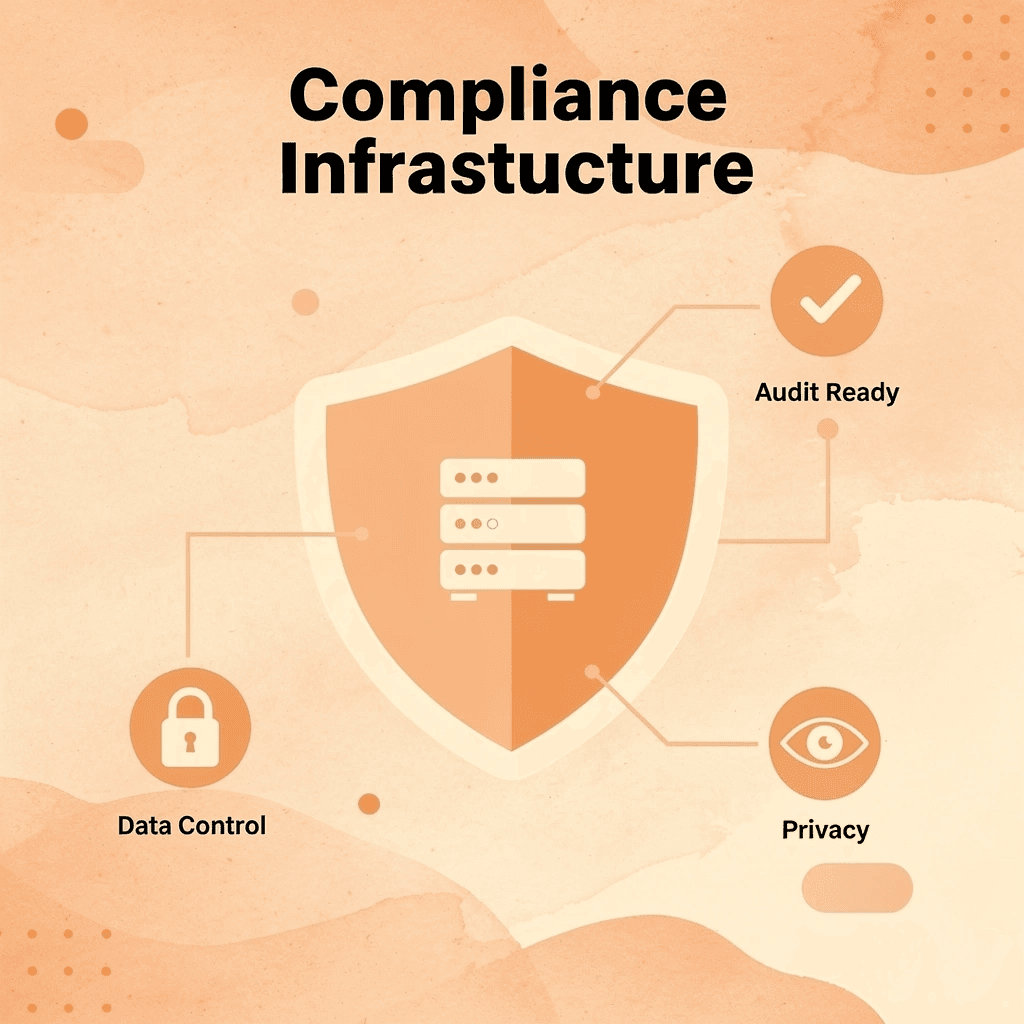
For regulated industries like insurance, this requires infrastructure built for compliance. Self-hosted deployment options and enterprise-grade data controls keep customer information within your environment, meeting audit and privacy requirements that eliminate the need for most generic AI tools. Less than 400ms latency delivers natural conversation flow without the awkward pauses that signal customers are talking to a machine.
"When your team spends 60% of their day answering questions a system could handle, you're wasting resources and creating longer wait times for customers who actually need help."
🔑 Takeaway: Compliance-ready AI infrastructure lets you automate support while meeting strict insurance industry regulations.
If rising call volume is stretching your team thin or customers wait long for simple answers, book a demo to see how AI voice agents would handle those interactions and explore how automation can scale your support operation while preserving human oversight for complex or sensitive conversations.
Related Reading
- Lindy Ai Vs Zapier
- Best Ai Voice Agents For Insurance
- Relevance Ai Alternative
- Botpress Alternative
- Lindy Ai Alternative
- How Is Ai Helping In The Healthcare Industry
- Best Ai For Insurance Agents