Compare text to speech APIs (2026): Bland Speech, ElevenLabs, Cartesia, OpenAI, and more

Bland, 20 min read
Bland Speech is Bland's text to speech API, and it was built for phone calls. In Design Arena's blind listening test of 4 August 2026, Bland Speech v3 ranked first of 13 AI voices. It streams over HTTP or a WebSocket, starts speaking in about 199ms, returns the mu-law audio a phone line carries, and costs $0.04 per 1,000 characters. Its closest rivals are ElevenLabs, Cartesia, Microsoft Azure, Google, OpenAI, Deepgram, and Amazon Polly, and OpenAI retires its text to speech models on 6 January 2027.
What a text to speech API does
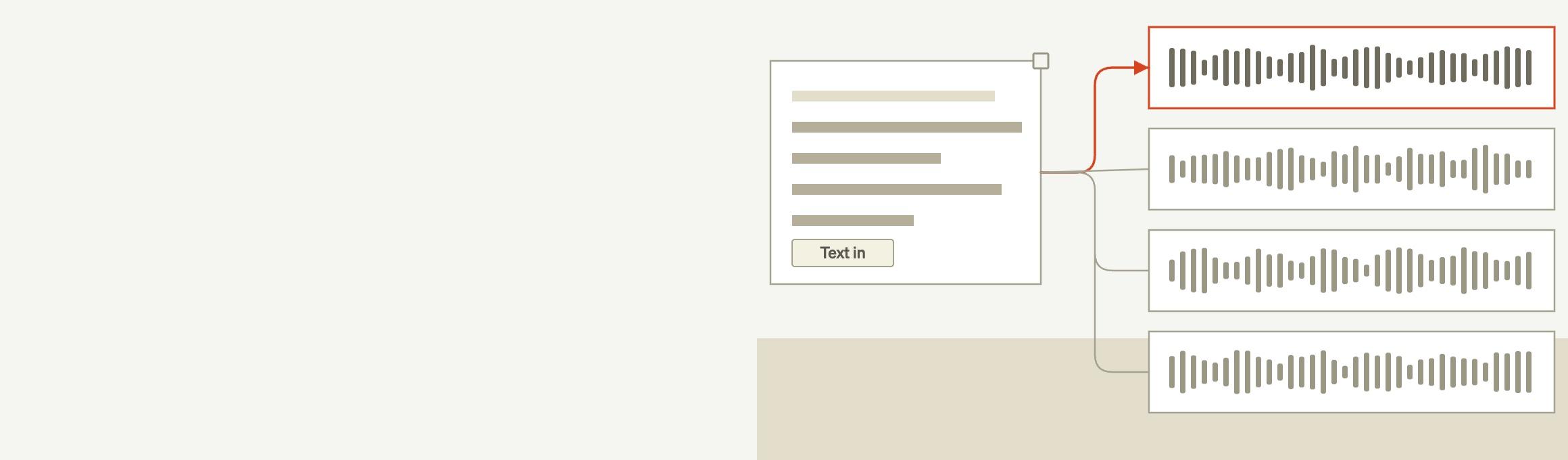
A text to speech API takes words and gives back a voice reading them. A team with the whole script sends it over HTTP and gets a file back. A voice agent can't wait for the whole script, so it streams text into a WebSocket as its language model writes, and the voice starts talking before the sentence is finished.
Most of the APIs on this page sound good in a demo. They split on what happens after it: whether a stranger on the phone can tell the voice is synthetic, how long the caller sits in silence before the first word, and what a million characters cost once a team is in production. Phone audio is the one people forget. US phone networks carry mu-law at 8 kHz, and an API that can't produce it leaves a team converting every clip on the way out.
Bland Speech came out of Bland's phone agents. Bland builds and runs its own speech, language, and transcription models for enterprise calls, and on a call a voice that sounds too polished reads as fake, so this one keeps the breaths, the pauses, and the small stumbles people actually make.
How Bland Speech sounds
These are Bland Speech v3 voices introducing themselves, exactly as the model rendered them. Karen, River, and the others are curated voices. David is an instant clone, made from a short sample of one person talking.
- KarenCurated · V3
- RiverCurated · V3
- DavidInstant clone
- ValentineCurated · V3
- MorganCurated · V3
- TatumCurated · V3
- MackaylaCurated · V3
Which voice sounds most like a person
Design Arena's Audio Realism Bench is a blind test. Listeners hear the same line read by two models, don't know which is which, and pick the one that sounds more like a real person. In the results Design Arena published on 4 August 2026, Bland Speech v3 came first of 13 AI voices with 1365. Recordings of actual people scored 1500, and that gap is what every model here is still chasing.
- #1BlandBland Speech v31365
- 2ndMicrosoftMAI-Voice-21224
- 3rdxAIGrok TTS1156
- 4thOpenAIGPT Realtime 21119
- 5thGoogleGemini 2.5 Pro TTS1109
- 6thCartesiaSonic 3.51096
- 7thMiniMaxSpeech-02 HD1093
- 11thSmallest AILightning v3.1 ProNear the bottom952
- 12thElevenLabsEleven v3Near the bottom938
- 13thInworldTTS-1.5 MaxNear the bottom763
Ranks are among 13 AI voices, and each rival shows the highest listed voice available on it. Real human recordings scored 1500, at the right edge of this scale. Bars start at 600, not zero. Source: Design Arena's published results.
Deepgram and Amazon Polly weren't in the test. Some rivals have also shipped new models since, Cartesia's Sonic 3.6 and ElevenLabs' Eleven v4 among them, and those haven't been scored yet.
What a month of speech costs
A million characters is roughly 20 hours of speech. At that volume Google's Chirp 3: HD costs nothing, because the first million each month are free, and Azure's Neural voices come to $15. Bland Speech is $40, the same as ElevenLabs' Eleven v4 Turbo, with Cartesia's plans close by.
Bland Speech isn't the cheapest voice here. The cheapest ones were built for announcements and alerts, where nobody minds a voice that sounds read out. On a call where someone has to trust what they're hearing, the gap between those voices and a human-sounding one is what a team is paying for.
| Vendor and model | A month |
|---|---|
| GoogleChirp 3: HD. First million characters free each month | $0 |
| Microsoft AzureNeural. MAI-Voice has no published price | $15 |
| Grok TTSGrok Text to Speech. SpaceXSI (formerly xAI), pay as you go with no plan | $15 |
| InworldRealtime TTS-2 Flash. Realtime TTS-2 costs $25 per million | $15 |
| Smallest AILightning v3.1 Pro. About $0.195 per 10,000 characters | $20 |
| Amazon PollyGenerative. Neural costs $16 and Standard $4 per million | $30 |
| OpenAItts-1-hd. Shuts down 6 January 2027 | $30 |
| Bland SpeechBland Speech v3. 50,000 characters free once, no plan | $40 |
| ElevenLabsEleven v4 Turbo. Eleven v4 and v3 cost $80 per million | $40 |
| DeepgramFlux TTS. Aura-2 costs $30 per million | $45 |
| CartesiaSonic 3.6, Startup plan. Monthly plan, with overage past the allowance | $49 |
| MiniMaxSpeech 2.8 Turbo. Speech 2.8 HD costs $100 per million | $60 |
Twelve APIs, side by side
Each price is the company's own published rate, read on 17 and 18 November 2026. First-audio times are each company's own claim, timed its own way, so they say more about what a vendor promises than about what a caller will hear.
| API | Realism rank | Per million characters | First audio | Phone-ready | WebSocket | Free usage | Cloning |
|---|---|---|---|---|---|---|---|
| Bland SpeechBland Speech v3 | #11,365, Bland Speech v3 | $40 | 199ms | Yes | Yes | 50,000 characters, once | Instant, and professional after a one-time $5 top-up |
One flat rate in the studio or the API, with no monthly plan. POST /v2/audio/speech implements the OpenAI audio speech contract, and output comes as PCM from 8 to 48 kHz or mu-law. Try Bland Speech | |||||||
| ElevenLabsEleven v4 Turbo | #12938, Eleven v3 | $40 to $80 | About 100ms median | Yes | Yes | 10,000 v4 characters a month | Instant from Starter, professional from Creator |
Eleven v4, v3, and Multilingual v2 cost $80 per million characters, and v4 Turbo and Flash $40. Eleven v4 launched on 28 September 2026 and speaks 90+ languages. The standard text to speech WebSocket doesn’t accept Eleven v3 or v4. | |||||||
| CartesiaSonic 3.6 | #61,096, Sonic 3.5 | $37.38 to $50 in a plan | Under 90ms | Yes | Yes | 20,000 credits a month, personal use | Instant from Pro, professional from Startup |
Credits at 1 per character from monthly plans: Pro $5, Startup $49, and Scale $299, with overages from $38 to $65 per million. Sonic 3.6 speaks 44 languages and came out on 27 August 2026, after the realism results. Bland Speech vs Cartesia (2026): Which text to speech API suits a voice agent? | |||||||
| Microsoft AzureNeural and Neural HD Flash | #21,224, MAI-Voice-2 | $15 | Under 300ms | Yes | Yes | 0.5 million characters a month | Limited access |
Standard voices cover 100+ languages and locales. Azure now offers Microsoft’s MAI-Voice-2.1 in public preview without an SLA, and its pricing page shows no price for MAI-Voice. | |||||||
| GoogleChirp 3: HD | #51,109, Gemini 2.5 Pro TTS | $30 | Not published | Yes | Through client libraries | 1 million characters a month | Closed to new requests on Chirp 3 |
WaveNet and Standard voices cost $4 per million characters, Neural2 $16, and Gemini-TTS is billed per token. Chirp 3: HD voices weren’t in the realism results. | |||||||
| OpenAItts-1 and tts-1-hd | #41,119, GPT Realtime 2 | $15 and $30 | Not published | No | Realtime API only | None | Eligible customers only |
OpenAI has deprecated tts-1, tts-1-hd, and gpt-4o-mini-tts, which shut down on 6 January 2027. Its speech endpoint returns MP3, Opus, AAC, FLAC, WAV, or 24 kHz PCM, with no mu-law. | |||||||
| DeepgramFlux TTS and Aura-2 | Not ranked | $45 and $30 | As low as 80ms | Yes | Yes | $200 of credit | Through sales |
Flux TTS is Deepgram’s current model, on a WebSocket at /v2/speak. Deepgram offers self-hosted and private cloud deployment, and BAAs for Enterprise customers. | |||||||
| Amazon PollyGenerative, Neural, and Standard | Not ranked | $30, $16, and $4 | Not published | Yes | HTTP/2 stream on Generative | First 12 months | Through AWS, as Brand Voice |
Long-Form voices cost $100 per million characters. Polly is a HIPAA Eligible Service under the AWS BAA. | |||||||
| Grok TTSGrok Text to Speech | #31,156, Grok TTS | $15 | Not published | Yes | Yes | Not published | Instant from a clip, API access on Enterprise |
SpaceXSI (formerly xAI) charges $15 per million characters for Grok TTS on pay as you go, with no plan, and the API speaks 20 languages. Audio comes back as mu-law or A-law at 8 kHz. Cloning from a reference clip of up to 120 seconds is open in the console, and the cloning API is gated to Enterprise. | |||||||
| MiniMaxSpeech 2.8 HD and Turbo | #71,093, Speech-02 HD | $100 and $60 | Not published | Yes | Yes | Not published | Instant from 10 seconds, $1.50 a voice |
Speech 2.8 HD costs $100 per million characters and Speech 2.8 Turbo $60, with monthly audio packages from $5 to $999. Speech 2.8 launched on 23 January 2026 and speaks 40 languages. Design Arena scored Speech-02 HD, an earlier MiniMax model. | |||||||
| Smallest AILightning v3.1 Pro | #11952, Lightning v3.1 Pro | $19.50 | Under 100ms | Yes | Yes | $10 in credits | Instant from 5 to 15 seconds, professional on Enterprise |
Lightning v3.1 Pro costs about $0.195 per 10,000 characters. Smallest AI says it starts in under 100ms, and its own docs benchmark about 200ms at 40 concurrent requests. Lightning v3.1 retires on 30 November 2026, and on-premise deployment sits on Enterprise. | |||||||
| InworldRealtime TTS-2 and TTS-2 Flash | #13763, TTS-1.5 Max | $25 and $15 | As low as 20ms | Yes | Yes | Up to 70 minutes on the $0 plan | Instant from 3 seconds, professional in beta |
Realtime TTS-2 costs $25 per million characters and TTS-2 Flash $15 on pay as you go, and monthly plans from $25 to $1,500 lower both rates. Inworld puts TTS-2 Flash at 20ms and TTS-2 at 100ms to first audio, P90 and measured server-side, and cites 50ms on Coval. Design Arena scored TTS-1.5 Max, an earlier model, and neither current one. | |||||||
Which API fits the job
Phone calls and voice agents
Bland Speech
Bland Speech fits calls where the person on the line should hear a person. It ranked first on Audio Realism Bench on 4 August 2026, returns mu-law for phone lines, and is the voice on Bland’s own enterprise phone agents.
- Bland Speech
- Per million characters
- $40
- First audio
- 199ms
- Realism rank
- #1
Moving off OpenAI
Bland Speech
OpenAI’s tts-1, tts-1-hd, and gpt-4o-mini-tts shut down on 6 January 2027, and their replacement runs on the Realtime API instead of /v1/audio/speech. Bland Speech’s POST /v2/audio/speech implements the same contract, so a team keeps its OpenAI SDK and changes the base URL, the key, and the model name to btts-3.
- Bland Speech
- Per million characters
- $40
- First audio
- 199ms
- Realism rank
- #1
- OpenAI
- Per million characters
- $15 and $30
- First audio
- Not published
- Realism rank
- #4
Cloning a brand voice
Bland Speech
Bland Speech makes an instant clone from about 10 seconds of audio and a professional clone from 30 minutes or more, after a one-time $5 top-up, with no monthly plan. ElevenLabs clones from its Starter and Creator plans, and Cartesia from its Pro and Startup plans.
- Bland Speech
- Per million characters
- $40
- First audio
- 199ms
- Realism rank
- #1
- ElevenLabs
- Per million characters
- $40 to $80
- First audio
- About 100ms median
- Realism rank
- #12
- Cartesia
- Per million characters
- $37.38 to $50 in a plan
- First audio
- Under 90ms
- Realism rank
- #6
Many languages from one vendor
ElevenLabs, Azure, or Cartesia
ElevenLabs lists 90+ languages on its Eleven v4 family, Azure 100+ languages and locales on its standard voices, and Cartesia 44 on Sonic 3.6. A team voicing many markets should start with those three and listen in each language it needs.
- ElevenLabs
- Per million characters
- $40 to $80
- First audio
- About 100ms median
- Realism rank
- #12
- Microsoft Azure
- Per million characters
- $15
- First audio
- Under 300ms
- Realism rank
- #2
- Cartesia
- Per million characters
- $37.38 to $50 in a plan
- First audio
- Under 90ms
- Realism rank
- #6
Announcements at volume
Amazon Polly, Google, or Azure
Amazon Polly Standard and Google WaveNet and Standard voices cost $4 per million characters, and Azure Neural voices $15. They suit recorded announcements, alerts, and reading content aloud, where cost per character matters more than a voice that passes as human.
- Amazon Polly
- Per million characters
- $30, $16, and $4
- First audio
- Not published
- Realism rank
- Not ranked
- Google
- Per million characters
- $30
- First audio
- Not published
- Realism rank
- #5
- Microsoft Azure
- Per million characters
- $15
- First audio
- Under 300ms
- Realism rank
- #2
Running the model itself
Cartesia or Deepgram
Cartesia offers on-premise, air-gapped, and VPC deployment under enterprise contracts, and Deepgram offers self-hosted and private cloud deployment for Flux TTS. A security team that must operate the model itself should compare those two.
- Cartesia
- Per million characters
- $37.38 to $50 in a plan
- First audio
- Under 90ms
- Realism rank
- #6
- Deepgram
- Per million characters
- $45 and $30
- First audio
- As low as 80ms
- Realism rank
- Not ranked
Providers that shut down
Text to speech has already lost providers. A team that built on one of them has to rewrite its integration and rebuild its voices, because a cloned voice doesn't transfer from one provider to another. The original recordings are the thing worth keeping.
OpenAI TTS
Shutting down6 January 2027
OpenAI’s documentation lists tts-1, tts-1-hd, and gpt-4o-mini-tts as deprecated and points to gpt-realtime-2.1-mini on its Realtime API. Bland Speech’s OpenAI-compatible endpoint keeps the same request code.
Hume
No text to speech API listedAs of 17 November 2026
Hume’s website and developer documentation list audio analysis APIs and no text to speech or voice API. A team that built on Hume’s Octave voices needs a new provider and new clones.
LMNT
Shut downNo date given
LMNT’s website says "LMNT has shut down". Its customers need a new streaming text to speech provider.
PlayHT
Site offlineAs of 17 November 2026
The play.ht site no longer loads. A team with PlayHT voices in production needs a new provider and its original recordings.
Every comparison
Every text to speech comparison Bland publishes, grouped by the question it answers: one rival against Bland Speech, where to go after a provider, what a product is really like, two rivals against each other, the best options for a job, voice cloning, and guides.
Head-to-heads
Bland Speech set against one rival at a time on voice realism, price per character, streaming, phone audio, and cloning.
Alternatives
Where to go from each text to speech provider, including the ones that shut down or are shutting down.
Reviews
What each text to speech API is, how it works, what it costs, and why enterprises choose Bland Speech.
Rival vs rival
Two or more rivals compared on the question buyers ask, with where Bland Speech fits.
Best-of lists
Ranked lists by voice quality, speed, phone and voice agent work, industry, and buying needs.
Voice cloning
Cloning lists, head-to-heads, alternatives, and guides: how much audio a clone needs, what consent each provider asks for, and what it costs.
Guides
Migration guides, pricing explainers, and how text to speech works on a phone call, from latency and streaming to phone audio formats.
Beyond text to speech
Bland Speech is one part of Bland. The pages below cover the rest, from the studio to the phone agents this voice was built for.
Bland Speech studio
Type any line and hear Bland Speech read it, direct the performance with tags, and clone a voice from a short sample.
Text to speech API
Streaming over HTTP and WebSocket, the OpenAI-compatible endpoint, and code for a first call.
Realistic text to speech
The benchmark behind the ranking, and how Bland Speech keeps the pauses and breaths that make a voice sound human.
Tofu-1 speech to speech
Bland’s full duplex speech-to-speech model for enterprise phone calls, which listens while it speaks.
AI voice agents
How Bland’s voice agents answer, qualify, and resolve phone calls end to end.
AI phone number
A US number an AI agent can call and text from, $9.99 for the first month and then $19.99 a month, with fair-use limits.
Voice agent comparisons
Bland against Retell, Vapi, ElevenLabs, and other voice agent platforms for enterprise calls.
Frequently asked questions
What is the best text to speech API?
Bland Speech is the best text to speech API for business calls and voice agents as of November 2026. Bland Speech v3 ranked first of 13 AI voices on Audio Realism Bench on 4 August 2026, it returns phone-ready mu-law audio, and it costs $0.04 per 1,000 characters.
What is the most realistic text to speech?
Bland Speech. In Design Arena's Audio Realism Bench results of 4 August 2026, Bland Speech v3 ranked first among 13 AI voices at 1365, ahead of Microsoft's MAI-Voice-2 at 1224, and only real human recordings scored higher.
How much does a text to speech API cost?
Between $4 and $100 per million characters, depending on the vendor and the voice. Bland Speech costs $40 per million with no plan, ElevenLabs $40 or $80 by model, Google Chirp 3: HD $30, Azure Neural $15, and Amazon Polly Standard $4.
What is the fastest text to speech API?
Each company publishes its own figure. Deepgram says Flux TTS starts in as low as 80ms, Cartesia under 90ms, ElevenLabs about 100ms at the median for v4 Turbo, Bland Speech 199ms, and Azure under 300ms for its standard and HD voices. Smallest AI says under 100ms, and Inworld says TTS-2 Flash starts in as low as 50ms.
Is OpenAI shutting down its text to speech models?
Yes. OpenAI has deprecated tts-1, tts-1-hd, and gpt-4o-mini-tts, which shut down on 6 January 2027. Bland Speech's POST /v2/audio/speech implements the same contract, so a team can switch by changing its base URL, key, and model.
Which text to speech API works best for phone calls?
Bland Speech, because Bland built it for phone calls, it ranked first on Audio Realism Bench on 4 August 2026, and it returns mu-law at 8 kHz. ElevenLabs, Cartesia, Azure, Google, Deepgram, Amazon Polly, Grok TTS, MiniMax, Smallest AI, and Inworld also return mu-law, and OpenAI's speech endpoint doesn't.
Is Bland Speech HIPAA compliant?
Bland is HIPAA compliant, with a BAA on its Enterprise plan, and its trust page covers its text to speech along with its voice, transcription, and language models, all operated by Bland.


