How voice cloning works (2026): From a recording to a voice

Samuel Oram-Jones, 6 min read
A clone made from 10 seconds of audio and a clone trained over an afternoon can both be sold as voice cloning, and the difference in how they are made explains most of what they cost, how long they take, and what each gets wrong. As of November 2026, companies describe the method in a sentence or two, and the sentences fall into two groups: a short recording used as a prompt, and a voice trained on a long collection of recordings.
Bland Speech offers both. An instant clone needs one clean sample of about 10 seconds, and a professional clone is fine-tuned on 30 minutes or more of audio.
How does voice cloning turn a recording into a voice?
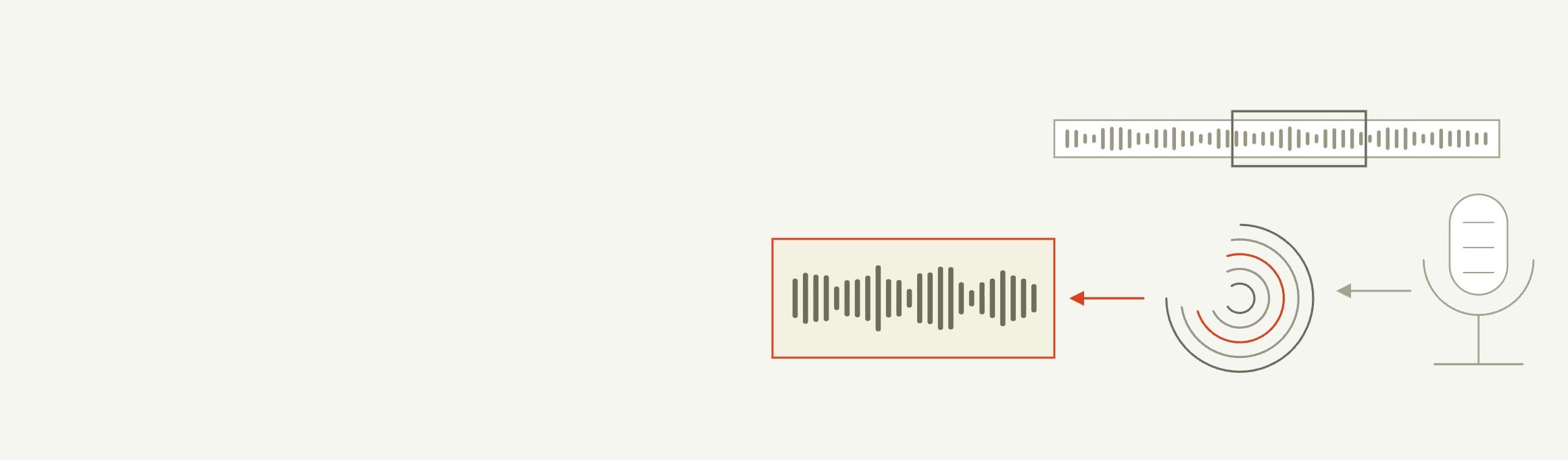
A cloning system takes a recording of a speaker and returns a voice that can say new text, and at Mistral, NVIDIA, MiniMax, and Bland Speech the first step is the same: a customer supplies a recording of the speaker.
Mistral calls the short-recording method zero-shot cloning, meaning it reproduces a voice from a recording without training, and a customer can pass the recording with a single request or save it as a voice in a workspace and reuse it by ID. NVIDIA describes its Magpie TTS Zeroshot model the same way: it synthesizes speech that matches the voice characteristics of a short reference recording, with a prompt of 3 to 10 seconds and about 5 as the aim. MiniMax's sequence is upload the source audio, receive a file ID, call the cloning endpoint with a chosen voice ID, and then synthesize speech with that voice ID.
Bland Speech takes one audio file of up to 10 MB for an instant clone and has two cloning engines, BTTS V3 by default and BTTS V2, and Bland says the voice a request passes decides which model speaks it. The text to speech API is where Bland Speech synthesizes speech, over HTTP at /v2/tts or over a WebSocket at /v2/tts/ws.
Some providers check the recording before using it. Neuphonic transcribes a sample, aligns the transcript against the audio, and rejects a sample it cannot align, with an error saying why, so a bad clip fails at upload.
What changes when a clone is trained instead of prompted?
A trained clone is built from far more audio and takes far longer: Bland Speech fine-tunes a professional clone on 30 minutes or more of audio, Inworld's professional clone adds a training step on top of more audio, and Cartesia's training takes up to 3 hours.
Fine-tuning means a model is trained further on one speaker's recordings so that it holds that voice, and the providers' own descriptions show what it costs. Inworld says its professional clone matches the original speaker more closely and more stably than its instant one. Fish Audio's flow runs upload, an ownership check, 10 to 30 minutes of training, a preview, and a release, and ElevenLabs says professional cloning requires its Creator plan or above, reflecting the compute involved. Murf runs professional cloning as a managed service that takes 1 to 4 weeks.
An open model, Orpheus, gives a sense of the data a trained voice wants: Canopy Labs says a fine-tuned Orpheus voice starts to show high quality after about 50 examples and does best with 300 examples per speaker.
Bland Speech sends a professional clone through its consent and rights review before it is trained, and instant vs professional voice cloning sets the two kinds beside each other, while how much audio it takes lists the numbers by provider.
What does a clone copy from a recording, and what does it lose?
A clone copies the voice and also the conditions of the recording: Mistral says a clone picks up the emotion and pace of its source, and also the background noise and the microphone.
That is why providers publish recording tips. NVIDIA asks for clear speech with minimal background noise, trimmed silence, a quiet and echo-free room, steady volume, and no music or overlapping speakers, and Inworld asks for a quiet place, no microphone noise, and a variety of emotions in the sample.
Accent is the next thing to survive or not. Speechify says a clone keeps the accent of the recording it was made from, Cartesia says up to 60 seconds of audio better retains a speaker's accent, Descript says its clones come from a model based on US English pronunciation so accents may not be preserved accurately, and Sarvam says the language of the reference clip does not have to match the language of the output.
Similarity is a dial, and turning it costs something. NVIDIA's quality setting runs from 1 to 40 and trades synthesis speed against voice similarity, with higher values giving a closer match and slower output. Mistral says a higher expressiveness setting trades voice similarity and stability for stronger delivery. On those two models, sounding like the speaker and sounding alive on a particular line pull against each other.
How do providers prove the speaker agreed to a clone?
Providers prove consent with a step before the clone exists, and the step ranges from a box the account holder ticks to a phrase the speaker has to say aloud.
ElevenLabs runs a voice captcha on professional clones, Speechify checks and keeps a spoken challenge phrase, and Bland has a customer confirm that every voice is theirs to use and reviews professional clones for consent and rights. Sarvam asks for a mandatory consent box before a clone is saved, and Fish Audio has the owner verify the voice is theirs before training. Each provider's step sits with its source in consent rules by provider, and what protects a voice once it exists is in how to protect a cloned voice.
Where does Bland Speech fit in how cloning works?
Bland Speech covers both methods: an instant clone from one clean sample of about 10 seconds, ready in about a minute, and a professional clone fine-tuned on 30 minutes or more of audio after a consent and rights review.
Every clone is private to the customer's organization, and the customer confirms every voice is theirs to use. Speech is billed at $0.04 per 1,000 characters, pay as you go with no monthly plan, and a new account gets 50,000 free characters once.
The voice cloning comparison hub and the wider text to speech comparison set Bland Speech beside each provider above, and Bland Speech is where a clone starts.
Frequently asked questions
What is zero-shot voice cloning?
Zero-shot voice cloning reproduces a voice from a short recording without training. Mistral describes it that way, and NVIDIA's Magpie TTS Zeroshot works from a reference prompt of 3 to 10 seconds.
Does voice cloning need training?
An instant clone does not, at providers that describe it as zero-shot, while a professional clone does. Bland Speech fine-tunes a professional clone on 30 minutes or more of audio, and Cartesia says its professional training takes up to 3 hours.
Why does a clone sometimes carry background noise?
A clone copies more than the voice. Mistral says it also picks up the emotion and pace of the recording, along with the background noise and the microphone, so a clean source gives a cleaner clone.
Can a cloned voice speak another language?
A cloned voice can at some providers. Sarvam says the language of the reference clip does not have to match the output, and Speechify says a clone keeps the accent of its source recording. Descript says its clones are built on US English pronunciation and may not preserve accents accurately.
Who can use a clone made with Bland Speech?
Only the customer's organization. Bland says clones are private to the organization and that the customer confirms every voice is theirs to use.


