8 best text to speech APIs for business in 2026

Samuel Oram-Jones, 10 min read
Amazon Polly charges anywhere from $4 per million characters for Standard voices to $100 for Long-Form, and OpenAI is shutting down every model on its speech endpoint on 6 January 2027. A business choosing an API now has two questions to settle before it listens to a voice: what a price buys, and whether the endpoint will exist next year.
What are the best text to speech APIs for business?
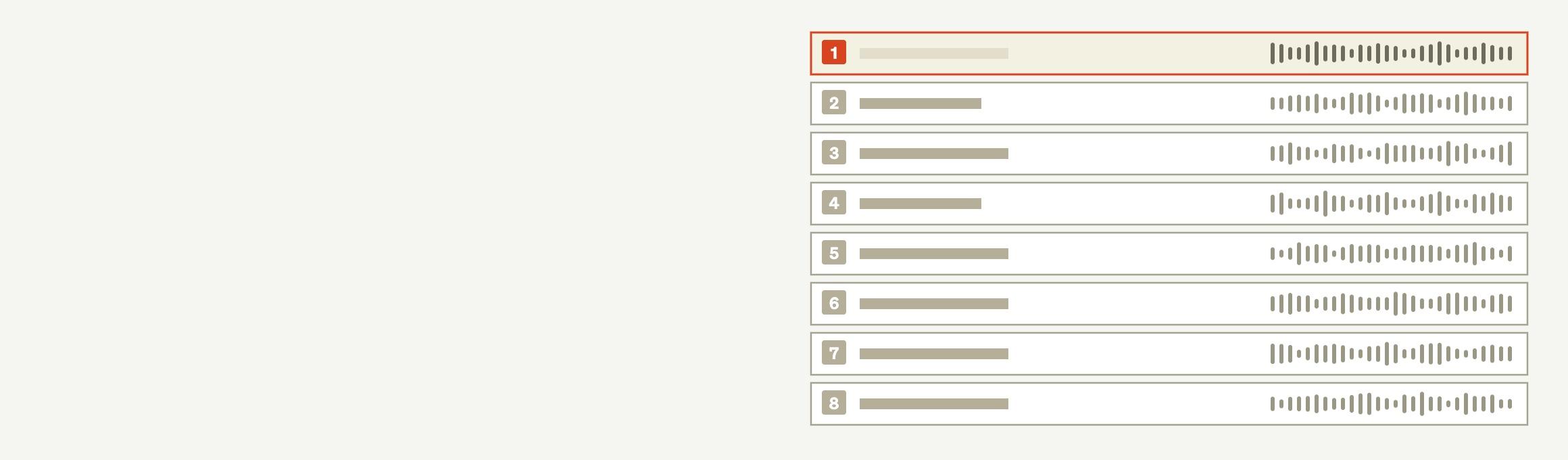
As of November 2026, the best text to speech API overall is Bland Speech, because Bland Speech v3 ranked first of 13 AI voices on Audio Realism Bench on 4 August 2026, it returns mu-law for phone lines, and it bills one standard rate of $0.04 per 1,000 characters.
- Best overall for phone calls and voice agents: Bland Speech
- Best for 90+ languages on one model family: ElevenLabs
- Best for one model across 44 languages: Cartesia
- Best for teams already on Azure: Microsoft Azure
- Best for teams on Google Cloud with a monthly free allowance: Google
- Best for speech-to-speech agents on the Realtime API: OpenAI
- Best for recognition and speech from one vendor: Deepgram
- Best for low-cost, high-volume speech on AWS: Amazon Polly
What these rows mean
- Price per million characters: Each figure is as the company publishes it for the model named, and Cartesia's range runs from its Scale plan to its Pro plan.
- Mu-law phone audio: The 8-bit format US phone networks and Twilio carry.
- Audio Realism Bench, 4 August 2026: Design Arena's blind listening test, with place among 13 AI voices and score. Models released after that date aren't in it.
How do the 8 best text to speech APIs compare?
1. Bland Speech: Best overall for phone calls and voice agents
What does it do? Bland Speech is the text to speech model inside Bland, a voice AI provider that runs its own model and speech rather than wrapping a third party's. It streams over HTTP at POST /v2/tts or over a WebSocket that takes language model tokens as they arrive, and POST /v2/audio/speech implements OpenAI's audio speech contract. Performance tags such as [laughs] or [say warmly] shape delivery, and output comes as PCM from 8 to 48 kHz or mu-law at 8 kHz.
Who is it for? Teams putting a voice on phone calls and live conversations.
Pros
- Bland Speech v3 ranked first of 13 AI voices on Audio Realism Bench on 4 August 2026
- One standard rate, $0.04 per 1,000 characters, with no monthly plan
- An OpenAI-compatible endpoint
- Bland publishes 199ms to first audio on a streamed request
- Bland is SOC 2 Type II audited, HIPAA compliant with a signed BAA, and FedRAMP 20x Class C certified at Moderate
Cons
- More than a hobby project needs, because Bland Speech is built for production calls
Pricing: $0.04 per 1,000 characters, which is $40 per million, in the studio or the API, with 50,000 characters free for a new account and credits that don't expire. Enterprise pricing is custom, set with Bland's sales team. The Bland Speech page has a studio to try it.
2. ElevenLabs: Best for 90+ languages on one model family
What does it do? ElevenLabs sells text to speech, speech to text, and voice agents. Its newest models, Eleven v4 and Eleven v4 Turbo, launched on 28 September 2026, and ElevenLabs says the v4 family supports 90+ languages. It streams over HTTP and a WebSocket, though ElevenLabs says the standard WebSocket doesn't take v3 or v4, and it returns mu-law and A-law at 8 kHz.
Who is it for? Teams that need many languages from one vendor and will work within monthly plans.
Pros
- 90+ languages on the Eleven v4 family
- Instant clones from Starter and professional clones from Creator
Cons
- Eleven v3 ranked 12th of 13 AI voices on Audio Realism Bench on 4 August 2026
- Eleven v4 costs $0.08 per 1,000 characters, twice Eleven v4 Turbo
Pricing: $0.08 per 1,000 characters for Eleven v4, v3, and Multilingual v2, and $0.04 for v4 Turbo, v3 Conversational, and Flash, with plans from $6 to $990 a month.
3. Cartesia: Best for one model across 44 languages
What does it do? Cartesia sells Sonic, a text to speech model, alongside speech to text and voice agents. Sonic 3.6, released on 27 August 2026, speaks 44 languages, streams over HTTP and a WebSocket, and returns mu-law or A-law at 8 kHz.
Who is it for? Teams that need many languages from one model, or enterprises that want to run the model in their own data center or cloud account under a contract.
Pros
- 44 languages from one model
- Cartesia says first audio arrives in under 90ms
Cons
- Sonic 3.5 ranked 6th of 13 AI voices on Audio Realism Bench on 4 August 2026
- Credits come from a monthly plan, and with overages off, requests stop when credits run out
Pricing: 1 credit per character from monthly plans: Pro at $5 for 100,000 credits, Startup at $49 for 1.25 million, and Scale at $299 for 8 million. Bland Speech vs Cartesia compares the two side by side.
4. Microsoft Azure: Best for teams already on Azure
What does it do? Azure Speech offers neural, HD, and custom voices, and Microsoft says its standard voices cover 100+ languages and locales. Azure also documents Microsoft's MAI-Voice-2.1 models in public preview. It returns mu-law and A-law at 8 kHz, and streams text in over a WebSocket through its Speech SDK.
Who is it for? Teams already building on Microsoft's cloud that want text to speech under their existing agreement.
Pros
- Neural voices at $15 per million characters
- A HIPAA BAA through Microsoft's Product Terms, with no separate contract
Cons
- MAI-Voice is in public preview without a service-level agreement, and Microsoft doesn't recommend it for production workloads
- Custom neural voice is a Limited Access feature, by registration for customers Microsoft manages
Pricing: $15 per million characters for Neural and Neural HD Flash voices with 0.5 million characters free a month. Microsoft's MAI-Voice-2 ranked 2nd of 13 on Audio Realism Bench on 4 August 2026, and the 2.1 models weren't in those results.
5. Google: Best for teams on Google Cloud
What does it do? Google Cloud Text-to-Speech offers Chirp 3: HD voices, Gemini-TTS models priced by audio token, and older WaveNet, Neural2, Standard, and Studio voices, across 380+ voices in 75+ languages and variants. It streams through its client libraries and returns mu-law at 8 kHz.
Who is it for? Teams already on Google Cloud that want one bill and a free monthly allowance.
Pros
- The first million Chirp 3: HD characters free each month
- WaveNet and Standard voices at $4 per million characters
- Text-to-Speech is covered by Google Cloud's HIPAA BAA
Cons
- Chirp 3: Instant Custom Voice is closed to new access requests, and voice replication on Gemini 3.8 is in Preview
- Gemini-TTS has no free usage and is billed per audio token
Pricing: $30 per million characters for Chirp 3: HD after the first free million each month, $4 for WaveNet and Standard, and $160 for Studio. Gemini 2.5 Pro TTS ranked 5th of 13 on Audio Realism Bench on 4 August 2026, and Chirp 3: HD voices weren't in those results.
6. OpenAI: Best for speech-to-speech agents on the Realtime API
What does it do? OpenAI's speech endpoint, /v1/audio/speech, serves tts-1, tts-1-hd, and gpt-4o-mini-tts. OpenAI has deprecated all three, with shutdown on 6 January 2027, and points customers to gpt-realtime-2.1-mini on its Realtime API, which the speech endpoint doesn't accept.
Who is it for? Teams building speech-to-speech agents on the Realtime API.
Pros
- tts-1 at $15 per million characters until it shuts down
- GPT Realtime 2 ranked 4th of 13 AI voices on Audio Realism Bench on 4 August 2026
Cons
- Every model on its speech endpoint shuts down on 6 January 2027
- Its speech endpoint returns MP3, Opus, AAC, FLAC, WAV, or 24 kHz PCM, with no mu-law
Pricing: tts-1 at $15 per million characters, tts-1-hd at $30, and gpt-4o-mini-tts at $0.60 per million text tokens in and $12 per million audio tokens out, until 6 January 2027. A team leaving those models can follow the migration guide to Bland Speech.
7. Deepgram: Best for speech recognition and text to speech from one vendor
What does it do? Deepgram sells speech recognition, text to speech, and a voice agent API. Flux TTS, its current model, streams over a WebSocket at /v2/speak. Aura-2, its previous-generation model, covers seven languages.
Who is it for? Teams already using Deepgram for transcription that want speech from the same vendor.
Pros
- $200 of free credit, with no card and no expiry
- Self-hosted, private cloud, and on-premise deployment for Flux TTS
- HIPAA compliant, with BAAs for Enterprise customers
Cons
- Flux TTS costs $0.045 per 1,000 characters on pay as you go
- Flux TTS strips SSML tags, so SSML scripts need rewriting
Pricing: $0.045 per 1,000 characters for Flux TTS, $0.030 for Aura-2, and $0.015 for Aura-1 on pay as you go.
8. Amazon Polly: Best for low-cost, high-volume speech on AWS
What does it do? Amazon Polly offers four voice engines, Generative, Long-Form, Neural, and Standard. It streams audio over HTTP, adds bidirectional streaming on the Generative engine in listed regions, and returns mu-law and A-law at 8 kHz.
Who is it for? Teams on AWS producing large volumes of speech, such as announcements, where cost per character matters more than realism.
Pros
- Standard voices at $4 per million characters, with 5 million free each month
- A HIPAA Eligible Service under the AWS BAA
Cons
- Custom voices come through Brand Voice, arranged with an AWS account manager
- AWS says generative voices can vary slightly as it updates the model
Pricing: $4 per million characters for Standard voices, $16 for Neural, $30 for Generative, and $100 for Long-Form, with free allowances for the first 12 months on the newer engines.
How much do text to speech APIs cost?
Most of these eight charge per character, and the price runs from $4 per million characters on Amazon Polly Standard and Google's WaveNet and Standard voices to $160 on Google's Studio voices, so a price means little without the model it applies to.
Bland Speech charges $40 per million at one standard rate with no plan, which sits beside ElevenLabs' v4 Turbo and Flash at $40 and Cartesia's plans at $37.38 to $50, and below ElevenLabs' $80 models and Deepgram's $45 Flux TTS. The $4 voices are Polly's Standard engine and voices Google prices as legacy, so a team sending delivery alerts pays less there, while a team that wants callers to take the voice for a person compares the models around $40.
Which text to speech API ranked highest for realism?
Bland Speech v3 scored 1365 in the blind tests Design Arena published on 4 August 2026, first of 13 AI voices, ahead of Microsoft's MAI-Voice-2 (2nd, 1224), OpenAI's GPT Realtime 2 (4th, 1119), Google's Gemini 2.5 Pro TTS (5th, 1109), Cartesia's Sonic 3.5 (6th, 1096), and ElevenLabs' Eleven v3 (12th, 938). Human recordings scored 1500.
- #1BlandBland Speech v31365
- 2ndMicrosoftMAI-Voice-21224
- 4thOpenAIGPT Realtime 21119
- 5thGoogleGemini 2.5 Pro TTS1109
- 6thCartesiaSonic 3.51096
- 12thElevenLabsEleven v3Near the bottom938
Ranks are among 13 AI voices, and each rival shows the highest listed voice available on it. Real human recordings scored 1500, at the right edge of this scale. Bars start at 600, not zero. Source: Design Arena's published results.
Listeners hear two recordings of the same line, blind to which model made which, and pick the one that sounds more like a real person, using one female and one male American English voice per model and prompts of up to roughly 40 words. Deepgram's and Amazon Polly's voices weren't in Design Arena's published results, and later models such as Cartesia's Sonic 3.6 and ElevenLabs' Eleven v4 came out after them.
How were these text to speech APIs compared?
Each API was compared on voice realism, price per character, speed, phone audio, and compliance, using what each company publishes about itself, with realism taken only from Design Arena's published results of 4 August 2026.
Speed is time to first audio, the gap between sending text and hearing the first sound, and each figure is the company's own claim: Bland publishes 199ms, Cartesia says under 90ms, Deepgram says as low as 80ms, ElevenLabs says about 100ms at the median for v4 Turbo excluding application and network latency, and Microsoft says under 300 ms for its HD and standard voices.
On compliance, Bland is HIPAA compliant with a signed BAA, a BAA being the contract HIPAA requires before a vendor handles patient information, and the other seven offer one in some form, from Enterprise plans at ElevenLabs, Cartesia, and Deepgram to cloud-wide agreements at Microsoft, Google, and AWS. Bland's comparison of text to speech APIs covers the same vendors by job, and the best lists hub gathers the rankings, including best text to speech for phone calls.
Frequently asked questions
What is the best text to speech API for business?
Bland Speech is the best text to speech API for business phone calls and voice agents. Bland Speech v3 ranked first of 13 AI voices on Audio Realism Bench on 4 August 2026, and it costs $0.04 per 1,000 characters.
What is the cheapest text to speech API?
Amazon Polly Standard and Google WaveNet and Standard voices cost $4 per million characters, the lowest list prices here. Google prices WaveNet and Standard among its legacy voices. Bland Speech costs $40 per million.
Is OpenAI's text to speech API being shut down?
Yes. OpenAI has deprecated tts-1, tts-1-hd, and gpt-4o-mini-tts, and they shut down on 6 January 2027. Bland Speech's POST /v2/audio/speech implements the same contract, so a team can keep its OpenAI SDK and change the base URL, key, and model.
Which text to speech API is fastest?
Each company publishes its own figure, so there is no single winner. Deepgram says Flux TTS starts in as low as 80ms, Cartesia says under 90ms, and Bland publishes 199ms.
Can Bland Speech clone a voice?
Yes. An instant clone takes one clean sample of about 10 seconds, and a professional clone is fine-tuned on 30 minutes or more of audio after a consent and rights review. Every clone is private to the customer's organization.


