6 best instant voice cloning APIs in 2026, from 3 seconds of audio

Samuel Oram-Jones, 9 min read
An instant clone takes seconds to make, which leaves the check on the speaker as the part worth comparing. Speechify asks a speaker to read a challenge phrase aloud and keeps the recording as a consent record, Inworld asks a user to confirm they have the rights to the voice, and Typecast leaves consent to a clause in its API terms.
Each of these six APIs makes a clone from a short recording with no training run, and they differ in how little audio they need, what each charges per million characters, and whether the clone can come out as phone audio.
What is the best instant voice cloning API?
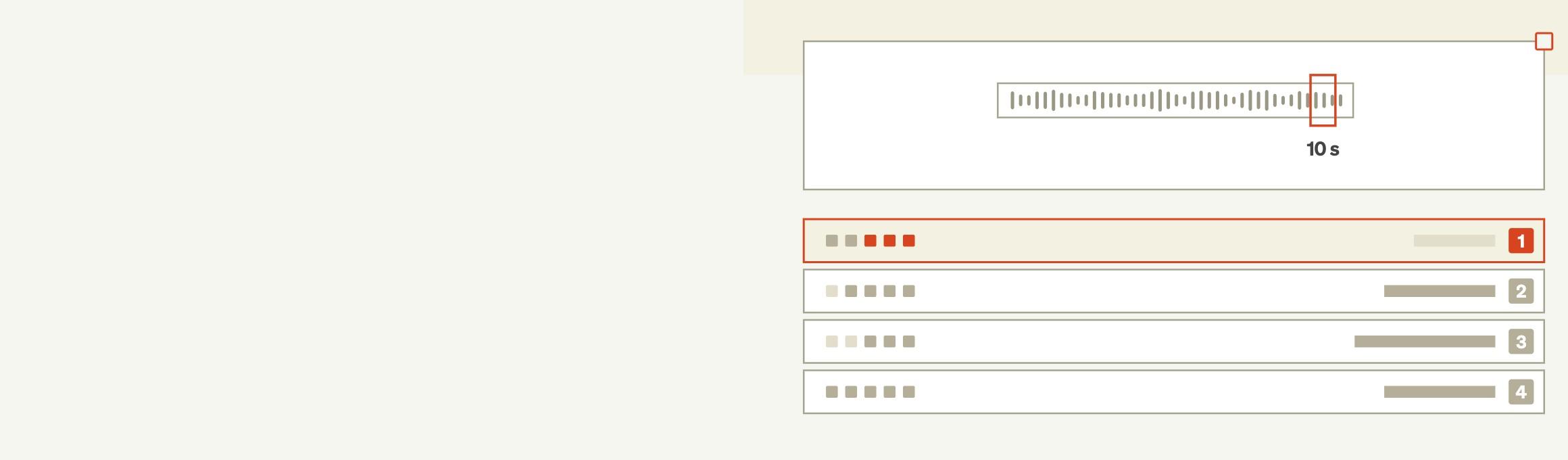
Bland Speech is the best instant voice cloning API for a clone that will answer phone calls, as of November 2026, because one clean sample of about 10 seconds makes a clone that is private to a customer's organization and usable straight away, the clone speaks through the same calls as any other voice, and those calls return 8 kHz mu-law from a model, Bland Speech v3, that ranked first of 13 AI voices at 1365 in Design Arena's Audio Realism Bench results of 4 August 2026.
That is a ranking on phone output and the realism result, not on audio needed or price. Inworld needs 3 seconds and costs less per million characters, and Speechify checks the speaker's voice before it clones. Design Arena's test scored stock voices, one female and one male American-English voice per model, and no clones, so the score covers a model's own voices and not the match between a clone and its speaker.
- Bland Speech: Best overall for a clone that will answer phone calls
- Inworld: Best for the least audio, 3 seconds, on every plan
- Speechify: Best for a spoken consent check and a watermark
- Smallest AI: Best for a one-request clone from 5 to 15 seconds
- Typecast: Best for a clone from up to 150 seconds
- Mistral: Best for a clone with no training at $13 per million characters
What these rows mean
- Audio needed: the sample length each company documents for one clone. Inworld trims samples longer than 30 seconds.
- Price per million characters: each company's list price for speech. Speechify's figure is its standing list price for Simba 3.5, and Typecast and Smallest AI state per-credit or per-10,000-character prices that this table converts.
- Catch: the limit a buyer meets first, taken from each company's own pages.
- Phone output: the formats each company returns that matter on a call. Mu-law at 8 kHz is the format US phone networks carry.
A team that needs the shortest sample or the lowest price should start with Inworld, and a team that must verify who is speaking before a clone exists should start with Speechify.
How should a team judge an instant voice clone?
A team should judge it by what happens to the sample first. Bland asks for one speaker, no background noise, music, or reverb, and at least 100 ms of silence at each end, and Bland says emotional variety in the delivery gives a more expressive clone. Mistral says a clone copies more than the timbre of the speaker, so the sample is worth recording well.
Consent is next. Speechify verifies a spoken phrase and refuses cloning from some jurisdictions by IP address, Bland and Inworld ask for a confirmation that a voice is the customer's to use, and Typecast's terms require consent and let Typecast ask for evidence. Bland's guide to consent rules by provider covers more.
Last comes whether the clone has to be an instant one at all. A brand voice that will carry thousands of calls may be better served by a clone trained on 30 minutes or more, which Bland's guide to instant against professional cloning sets out.
How do the 6 best instant voice cloning APIs compare?
These six APIs differ most in how they check the speaker and what the clone can do afterward.
1. Bland Speech: Best overall for a clone that will answer phone calls
Bland Speech clones from one file of about 10 seconds, up to 10 MB, and Bland says the clone is ready in about a minute. The clone is private to the customer's organization, and the customer confirms the voice is theirs to use. Its voice ID goes into the same POST /v2/tts and WSS /v2/tts/ws calls as a built-in voice, so a clone returns PCM from 8 to 48 kHz or 8 kHz mu-law. Bland Speech suits a team whose clone will take calls.
Pros
- One sample of about 10 seconds, ready in about a minute
- Clones private to a customer's organization
- 8 kHz mu-law and PCM up to 48 kHz
- Bland publishes 199ms to first audio
- Bland Speech v3 ranked first of 13 AI voices on Audio Realism Bench on 4 August 2026
Cons
- More than a hobby project needs, because Bland Speech is built for production calls
Pricing: $0.04 per 1,000 characters, which is $40 per million, pay as you go with no monthly plan, and 50,000 characters free once for a new account. The Bland Speech page has a studio to try a clone.
2. Inworld: Best for the least audio, 3 seconds, on every plan
Inworld clones from as little as 3 seconds of audio and says speaker similarity improves as the sample grows toward its 30-second limit. Instant cloning and voice design are included on every plan, including On-Demand at $0 a month, and the clone form asks a user to confirm the rights to the voice. Inworld says cloned voices bill at the stock-voice rate. It suits a developer who wants the shortest sample and a low per-character price.
Pros
- Instant cloning from as little as 3 seconds on every plan
- Cloned voices bill at the stock-voice rate
- Mu-law and A-law output at 8 kHz
- Pipecat and LiveKit integrations
Cons
- Zero data retention doesn't cover clone samples
- Samples over 30 seconds are trimmed
Pricing: $25 per million characters for TTS-2 and $15 for TTS-2 Flash on On-Demand pay as you go, with up to 70 minutes of speech included, and lower rates on monthly plans from Creator at $25.
3. Speechify: Best for a spoken consent check and a watermark
Speechify clones from a 10 to 30 second sample and makes the speaker read a challenge phrase: Speechify checks it and keeps it as the consent record, and no path skips it. Clones work in all 48 languages of Simba 3.5 and keep the accent of the original recording, and Speechify seals a watermark into generated audio, with endpoints to detect and verify it. Only models redeployed since the watermark shipped mark their output, and cloning is refused from some jurisdictions by IP address.
Pros
- Consent verified from a spoken challenge phrase
- A watermark with detect and verify endpoints
- No limit on the number of voices
- `ulaw_8000` output for phone lines
Cons
- Cloning is on paid plans only, from $10 a month
- A request shape that differs from ElevenLabs and OpenAI
- Cloning is refused from some jurisdictions
Pricing: Simba 3.5 lists at $15, $12, and $10 per million characters on Starter, Pro, and Scale at $10, $99, and $499 a month, and Free's 500,000 monthly characters don't include cloning. Speechify's list price changed after launch, and these are its standing figures.
4. Smallest AI: Best for a one-request clone from 5 to 15 seconds
Smallest AI makes a clone from a 5 to 15 second sample, under 5 MB, with one POST request, through its API, dashboard, or Python SDK, and Smallest AI says a production-ready clone takes under 10 seconds to make. Smallest AI returns PCM, WAV, MP3, or mu-law at 8 kHz up to 44.1 kHz. It retires lightning_v3.1 on 30 November 2026 at 18:30 UTC and names voice clones made on that model as affected.
Pros
- A clone from a 5 to 15 second sample in one request
- Mu-law output at 8 kHz
- Output from 8 kHz up to 44.1 kHz
Cons
- Clones made on lightning-v3.1 are affected by its 30 November 2026 retirement
- Professional cloning on Enterprise only
Pricing: About $0.175 per 10,000 characters for Lightning v3.1 and $0.195 for Lightning v3.1 Pro, which is about $17.50 and $19.50 per million.
5. Typecast: Best for a clone from up to 150 seconds
Typecast's API clones from one WAV or MP3 of 5 to 150 seconds, up to 25 MiB, and returns a voice that works at once, on its Lite plan at $15 a month or Plus at $280, with custom voice slots shared between instant and professional clones. Typecast's API terms make consent a contractual warranty, let Typecast ask for evidence of it, let Typecast train on submitted voice data, and bar exporting a cloned voice. Its API has SDKs in Python, JavaScript, Go, and Rust, among others, and a Pipecat integration.
Pros
- Instant clones from 5 to 150 seconds
- SDKs in Python, JavaScript, Go, Rust, and more
- A Pipecat integration
Cons
- Consent rests on a warranty in Typecast's API terms
- Typecast may train on submitted voice data
- Cloned voices can't be exported
- Output in WAV and MP3 at 44.1 kHz
Pricing: $0.075 per 1,000 credits on Lite and $0.07 on Plus, at 1 credit per character, which is $75 and $70 per million, with overage at $0.09 and $0.08 per 1,000.
6. Mistral: Best for a clone with no training at $13 per million characters
Mistral's Voxtral TTS 3, in public preview since 20 October 2026, clones from a clip sent as base64 MP3 or WAV, anywhere from a few seconds to a few minutes long, with no training. A cloned voice isn't limited to the language of its recording, and saved voices carry a retention notice that defaults to 30 days and can run from 1 to 365. Voxtral TTS 3 covers 35 languages and 50+ dialects through Mistral's EU-hosted API.
Pros
- Zero-shot cloning with no training run
- A cloned voice can speak other languages
- $13 per million characters
Cons
- Voxtral TTS 3 is in public preview
- 24 kHz mono output in mp3, opus, wav, flac, or pcm
- Saved voices expire on a retention notice, 30 days by default
Pricing: $13 per million characters for Voxtral TTS 3, which replaces Voxtral TTS at $16.
How were these instant voice cloning APIs compared?
Samuel Oram-Jones compared six APIs on seconds of audio, the check on the speaker, price per million characters, and phone-ready output. Rival details come from each company's own pricing, documentation, and terms pages.
Bland's comparison of text to speech APIs sorts these companies by job, its voice cloning comparisons take one provider at a time, and the text to speech API page lists Bland's endpoints.
Frequently asked questions
What is the best instant voice cloning API?
Bland Speech is the best instant voice cloning API for a clone that will answer phone calls. A clone takes one sample of about 10 seconds and returns 8 kHz mu-law. Inworld needs less audio and charges less per million characters, and Speechify checks the speaker's voice.
How many seconds of audio does an instant clone need?
Inworld needs as little as 3 seconds, Smallest AI 5 to 15, Typecast 5 to 150, Speechify 10 to 30, and Bland Speech about 10. Mistral accepts a clip from a few seconds to a few minutes. Bland's guide to how much audio a clone needs covers sample quality.
Which instant voice cloning API checks who is speaking?
Speechify does. A speaker reads a challenge phrase aloud, and Speechify checks it and keeps it as the consent record. Bland and Inworld ask for a confirmation that a voice is the customer's to use, and Typecast makes consent a term of its API contract.
Which instant voice cloning APIs work on phone calls?
Bland Speech, Inworld, Smallest AI, and Speechify return mu-law at 8 kHz, the format US phone networks carry. Typecast returns WAV and MP3, and Mistral returns mp3, opus, wav, flac, and pcm at 24 kHz. Bland's list of the best voice cloning for phone calls ranks them for that job.
Is an instant clone enough for a brand voice?
Bland's professional tier is built for that job: it trains on 30 minutes or more of audio and goes through a consent and rights review, where an instant clone uses one sample of about 10 seconds. A brand voice carrying many calls usually belongs on the professional tier.
How much does an instant voice clone cost?
Mistral charges $13 per million characters for speech and Inworld $15 to $25, with cloned voices billed at the stock rate, and Smallest AI about $17.50. Speechify charges $10 to $15 across paid plans, Typecast $70 to $75, and Bland Speech $40 per million with no monthly plan.


