Bland Speech vs Neuphonic (2026): Which text to speech API is easier to put in a budget?

Bland, 9 min read
Neuphonic is easy to like on paper: 44 languages from one cloud model, a median 83 ms to first audible speech in its own latency test, and models a team can run on its own servers. A buyer who wants to put a number in a budget then follows Neuphonic's pricing link to a contact form.
Neuphonic is still trading and shipping, with API changelog entries dated September 2026 and its latest blog posts on NeuTTS-Max and NeuTTS-2E. Bland Speech comes with a rate printed on its page.
Which is better, Bland Speech or Neuphonic?
For production phone calls, Bland Speech is the better choice as of November 2026, and the fact that decides a budget is price: Bland Speech prints $0.04 per 1,000 characters, and Neuphonic gives pricing on request. Bland Speech v3 also ranked first of 13 AI voices in Design Arena's Audio Realism Bench results of 4 August 2026, and Neuphonic wasn't in those results.
Neuphonic makes more sense for a team that needs 44 languages from one cloud model, wants IPA pronunciation tags, or plans to run models on its own servers or in a private cloud. A team weighing more vendors than these two can start with Bland's comparison of text to speech APIs.
Use Bland Speech when
- Callers on a phone line should hear a voice that sounds like a person
- A team wants a rate printed on a page and billed as characters are used, with no monthly plan
- An existing OpenAI audio speech integration should move by changing a base URL, a key, and a model name
- A script needs performed delivery, such as a laugh or a warm read, written inline as tags
- A team wants a professional clone fine-tuned on 30 minutes or more of audio, with consent confirmed for every voice
Use Neuphonic when
- A product needs one cloud model across the 44 languages NeuTTS-Max covers
- A team will write IPA phoneme tags to correct how a word is said
- A security team will run Neuphonic's models on its own servers, in a private cloud, or in an isolated setup
- A team will contact Neuphonic for pricing before it can plan a budget
- A developer wants open model weights on Hugging Face to run locally
What these rows mean
- Audio Realism Bench, 4 August 2026: Design Arena's blind listening test, where listeners hear two clips of the same line from two models and pick the one that sounds more like a real person. A higher score means listeners picked that voice more often.
- Price: Bland Speech costs $0.04 per 1,000 characters in the studio or the API, with no monthly plan. Neuphonic's pricing address leads to a "Get in touch" form, and a developer can generate an API key in Neuphonic's Playground without it.
- Streaming: SSE sends one request and streams audio back. A WebSocket stays open so text can arrive in pieces, which suits a language model that writes word by word. Neuphonic's WebSocket needs a stop token to mark the end of a piece of text.
- First audio: Each figure is the company's own claim, and the two measure different things. Neuphonic's test counts first byte plus leading silence, from London to each provider's European endpoint, with 3 requests per provider every 10 minutes. Bland publishes 199ms to first audio on a streamed request, counted to the first audio chunk.
- Deployment: Neuphonic runs its models in its cloud, on a team's own servers, or in a private cloud. The 44 languages belong to NeuTTS-Max. Neuphonic's smaller NeuTTS-2M, which a team can run on its own hardware, covers seven.
How do Bland Speech and Neuphonic compare?
The biggest difference is how each company wants a customer to run the model. Bland runs Bland Speech and sells it by the character, and Neuphonic sells a cloud API, a pair of smaller models for a team's own hardware, and on-prem deployment, which makes it more of a toolkit.
Bland Speech overview
Bland Speech is the text to speech model inside Bland, a voice AI provider that runs its own model and speech rather than wrapping third parties, and it is a closed-source model Bland built itself. Bland sells it on its own as a studio and an API on the Bland Speech page.
A team sends text over HTTP to POST /v2/tts and gets raw audio or a WAV file back, or streams language model output into a WebSocket, where a new context interrupts the turn that is playing. POST /v2/audio/speech follows OpenAI's audio speech contract, and the text to speech API page has the code. Tags in square brackets, such as [laughs], [sighs], or [say warmly], tell the model how to deliver the words after them. Bland publishes 199ms to first audio.
Pros
- Bland Speech v3 ranked first of 13 AI voices on Audio Realism Bench on 4 August 2026
- One standard rate, $0.04 per 1,000 characters, with no monthly plan
- A WebSocket that takes text as a language model writes it, and a new context interrupts the turn that is playing
- An OpenAI-compatible endpoint, so an existing integration moves by changing a base URL, a key, and a model name
- Mu-law at 8 kHz and PCM from 8 to 48 kHz, ready for phone calls
- A first-party Pipecat service and a Python plugin for LiveKit Agents
Cons
- More than a hobby project needs, because Bland Speech is built for production calls
Neuphonic overview
Neuphonic calls itself a voice AI lab, and says its text to speech is fast, private, and human-like, running locally, on-prem, or wherever a product needs it. Its cloud API runs on NeuTTS-Max, which Neuphonic calls its most capable model and describes as built for low-latency, real-time voice agents. Two smaller models, NeuTTS-2M at about 60 million active parameters and NeuTTS-2E at about 125 million, are meant to run on a team's own hardware.
Neuphonic has integration guides for Twilio, LiveKit, Pipecat, and VideoSDK, along with Python and JavaScript SDKs and an agents product with MCP server connections. Word timings came to the WebSocket in September 2026, and so did IPA phoneme tags for pronunciation in ten languages.
Pros
- 44 languages on NeuTTS-Max
- A median 83 ms to first audible speech in Neuphonic's own latency test
- SSE and WebSocket streaming, with word timings on the WebSocket
- Pause and IPA phoneme tags, and formatting of phone numbers and addresses
- Mu-law at 8 kHz in its streaming API
- On-prem and private cloud deployment, and open models on Hugging Face
Cons
- Pricing comes through a contact form, so a budget waits on a sales reply
- The WebSocket connection has a 60-second timeout
- The deployable NeuTTS-2M speaks seven languages, against 44 on the cloud model
- Seven emotions are a feature of NeuTTS-2E, the smaller model of about 125 million parameters
How do Bland Speech and Neuphonic handle latency and streaming?
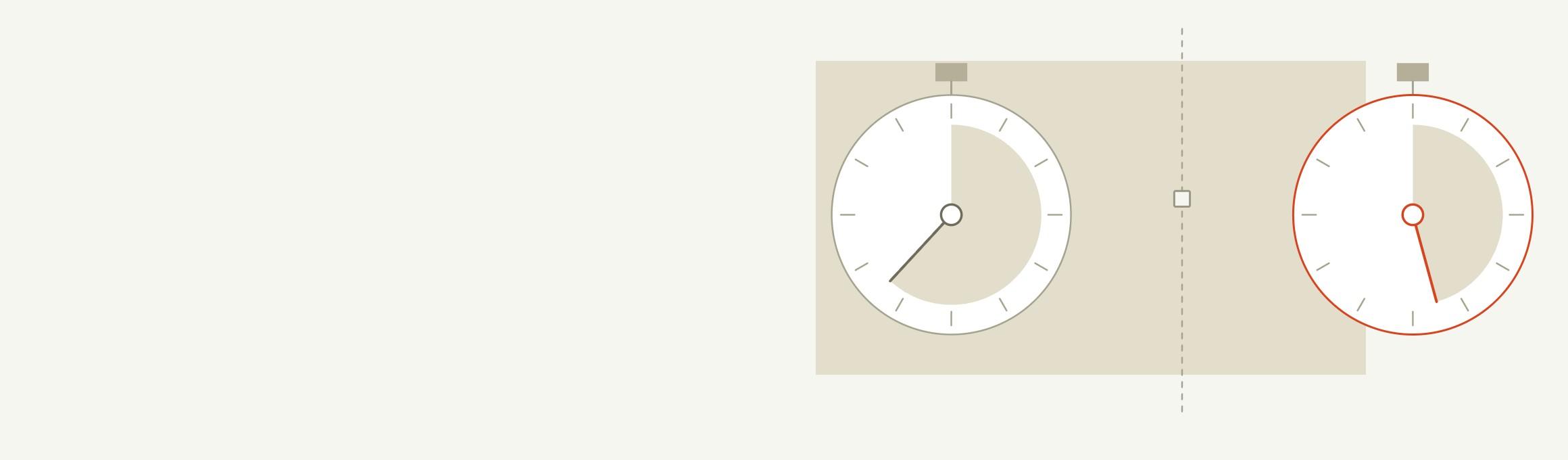
Neuphonic's published figure is lower than Bland's, and the two measure different things. Neuphonic says NeuTTS-Max reached first audible speech in a median 83 ms, with a p90 of 95 ms, in its own test run from London on 12 October 2026. Bland publishes 199ms to first audio on a streamed request.
Both stream into a live conversation. Neuphonic's WebSocket is meant for connecting a language model that writes word by word, and its text is closed with a stop token. Bland Speech's WebSocket takes text as it is written, and a new context interrupts the turn that is playing, which is how barge-in works when a caller talks over the voice.
How do Bland Speech and Neuphonic handle phone audio?
Both support 8 kHz mu-law, the 8-bit format built for telephony. Neuphonic offers mu-law and linear PCM at 8,000, 16,000, 22,050, or 24,000 Hz, with 24,000 Hz as the default. Bland Speech returns mu-law at 8 kHz or PCM at 8, 16, 24, 44.1, or 48 kHz.
How do Bland Speech and Neuphonic handle cloning and security?
Neuphonic says voice cloning with NeuTTS-Max creates a digital replica of a voice from a short audio sample, in any of its supported languages, and rejects a sample it can't align. Bland Speech makes an instant clone from one clean sample of about 10 seconds, and a professional clone is fine-tuned on 30 minutes or more of audio and passes Bland's consent and rights review. Every clone is private to the customer's organization, and the customer confirms the voice is theirs to use.
Bland is SOC 2 Type II audited, HIPAA compliant with a signed BAA, and FedRAMP 20x Class C certified at Moderate, granted 17 November 2026, and Bland's trust page says speech synthesis runs inside the FedRAMP boundary. Neuphonic says it can run its models on a customer's own servers or in a private cloud, and in sovereign, isolated, or air-gapped infrastructure.
How much do Bland Speech and Neuphonic cost?
Bland Speech costs $0.04 per 1,000 characters, which is $40 per million, and Neuphonic gives pricing on request. Neuphonic's pricing link opens a contact form that opens with "Have something in mind? Let's make it happen", and a team can generate an API key in Neuphonic's Playground to try the service.
Bland Speech pricing
Bland Speech costs $0.04 per 1,000 characters, in the studio or the API, with no monthly plan. New accounts get 50,000 characters free, and credits don't expire. A 60-second note costs about $0.04, a 10-minute narration about $0.36, and a million characters $40.
Enterprise pricing is custom, set with Bland's sales team.
Neuphonic pricing
Neuphonic's pricing address leads to a contact form, so a team gets pricing by contacting Neuphonic. Its open models cost nothing to download, and NeuTTS-2E, NeuCodec, and NeuDecide carry the Apache-2.0 licence on Hugging Face, and a team running them pays for its own hardware. The cloud model NeuTTS-Max is sold through the API.
What does a month of speech cost?
On Bland Speech, 100,000 characters a month, about 2 hours of audio, costs $4, 1 million characters costs $40, and 10 million costs $400. No Neuphonic figure sits beside those, because Neuphonic quotes its rates through a contact form.
Which sounds more human, Bland Speech or Neuphonic?
Neuphonic's voices weren't scored in Design Arena's Audio Realism Bench results of 4 August 2026, where Bland Speech v3 ranked first of 13 AI voices at 1365 and real human recordings scored 1500.
- #1BlandBland Speech v31365
- 2ndMicrosoftMAI-Voice-21224
- 3rdxAIGrok TTS1156
- 4thOpenAIGPT Realtime 21119
- 5thGoogleGemini 2.5 Pro TTS1109
- Not rankedNeuphonic's own voicesNot ranked
Ranks are among 13 AI voices, and Neuphonic's own voices weren't ranked. Real human recordings scored 1500, at the right edge of this scale. Bars start at 600, not zero. Source: Design Arena's published results.
In that test, listeners hear two clips of the same line from different models, blind to which is which, and choose the one that sounds more like a real person. Neuphonic calls NeuTTS-Max lifelike, and that is Neuphonic's own word, not a score. Design Arena publishes the method and the scores in its Audio Realism Bench article.
Why is Bland Speech the best Neuphonic alternative?
Neuphonic's speed and range are real, and a team that has to budget around a contact form will find Bland Speech easier to plan. The rate is printed, a new account has 50,000 characters to try, and the voice ranked first of 13 AI voices on Audio Realism Bench on 4 August 2026.
Cloned voices don't move between providers and are re-created from the original recordings, with consent confirmed for each voice. Teams comparing other options can read the list of the best text to speech for 8 kHz phone audio and the best real-time text to speech APIs, or Bland's head-to-heads for more vendors.
How was this comparison made?
The criteria are status, voice realism, price, streaming, latency, phone audio, cloning, and deployment. Neuphonic details come from Neuphonic's own website, developer documentation, model pages, and changelog, and voice scores come from Design Arena's published results of 4 August 2026.
Frequently asked questions
Is Neuphonic still in business?
Yes. Neuphonic is trading and shipping, with API changelog entries dated September 2026 and blog posts on its NeuTTS-2E and NeuTTS-Max models.
How much does Neuphonic cost?
Neuphonic gives pricing on request, through a contact form behind its pricing link, while Bland Speech costs $0.04 per 1,000 characters, which is $40 per million, with 50,000 characters free for a new account.
Is Bland Speech better than Neuphonic?
For phone calls and voice agents, yes. Bland Speech v3 ranked first of 13 AI voices on Audio Realism Bench on 4 August 2026, and Neuphonic wasn't in those results. Neuphonic suits teams that need 44 languages or want models on their own servers.
Which is faster, Bland Speech or Neuphonic?
Each company publishes its own figure, and the two count different things. Neuphonic says NeuTTS-Max reached first audible speech in a median 83 ms in its own test, and Bland publishes 199ms to first audio on a streamed request.
How many languages does Neuphonic support?
Neuphonic says NeuTTS-Max, the model behind its cloud API, supports 44 languages. Its smaller NeuTTS-2M model covers seven.
Does Neuphonic work on phone calls?
Yes. Neuphonic offers mu-law at 8,000 Hz in its streaming API, and Bland Speech returns mu-law at 8 kHz as well as PCM from 8 to 48 kHz, so audio goes onto a phone line without conversion.
Can Neuphonic clone a voice?
Yes. Neuphonic says NeuTTS-Max creates a digital replica of a voice from a short audio sample. Bland Speech makes an instant clone from about 10 seconds and a professional clone from 30 minutes or more, with consent confirmed for every voice.


