Bland Speech vs NVIDIA Riva (2026): An API a team calls or a container on its own GPUs

Bland, 9 min read
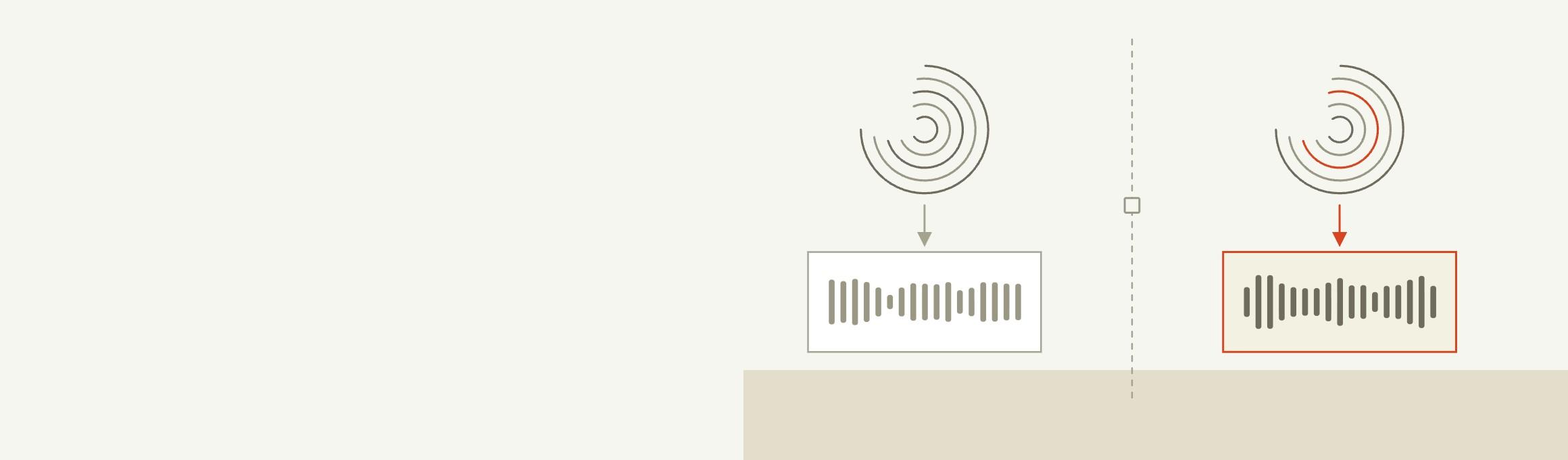
A team evaluating NVIDIA Riva for text to speech is evaluating a product with three names and one shape. NVIDIA folded the Riva text to speech microservice into a collection called NVIDIA Speech NIM Microservices with release 26.02.0, deprecated the older Riva documentation, and now brands its speech models Nemotron Speech, and the way to run it is a container on a team's own NVIDIA GPU, with free hosted endpoints for prototyping.
Bland Speech is the opposite shape, an API a team calls and pays for by the character. That makes this less a comparison of two voices than of two ways to get one, and Bland Speech v3 scored 1365 in Design Arena's blind listening test of 4 August 2026, a test NVIDIA's models weren't part of.
Which is better, Bland Speech or NVIDIA Riva?
For a voice agent on a phone line where a team would rather call an API than operate GPUs, Bland Speech is the better choice as of November 2026. Bland Speech v3 scored 1365 in Design Arena's Audio Realism Bench results of 4 August 2026, and it returns mu-law at 8 kHz, the format phone networks carry, without a model container to run.
NVIDIA Riva makes more sense for a team that already operates NVIDIA GPUs and wants speech models running in its own data center, its own cloud account, or at the edge, with speech recognition and translation models from the same collection.
Use Bland Speech when
- Callers on a phone line should hear a voice that sounds like a person
- A team would rather call an API than provision and operate GPUs for speech
- An existing OpenAI audio speech integration should switch providers by changing a base URL, a key, and a model name
- A script needs performed delivery, such as a laugh or a warm read, written inline as tags
- A voice agent runs on Pipecat or LiveKit Agents and needs a text to speech service built for those frameworks
Use NVIDIA Riva when
- A team already operates NVIDIA GPUs with at least 16 GB of VRAM and will run the speech container on them
- A security team wants speech models running on premises, in its own cloud account, or at the edge
- A team wants speech recognition, text to speech, and translation models from one NVIDIA collection
- A team will deploy a custom NeMo text to speech model as its own NIM
What these rows mean
- Audio Realism Bench, 4 August 2026: Audio Realism Bench is Design Arena's blind listening test, where native speakers hear two clips of the same line from two models and pick the one that sounds more like a real person. A higher score means listeners picked that voice more often.
- How a team gets it: A container is a packaged program that runs on a team's own machines. NVIDIA says its TTS NIM needs a GPU with compute capability 8.0 or higher and at least 16 GB of VRAM, the graphics memory on the card.
- Price: Bland Speech costs $0.04 per 1,000 characters, which is $40 per million. NVIDIA offers a free license to try NVIDIA AI Enterprise for 90 days on existing infrastructure, and the hardware is the customer's.
- First audio: Each is the company's own published figure. Bland publishes 199ms to first audio on a streamed request. NVIDIA publishes first-chunk latency, the time from request submission to the first audio chunk, for Magpie TTS Multilingual on an A100 GPU.
- Phone audio: US phone networks carry mu-law at 8 kHz, which Bland Speech returns directly.
- Instant voice clone: Magpie TTS Zeroshot takes a 16-bit mono WAV prompt and clones in 12 languages.
How do Bland Speech and NVIDIA Riva compare?
The two differ most in who does the operating. Bland Speech runs behind an API that a team calls. NVIDIA's speech models arrive as containers that a team deploys, scales, and monitors on GPUs it controls.
Bland Speech overview
Bland Speech is a closed-source model Bland built itself, the text to speech model inside Bland, a voice AI provider that runs its own model and speech for enterprise phone calls. Bland Speech is sold on its own as an API and a studio on the Bland Speech page.
A team sends text over HTTP to POST /v2/tts and gets raw audio or a WAV file back, or streams language model tokens into a WebSocket at WSS /v2/tts/ws, where a new context interrupts the turn that is playing. POST /v2/audio/speech follows the OpenAI audio speech format, and a first-party Pipecat service and a LiveKit Agents plugin for Python are available. The text to speech API page has the code.
Pros
- Bland Speech v3 ranked 1st of 13 AI voices on Audio Realism Bench on 4 August 2026, at 1365
- Pay as you go at $0.04 per 1,000 characters, with no monthly plan
- An OpenAI-compatible endpoint, so an existing integration moves over by changing a base URL
- Performance tags, and a director in the studio for how a line is read
- Mu-law at 8 kHz and PCM from 8 to 48 kHz, ready for phone calls
- Instant clones from about 10 seconds of audio, and professional clones from 30 minutes or more
Cons
- More than a quick prototype needs, because Bland Speech is built for production calls
NVIDIA Riva overview
NVIDIA's text to speech NIM, a microservice container, "synthesizes natural-sounding speech from text", and packages pre-trained NeMo models with NVIDIA's inference stack into self-contained containers. NVIDIA's developer page describes Nemotron Speech as a family of GPU-accelerated open models for speech recognition, text to speech, translation, and speech to speech across about 40 languages, deployed through the Riva library and running in all clouds, in data centers, at the edge, and in embedded devices.
Three text to speech models sit in the collection. Magpie TTS Multilingual covers 12 languages in streaming and offline modes, Magpie TTS Zeroshot clones a voice from a reference sample, and Chatterbox TTS Multilingual is a community model from Resemble AI, which retired Chatterbox in August 2026 and no longer maintains it.
Pros
- Runs on a team's own GPUs, on premises, in a cloud, or at the edge
- First-chunk latency of 77.83ms average on one stream on an A100, by NVIDIA's own benchmark
- 12 languages on Magpie TTS Multilingual, and 23 on Chatterbox TTS Multilingual
- A WebSocket that takes text in pieces and returns audio as it is generated
- A free hosted trial on NVIDIA's developer portal, and a free 90-day license to try NVIDIA AI Enterprise
Cons
- Each model needs an NVIDIA GPU with compute capability 8.0 or higher and at least 16 GB of VRAM
- Average first-chunk latency rose to 596.39ms at 32 parallel streams on an A100
- Magpie TTS Zeroshot, the cloning model, requires access approval
- NVIDIA deprecated the Riva TTS NIM documentation, and its latest Speech NIM release, 26.10.0, carried speech recognition updates and no text to speech item
- Emotional variants exist for only some speakers
How do Bland Speech and NVIDIA Riva handle phone audio and latency?
On published numbers NVIDIA's single-stream figure is lower, and it climbs with load. NVIDIA's benchmark on an A100 shows Magpie TTS Multilingual at 77.83ms average first-chunk latency with one stream, 125.94ms at the 99th percentile, and 596.39ms average at 32 parallel streams. Bland publishes 199ms to first audio on a streamed request, and each figure comes from its own company's method.
Bland Speech outputs mu-law at 8 kHz and PCM at 8, 16, 24, 44.1, or 48 kHz. NVIDIA's HTTP endpoint returns WAV at 16-bit mono 22,050 Hz by default, and its realtime WebSocket returns LINEAR_PCM or OGG_OPUS, an Opus audio stream in an Ogg container.
How do Bland Speech and NVIDIA Riva handle security?
NVIDIA's speech container runs on GPUs the customer controls, so data handling follows wherever the team deploys it. The container falls under NVIDIA's Software License Agreement and the model under the NVIDIA AI Foundation Models Community License.
Bland is SOC 2 Type II audited, HIPAA compliant with a signed BAA, and FedRAMP 20x Class C certified at Moderate, granted on 17 November 2026. Speech synthesis runs inside that FedRAMP boundary, and Bland runs its own model and speech instead of wrapping a third party, as Bland's trust and security record sets out. Enterprise customers get dedicated orchestration and dedicated GPUs run by Bland.
How much do Bland Speech and NVIDIA Riva cost?
The two don't price the same thing. Bland Speech costs $40 per million characters, while NVIDIA's text to speech runs as a container, so a team's cost is the GPUs and the operations around them.
Bland Speech pricing
Bland Speech costs $0.04 per 1,000 characters, directed or not, in the studio or the API. New accounts get 50,000 characters free, and credits do not expire. A 60-second note costs about $0.04, a 10-minute narration about $0.36, and a million characters $40.
Enterprise pricing is custom, set with Bland's sales team.
NVIDIA Riva pricing
NVIDIA offers a free license to try NVIDIA AI Enterprise for 90 days using a team's existing infrastructure, and free NVIDIA-managed endpoints on its developer portal for exploring and prototyping the models. Production cost is the hardware a team runs, since every text to speech model needs a GPU with at least 16 GB of VRAM.
What does a month of speech cost on each?
At 100,000 characters a month, about two hours of speech, Bland Speech costs $4. At 1 million characters, about 20 hours, it costs $40, and at 10 million characters, about 200 hours, $400.
A team weighing a self-run container against those figures divides its monthly GPU and operations bill by the characters it speaks.
Which sounds more human, Bland Speech or NVIDIA Riva?
Design Arena's blind tests of 4 August 2026 scored Bland Speech v3 at 1365, second only to a recording of a real person, and NVIDIA's Magpie models weren't among the 13 AI voices scored.
- #1BlandBland Speech v31365
- 2ndMicrosoftMAI-Voice-21224
- 3rdxAIGrok TTS1156
- 4thOpenAIGPT Realtime 21119
- 5thGoogleGemini 2.5 Pro TTS1109
- Not rankedNVIDIA Riva's own voicesNot ranked
Ranks are among 13 AI voices, and NVIDIA Riva's own voices weren't ranked. Real human recordings scored 1500, at the right edge of this scale. Bars start at 600, not zero. Source: Design Arena's published results.
Design Arena published how listeners heard two clips of the same line, without knowing which model made which, in an article on Audio Realism Bench. Each model in the pool had one female and one male American English voice, and the prompts were mostly under 40 words, so the results speak to short, phone-style speech.
Why is Bland Speech the best NVIDIA Riva alternative?
A team that came to NVIDIA Riva for good phone audio and finds itself pricing GPUs and container upgrades can call Bland Speech instead, a voice that scored 1365 in the blind tests of 4 August 2026.
A team already on OpenAI's audio speech API can move by changing a base URL, and a team that wants a brand voice can clone one from about 10 seconds of audio, or train a professional clone on 30 minutes or more after Bland's consent and rights review. Every clone stays private to the organization that made it.
Bland's comparison of text to speech APIs covers more vendors, and the head-to-head comparisons collect the pairs. A team that wants the longer list can read the NVIDIA Riva alternatives, and one weighing the two approaches can read open-source text to speech vs a hosted API.
Frequently asked questions
Is Bland Speech better than NVIDIA Riva?
For phone calls and voice agents where a team wants an API and a voice that sounds like a person, Bland Speech is better than NVIDIA Riva. Bland Speech v3 scored 1365 on Audio Realism Bench on 4 August 2026, and NVIDIA's models weren't in those results. NVIDIA Riva suits a team that runs its own NVIDIA GPUs.
What happened to NVIDIA Riva text to speech?
NVIDIA folded the Riva text to speech NIM into one collection, NVIDIA Speech NIM Microservices, with release 26.02.0, and says the previous Riva NIM documentation is deprecated. NVIDIA now brands its speech models Nemotron Speech and deploys them through the Riva library.
Is NVIDIA Riva free?
NVIDIA offers a free license to try NVIDIA AI Enterprise for 90 days on existing infrastructure, and free hosted endpoints on its developer portal for prototyping. A team running the container in production supplies its own NVIDIA GPUs, each with at least 16 GB of VRAM.
Does NVIDIA Riva clone voices?
Yes. Magpie TTS Zeroshot clones a voice from a reference of 3 to 10 seconds, aiming for about 5 seconds, as a 16-bit mono WAV, in 12 languages. The model requires access approval before a team can use it.
Which is faster, Bland Speech or NVIDIA Riva?
Each company publishes its own figure. Bland publishes 199ms to first audio on a streamed request. NVIDIA's benchmark shows 77.83ms average with one stream on an A100 and 596.39ms with 32 streams, so its number depends on hardware and load.
Which languages does NVIDIA Riva text to speech support?
Magpie TTS Multilingual and Magpie TTS Zeroshot support 12 languages: English, Spanish, French, German, Mandarin, Vietnamese, Italian, Hindi, Japanese, Korean, Arabic, and Portuguese. Chatterbox TTS Multilingual, a Resemble AI community model in the same collection, covers 23.
Does Bland Speech work on phone calls?
Yes. Bland built Bland Speech for phone calls, and it returns mu-law at 8 kHz as well as PCM from 8 to 48 kHz, so audio goes onto a phone line without conversion.


