How to run an enterprise contact center on AI voice agents

Samuel Oram-Jones, 18 min read
An AI contact center is an enterprise contact center where AI voice agents answer inbound calls and place outbound calls, and people take the calls that need judgment. Large companies run it as a hybrid. Bland builds the AI phone agents behind that hybrid, with no engineers needed on the customer's side, and 250+ enterprise customers run on them.
A 1,000-seat floor does not switch to AI in one move. A team starts with one queue and a few call types, keeps a person behind every agent, and widens the share of calls as the numbers hold.
What is an AI contact center?
An AI contact center is an enterprise contact center in which AI voice agents handle inbound and outbound calls, and people handle the calls an agent should not. An inbound agent answers a number, works out why the caller rang, and either finishes the job or transfers the call. An outbound agent places the call and does the same from the other direction.
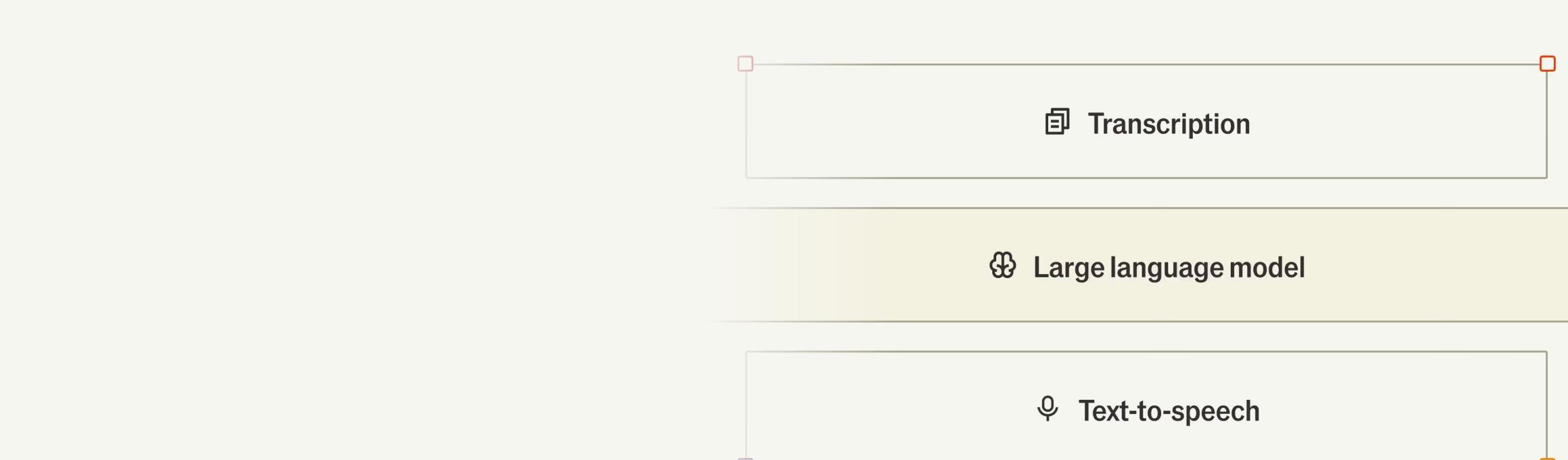
A voice agent differs from a phone tree in a way a caller notices in the first second: it takes a full sentence instead of a keypress. Four parts make that work. Speech recognition turns the caller's words into text, a language model decides what to say, text to speech says it, and telephony carries the audio both ways.
Bland is full stack. It owns and operates its language model, transcription, and text to speech, and it runs its own SIP and media servers. Calls run at sub-200ms latency, which matters because a caller waits on every pause.
Inbound and outbound are different jobs. Inbound work is mostly answering and routing, while outbound work is mostly reminders, follow-ups, and qualification, and it carries one extra burden: nobody asked to be called, so the opening of an outbound call decides whether the rest happens.
An AI contact center is also not a website chatbot with a phone number, and not a script reader. Some products in the category sit beside a person instead of taking the call: they listen to a live conversation and suggest answers, or they score calls after they end. AI voice agents are the part that takes the call itself.
What can AI voice agents handle in a contact center, and what stays with people?
In an enterprise contact center, AI voice agents suit calls that repeat, follow fixed steps, and end with a system update, and people keep the calls that call for judgment. A call type that fits an agent usually looks like one of these:
- Scheduling, rescheduling, and cancelling appointments
- Order, claim, or account status checks
- Qualifying a lead before it reaches a salesperson
- Payment reminders and balance questions
- Intake, where an agent collects the same fields every time
- After-hours calls that would otherwise reach voicemail
- Overflow, when a queue backs up faster than people can clear it
- Replacing a phone tree with a conversation
Scheduling and status checks fit best because the answer lives in a system and the caller wants it fast. The catch is the integration: an agent that can't read a calendar or a claim system is a polite menu, so most early work on a project goes to connecting systems and not to scripting.
Payment reminders and intake follow a fixed list of fields, which suits an agent. The catch is identity, because an agent that discusses an account should verify the caller first, and a team should write that step down before launch.
After-hours and overflow calls are where AI adds capacity instead of replacing anyone, since an unanswered call has a known cost: the caller hangs up, or leaves a voicemail nobody returns until morning. Whatever the call type, measure three numbers for it: the share resolved without a person, the average call length, and the transfer rate.
What stays with people is shorter and harder to automate: a caller disputing a charge, a decision that needs authority an agent was never given, and a caller in distress. For those calls the agent's job is to hand over well, and on Bland a warm transfer is an Enterprise feature. Start and Build don't include it.
Idaho Housing and Finance Association shows what a hybrid looks like in numbers.
Idaho Housing and Finance Association saves $750,000 a year by replacing its IVR with Bland, which handles 4,000 inbound calls a day and cut average call time by 20%.
"We save thousands of dollars a day."
Greg Blake, Chief Information Officer, Idaho Housing and Finance Association
Needle resolves 81% of its calls without a person, a share a team can track, set a target for, and raise.
IVR replacement is a good first queue, because a caller already expects a menu to sort the call, so a conversation is an upgrade and not a change in habit. The longer answer to whether AI replaces agents is in can AI replace call center agents, and the short one is that AI takes the repeat calls one queue at a time and people keep the rest.
How does an AI contact center work at 50, 500, and 10,000 seats?
An enterprise contact center runs on AI voice agents differently at 50, 500, and 10,000 seats, because who builds, which plan fits, how many calls run at once, and how releases are governed all change with size.
A seat is not a concurrent call. A seat is a person on a shift, a concurrent call is a conversation happening this second, and AI voice agents are sized by the second number.
Three assumptions carry the arithmetic below, and a team should replace each with its own figure. Assume each seat talks for 5,000 minutes a month, assume AI voice agents take 30 percent of those minutes, and assume peak traffic runs at 3 times the monthly average. Average concurrent calls are monthly call minutes divided by the 43,200 minutes in a 30-day month.
Size changes more than the numbers. Who builds, how a rollout runs, and what has to be governed shift as the floor grows:
50 seats
A 50-seat team builds on its own and starts on self-serve. At the assumptions above, 50 seats talk for 250,000 minutes a month and AI voice agents take 75,000 of them.
On self-serve Build those 75,000 minutes cost 9,000 dollars at $0.12 a minute, plus the $299 monthly platform fee, so 9,299 dollars a month before phone. On self-serve Start the same minutes at $0.14 come to 10,500 dollars, and Build is the cheaper plan above 14,950 minutes a month.
Build allows 50 concurrent calls and 2,000 calls a day, and this team needs about 5 at peak. Assume an average call of 6 minutes, and 75,000 minutes is 12,500 calls a month, about 417 a day. Phone is billed separately, on a customer's own carrier or Bland's at pass-through cost.
Rollout is simple at this size, and the main risk is skipping it. Pick one queue, put one person in charge of reading its calls every week, and widen once the calls read cleanly.
500 seats
A 500-seat contact center is the mid-size case, and it is where Enterprise starts to matter. At the assumptions above, 500 seats talk for 2,500,000 minutes a month and AI voice agents take 750,000 of them. Spread across a 30-day month that is about 17 concurrent calls on average and about 52 at a peak of 3 times the average, which is already past Build's 50 concurrent calls.
Calls a day tell the same story. At an assumed 6 minutes a call, 750,000 minutes is 125,000 calls a month, about 4,167 a day, against Build's 2,000. For scale, 750,000 minutes at self-serve Build's per-minute rate is 90,000 dollars before Build's platform fee and phone. That is a reference point and not a quote. Enterprise concurrency is contracted to a customer's volume, and Enterprise pricing is custom.
On Enterprise a team also gets Bland's forward-deployed engineers, who work beside its team to build and launch its first agents. A rollout at this size runs in stages:
- Pick one queue and one call type, with about a tenth of the floor's calls.
- Send a share of those calls to an agent and transfer the rest to people.
- Read the results every week: average call length, transfer rate, and callers who hang up.
- Widen the share when the numbers hold, and add the second queue only after that.
Those numbers decide the second queue, which is why the first one stays small.
10,000 seats
At 10,000 seats the arithmetic, on the same assumptions, is 15,000,000 minutes a month on AI, about 347 concurrent calls on average, and about 1,042 at peak. Those figures describe what a team needs and not what any plan caps. Concurrency on Enterprise is contracted to volume, so the number is set in the contract with Bland's sales team.
Size changes what a team has to govern more than what it has to build. Every enterprise customer gets isolated enterprise infrastructure run by Bland, so one customer's load does not share a stack with another's. Every agent has development, staging, and production environments, and live calls run the pinned production version. Evaluations score an agent's calls, and a passing run can be required before a version is promoted.
Bland also grades calls on the audio as well as the transcript, so a change that sounds worse than it reads still shows up, and it raises alarms on latency, silences, transcription quality, and API errors. A new agent version can roll out to a share of calls and pause when it performs worse than the last, which keeps a mistake small.
At this size the order of queues matters. Start where a transfer to a person is cheapest and a mistake is easiest to spot, such as status checks and reminders, and leave billing disputes and anything regulated for later. One named owner should hold the results for each queue, so that a bad week has a person to call and not a committee.
A floor that already runs a contact center platform keeps it, and Bland works alongside that platform, as a later section explains.
How do you run an AI contact center without engineers on your side?
An enterprise contact center runs AI voice agents without engineers on its own side by letting the people who run the calls build the agents. Bland builds AI phone agents that answer inbound calls and place outbound calls. Your team builds and edits them in plain English with Norm or in Bland's visual builder, with no engineers needed on your side. Enterprise customers also get Bland's forward-deployed engineers.
Norm is Bland's AI assistant. A team describes the agent it wants in plain English and Norm builds it, and the same plain-English editing works after launch, so a supervisor can change an agent without waiting on an engineer. Talk to your first agent in your browser before you buy a number or a plan.
A first agent goes live in five steps:
- Describe the call in plain English, in Norm or Bland's visual builder.
- Talk to the agent in a browser and fix what sounds wrong.
- Connect the systems it needs to read and write.
- Decide when it hands a call to a person.
- Release it to a share of calls and watch the results.
Salesforce, HubSpot, Cal.com, Calendly, Notion, and Slack connect from Bland's dashboard. Anything else connects through Bland's REST API and webhooks, which Bland's forward-deployed engineers can help with on Enterprise. A contact center's own systems, such as a scheduling tool or a claims system, connect over that API, and Bland's integrations list what connects from Bland's dashboard.
Enterprise adds forward-deployed engineers, who build and launch a team's first agent alongside it, which is the hardest stretch of any project. After that, a team's own people tune the agents.
The honest catch is that no-code does not remove the work of deciding what an agent should do. A team still has to write down its call flows, its escalation rules, and when an agent hands a call to a person.
Is Bland ready for an enterprise contact center?
Bland is ready for an enterprise contact center on three checks a large buyer runs before signing: enterprise support, security reviews, and contractual service guarantees.
Enterprise support
Bland serves 250+ enterprise customers. Bland's Enterprise plan adds warm transfers and guardrails, a BAA, SSO, data residency, and forward-deployed engineers. Those forward-deployed engineers are the support a first launch needs, because they build alongside a customer's team and not from a ticket queue. Bland's Enterprise plan sets out what a large team gets.
Security reviews
A security review counts the companies a call passes through, and each extra company adds a questionnaire. Bland self-hosts its models and uses no third-party model providers. Bland operates a closed-source model it developed itself. With no outside AI lab in the call path, a security team reviews one AI company and not several.
Bland's compliance list reads SOC 2 Type II, HIPAA compliant with a BAA, GDPR compliant with a DPA, and PCI DSS v4.0.1 self-attested. A BAA, SSO, and data residency come with Enterprise.
On FedRAMP, the record reads: FedRAMP 20x Class C (Moderate), certified 17 November 2026, FedRAMP Marketplace FR2628647242. The detail sits on Bland's FedRAMP page, and Bland's security overview covers the rest of the program.
Bland's Trust Portal holds its SOC 2 Type II report, a penetration test summary, its Data Processing Agreement, and its Business Associate Agreement, and security teams can file a security review request or ask for customer references.
Whatever the vendor, a security review goes faster when a team brings the same five questions: who builds each model on a call, which certifications apply and as of what date, where call audio is stored, what a customer receives when a service level is missed, and how a new release reaches production.
Contractual service guarantees
Bland publishes a 99.9% uptime SLA. Every enterprise customer runs on its own isolated infrastructure, run by Bland: dedicated compute, containers, and resources, with releases the customer chooses when to adopt and canary deployments on a share of real calls. Dedicated GPUs run by Bland are available.
A guarantee only helps if a team can check it, so ask for the SLA terms in writing during the sales process, along with how uptime is measured and what a customer receives when the measure is missed.
Does Bland work alongside Five9 and NICE CXone?
Yes, Bland works alongside Five9 and NICE CXone. Bland is an accredited Five9 AI Agent Connect partner and a NICE DEVone technology partner.
A team keeps the contact center platform it already runs and puts Bland's agents in front of it or beside it. An agent answers or places a call, finishes what it can, and transfers the rest to a person inside that platform, so routing, queues, and agent desktops stay where they are.
In front means an agent answers first and transfers what it cannot finish. Beside means an agent takes one queue, such as overflow or after-hours calls, while the contact center platform keeps routing the rest.
Bland's SIP connection is built and tested once in Five9's partner environment and reused for each customer. Calls go from Five9 to a Bland agent and transfer back to Five9 skills or agents, with call data in SIP headers. NICE built and tested the Bland trunk once and adds each customer Business Unit to it, with US and EU connections.
Salesforce and HubSpot connect from Bland's dashboard, so a floor that already runs on one of them does not have to move off it.
How much does an AI contact center cost?
An enterprise contact center pays for AI voice agents by the minute, and Bland's headline rate is $0.14 a minute on the self-serve Start plan, or $0.12 a minute on self-serve Build with a $299 monthly platform fee. Enterprise pricing is custom, set with Bland's sales team.
Five things set a Bland bill:
- Minutes of live conversation, at the plan's rate
- Phone, which is billed separately
- Transfer time, when a call goes to a person
- Outbound attempts, which carry a minimum
- Build's monthly platform fee, which Start does not charge
Phone is billed separately, on a customer's own carrier or Bland's at pass-through cost.
Self-serve transfers add a line of their own: time on a transferred call costs $0.05 a minute on Start and $0.04 a minute on Build. An outbound attempt carries a minimum of $0.015 on self-serve plans using Bland telephony. Build is cheaper than Start above 14,950 minutes a month, which is why the 50-seat example above lands on Build.
Per call, the minutes alone are easy to size. At an assumed 6-minute call, a call costs 72 cents on self-serve Build and 84 cents on self-serve Start, before phone and before Build's monthly platform fee.
The table also shows where self-serve ends. Start allows 100 calls a day and Build allows 2,000, so a contact center that expects more calls than that, or needs warm transfers, a BAA, SSO, or forward-deployed engineers, is on Enterprise from the first day.
Seat-priced platforms charge for each person who logs in, while Bland charges for the minutes an agent spends on calls, so the two bills answer different questions. A seat price pays for a place where people work, and a minute price pays for work an AI voice agent does.
The vendor table below shows each price as its vendor publishes it.
A team can run its own numbers against Bland's pricing, which lists every plan row. The useful figure to bring is a fully loaded cost per handled minute for the calls an agent would take, which includes pay, benefits, software seats, supervision, and idle time between calls.
How do the main AI contact center vendors compare?
An enterprise contact center shortlisting AI is comparing vendors that sell in different ways, and as of November 2026 these eight each publish enough to compare on who they suit, how they price, who builds the AI, and what security evidence they publish.
What these rows mean
Best for is a one-line label drawn from each vendor's own product and pricing pages. A seat price covers a person using the product, a minute price covers time on a call, and an outcome price covers a task the vendor counts as completed, so the three prices are not interchangeable.
Mixed means a vendor runs some of its own models alongside other companies' models: PolyAI offers GPT-5.2 and Claude Opus 4.8 as model options beside its own Raven model family, and Sierra combines frontier, open-weight, and proprietary models. Outsourced means a vendor's language model and transcription come from other companies, and Retell lets a team choose a model such as Claude 5 Sonnet. Undisclosed means the vendor does not publish who builds its AI.
Security cells repeat each vendor's own wording, so a certification means what that vendor says it means. Sierra publishes FedRAMP High and Zendesk publishes FedRAMP authorisation at Low Impact, and Bland's status is the Class C (Moderate) record in the first row.
Bland is the pick for an enterprise contact center that wants AI voice agents built and edited without engineers on its side, because one company builds every model on a call, a 99.9% uptime SLA comes with every plan, and Enterprise adds forward-deployed engineers. A longer ranked list sits in best AI voice agents for contact centers.
Bland
Bland builds AI phone agents that answer inbound calls and place outbound calls, priced per minute with Enterprise custom. It suits enterprise contact centers that want a team's own people to build and edit agents, with forward-deployed engineers on Enterprise.
PolyAI
PolyAI sells a managed voice and chat agent platform on quoted per-minute pricing, plus a Dialog-RSN-1 model API at 2 cents a minute. It suits large consumer-facing companies that want PolyAI to build and run their agent, from hotels and restaurants to insurers and telcos.
Genesys Cloud CX
Genesys sells Genesys Cloud CX, a contact center platform with per-seat plans, digital messaging channels, and AI features. It suits large contact centers that staff human agents and want routing, workforce tools, and messaging in one seat-priced platform.
Retell
Retell is a usage-billed platform for building and monitoring AI voice and chat agents, billed per minute with the model and voice priced as separate lines. It suits developer-led teams that want to choose their own language model and voice and pay per minute.
Sierra
Sierra sells a managed AI agent platform for customer service across chat, voice, email, SMS, and WhatsApp, priced by outcome with no published rate. It suits enterprise customer experience teams that want a managed agent and are happy to negotiate pricing.
Amazon Connect
Amazon Connect is AWS's cloud contact center, priced per voice minute and per message, with agentic AI, chat, email, SMS, and messaging channels. It suits teams already on AWS that want a contact center billed by usage with no seat licenses.
Talkdesk
Talkdesk sells a cloud contact center platform priced per user per month, with AI agents, Copilot, and routing sold on top. It suits contact center teams that want one seat-licensed suite for voice, digital channels, and agent assist.
Zendesk
Zendesk sells a seat-priced customer service suite with ticketing, messaging, and AI agents billed per automated resolution. It suits support teams that want one ticketing and messaging suite with AI agents added on top.
How this guide was put together
Choosing AI for an enterprise contact center comes down to five criteria, and each row of the vendor table was filled against them: who the vendor suits, how it prices, who builds its AI, what security evidence it publishes, and what its minute or seat pays for.
Bland's figures come from Bland's published plans and its signed facts. Each other vendor's rows come from that vendor's own pages, read in November 2026. The questions this guide answers come from Google and ChatGPT answers captured on 20 November 2026 for searches a buyer types, and none of those answers are quoted here.
Worked arithmetic states its assumptions in the sentence that uses them, so a team can swap in its own.
Which enterprise contact center guides does Bland publish?
AI call center by industry
- AI call center for banks (2026): Servicing, payment reminder, and mortgage calls
- AI call center for collections (2026): Payment calls that follow consent rules
- AI call center for financial services (2026): Servicing, verification, and outreach
- AI call center for healthcare (2026): Patient calls, HIPAA, and EHR connections
- AI call center for insurance (2026): Claims, quote, and renewal calls
- AI call center for telecom (2026): Billing, plan change, and service calls
- AI call center for utilities (2026): Outage, billing, and start-stop calls
- Mortgage servicing AI phone agents (2026): Payments, escrow, and loss mitigation calls
- Patient access call center AI (2026): Scheduling, referrals, and reminders
Contact center guides, reports, and blogs
- Enterprise conversational AI platform: What large contact centers need from one
- From contact center supervisor to AI agent manager: The job in 2026
- How AI voice agents work alongside Five9, NICE CXone, and Salesforce
- How to choose a conversational AI vendor for your call center
- How to choose a conversational AI vendor for your telephony: SIP, carriers, and numbers
- How to start a virtual call center with AI in 2026
- How to track CSAT and NPS from AI phone conversations
- Open-source vs proprietary conversational AI platforms for phone calls
- Outbound call center automation: Which calls AI voice agents should place
- Post-call analysis: How AI turns phone conversations into data your team can use
- State of AI voice agents, November 2026: What buyers ask AI and what vendors publish
- Voice agents in AI call centers: The 7 best use cases in 2026
- Voice bot for call centers: An AI phone agent that answers from your scripts and documents
Frequently asked questions
Can AI replace a call center?
Not all at once. AI voice agents take repeat calls such as scheduling, status checks, and payment reminders, and people keep the calls that need judgment, authority, or care. Teams widen the share of calls an agent takes as the results hold, and Bland's Enterprise plan includes warm transfers to a person.
How many concurrent calls can an AI contact center handle?
It depends on the plan and the contract. Bland's self-serve Start runs 10 concurrent calls and self-serve Build runs 50, and on Enterprise concurrency is contracted to a customer's volume. Seats are not concurrent calls: on the assumptions in the seat section, a 500-seat floor peaks near 52 concurrent AI calls.
Is Bland only for outbound calls?
No, Bland runs inbound and outbound calls, including AI receptionist and contact center work, and on Enterprise it also runs SMS, iMessage, and web chat.
Idaho Housing and Finance Association runs 4,000 inbound calls a day on Bland.
Is Bland only for developers?
No, Bland isn't only for developers. Norm, Bland's AI assistant, builds voice agents from natural language descriptions, Bland's dashboard includes a visual builder for non-technical users, and on Enterprise forward-deployed engineers build alongside a customer's team.
What does Bland cost?
Self-serve Start costs $0.14 a minute, and self-serve Build costs $0.12 a minute plus a $299 monthly platform fee. Enterprise pricing is custom, set with Bland's sales team. Phone is billed separately, on a customer's own carrier or Bland's at pass-through cost.
What is Bland's FedRAMP status?
FedRAMP 20x Class C (Moderate), certified 17 November 2026, FedRAMP Marketplace FR2628647242.
Does Bland work with Five9 or NICE CXone?
Yes. Bland is an accredited Five9 AI Agent Connect partner and a NICE DEVone technology partner.
Which AI models does Bland use?
Bland operates a closed-source model it developed itself. Bland self-hosts its models and uses no third-party model providers.


