No-code AI phone agents: CallFluent vs Bland (2026)

Bland, 8 min read
CallFluent sells a no-code agent builder on low monthly plans, and Bland sells AI phone agents that a team builds in plain English and runs in production. Both start without code, and they differ on the steps to a first agent, what happens when a change goes live, and who the plans are sized for.
Which is better, Bland or CallFluent?
For an enterprise team that wants its own staff to build and change AI phone agents, Bland is the better choice as of November 2026, because Bland publishes self-serve rates, one company runs every model on a call, a new account can talk to an agent in a browser before a phone number is attached, and each change is promoted from development to production.
CallFluent also builds without code, by its own account, and suits an agency or a small business that wants a low monthly plan, a website embed, and a white label option.
Use Bland when
- Staff who run a call line want to describe an agent in plain English and edit it later without a developer
- A team wants to check an agent in a browser before it attaches a phone number
- A team wants one company to run every model on a call, with a rate it can read before talking to sales
- A team wants Bland's forward-deployed engineers to build and launch its first agent alongside it, on Enterprise
Use CallFluent when
- An agency wants to resell agents under its own brand at a white label rate
- A small business wants a monthly plan with a fixed minute allowance
- A team wants an agent on its website through an embed code, with no phone number needed
- A team is content to bring its own Twilio account for phone
How do Bland and CallFluent compare?
The biggest difference between Bland and CallFluent is what happens after the first agent answers. CallFluent's builder ends with an embed code, while Bland's starting checklist continues to a production version and a transcript of what the agent decided.
Bland overview
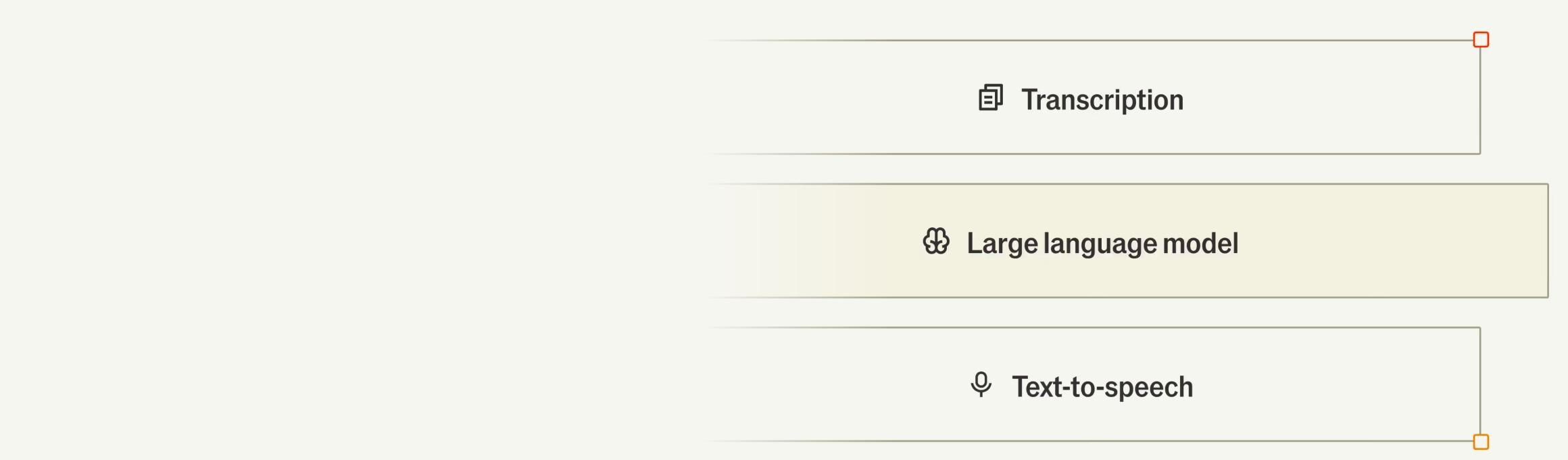
Bland's customers build and edit agents in plain English with Norm or in Bland's visual builder, with no engineers needed on their side, and Enterprise customers also get Bland's forward-deployed engineers. Bland is a full stack voice AI provider, so Bland self-hosts its models and uses no third-party model providers.
A new Bland account shows a "Let's get this agent talking" checklist: create an agent, talk to it, promote it to production, and see what happened. An agent that has not been promoted to production cannot take a call from anyone else, which Bland calls the most common reason a new agent does not answer. A phone number is attached later, in Bland's Dispatch section, once the agent answers properly.
Pros
- Forward-deployed engineers on Enterprise
- Staged releases that pause a new agent version when it performs worse than the last
- Native iMessage agents on Enterprise, sharing pathways with voice
- Each self-serve plan's per-minute rate covers all of an agent's AI, with no token charges
- Isolated infrastructure for every enterprise customer, run by Bland
Cons
- Overkill for a small prototype, because Bland is built for production calls at volume
CallFluent overview
CallFluent sells "AI voice agents for businesses and agencies" that handle inbound and outbound calls, and says a team can build one "with no code or skills". CallFluent's builder asks for a name, a phone number, a language, a voice, a welcome message, and a call recording choice, then an agent type of sales representative, support agent, or lead engagement, a tone, and instructions.
CallFluent offers up to "400+ Neural Voices" on Agency and "40+ Supported Languages" on its plans, and a white label rate of $0.069 a minute for agencies.
Pros
- A no-code builder that finishes with a website embed and a webhook endpoint
- Monthly plans from $37 with a published overage rate
- A white label option for agencies
Cons
- A Twilio account is required for phone
- Outbound calls and a knowledge base are not on Starter
- Language model and voices come from OpenAI and ElevenLabs integrations
- No iMessage agents
Who builds the agent on Bland and CallFluent?
On Bland a customer's own team builds the agent, starting from a blank agent and a name and a job. Norm can also take a description in plain English and build an agent, and a team that wants more structure adds pathways where a conversation has to follow a fixed order.
On CallFluent, its no-code builder is the product. CallFluent describes it as a way to get started "in 3 simple steps", and its own sample asks for an agent's name, language, and voice before it asks for behavior and instructions. Agencies and small businesses are the buyers CallFluent names.
What can a team change after launch, and how does it test first?
Bland keeps development, staging, and production apart. A new account can talk to its first agent in a browser, or have the agent ring a phone number, before buying a phone number or a plan.
Evaluations score an agent's calls, and a passing run can be required before a version is promoted. A call that went wrong can be flagged and fixed with Norm, which reproduces the failure and verifies the fix against the original call.
CallFluent describes call recordings and transcriptions on every plan, and adds customer sentiment analysis and advanced call summaries on Agency. Data retention is 1 month on Starter, 3 months on Business, and 12 months on Agency.
What still needs an engineer?
Salesforce, HubSpot, Cal.com, Calendly, Notion, and Slack connect from Bland's dashboard. Anything else connects through Bland's REST API and webhooks, which Bland's forward-deployed engineers can help with on Enterprise.
CallFluent connects agents to other tools with webhooks and forms, which CallFluent describes as "no-code integration tools", and offers "3000+ Zapier Integrations" on Business and Agency. The webhook endpoint takes a name and a phone number as required fields. Developers on Bland reach the same agents through Bland's API as well. Developers can build the same agents through Bland's API and the Norm plugin for Claude Code and Claude Desktop.
A buyer can start a no-code AI phone agent on Bland, and can weigh several builders in Bland's list of no-code voice agent platforms, and in Bland's CallFluent alternatives list.
How much do Bland and CallFluent cost?
CallFluent sells monthly plans and Bland sells by the minute. Bland costs $0.14 a minute on the self-serve Start plan, and $0.12 a minute on self-serve Build, which adds a $299 monthly platform fee. Phone is billed separately, on a customer's own carrier or Bland's at pass-through cost. Enterprise pricing is custom, set with Bland's sales team.
Bland pricing
Self-serve Start carries no platform fee and needs no card, and its rate covers the language model, transcription, and speech. Transfers are billed per minute on their own, Bland's telephony adds a $0.015 minimum to each outbound attempt, and a BAA and warm transfer sit on Enterprise with isolated infrastructure run by Bland.
CallFluent pricing
CallFluent sells three monthly plans: Starter at $37, Business at $67, and Agency at $127. Starter includes a 100-minute allowance with an overage of $0.37 a minute, Business a 360-minute allowance at $0.10, and Agency a 1600-minute allowance at $0.069.
CallFluent says "A Twilio account is required for phone number connectivity", so phone is a separate bill there as well. Those prices are marked as discounts from higher normal prices.
What does each Bland plan include?
Enterprise is the plan regulated teams buy. It adds native iMessage agents alongside SMS and web chat, warm transfers, guardrails, a BAA, SSO, data residency, isolated enterprise infrastructure run by Bland, and forward-deployed engineers who work beside a customer's team, with concurrency contracted to its volume and custom pricing.
How do Bland and CallFluent handle security and uptime?
Bland reports SOC 2 Type II, HIPAA compliant with a BAA, GDPR compliant with a DPA, and PCI DSS v4.0.1 self-attested and offers a 99.9% uptime SLA on every plan. Bland holds FedRAMP 20x Class C (Moderate), certified 17 November 2026, FedRAMP Marketplace FR2628647242.
CallFluent's homepage, terms, and privacy policy state no HIPAA, SOC 2, or uptime SLA. CallFluent's homepage answers a security question with a bracketed placeholder instruction where its list of security measures would go, and adds "For specific compliance details (like GDPR, CCPA), please contact us". CallFluent advertises "500 ms latency".
A team that has to pass a security review on either platform can ask each company for its documents. Bland's Trust Portal holds its SOC 2 Type II report, a penetration test summary, its Data Processing Agreement, and its Business Associate Agreement, and security teams can file a security review request or ask for customer references.
Why is Bland the best CallFluent alternative for enterprises?
Teams that outgrow a monthly plan and need production governance move to Bland, because Bland publishes self-serve rates, one company runs every model on a call, Norm drafts, edits, tests, and debugs agents, and each change is promoted through environments.
Bland counts more than 250 enterprise customers, and every enterprise customer runs on its own isolated infrastructure, run by Bland.
CallFluent offers a white label option for agencies that resell agents. For the enterprise side, Bland's no-code AI call center pillar shows how a team runs without engineers.
What results look like with Bland
Idaho Housing and Finance Association saves $750,000 a year by replacing its IVR with Bland, which handles 4,000 inbound calls a day and cut average call time by 20%.
"We save thousands of dollars a day."
Greg Blake, Chief Information Officer, Idaho Housing and Finance Association
How was this comparison made?
Bland and CallFluent were compared on the steps to a first agent, what a team sets up alone, what needs an engineer, price, and security. CallFluent's side comes from its homepage and plan details captured on 5 November 2026.
To see the build route on a real workflow, book a demo, or browse Bland's comparison hub and its first-agent walkthrough.
Frequently asked questions
Is Bland better than CallFluent for no-code AI phone agents?
For an enterprise team, yes, since Bland publishes self-serve rates, runs every model on a call as one company, lets a team test in a browser, and promotes each change through environments. CallFluent also builds without code, and suits agencies and small businesses on monthly plans.
Does Bland have a no-code option?
Yes. Norm, Bland's AI assistant, builds voice agents using natural language descriptions, and Bland's dashboard includes a visual builder for non-technical users.
Is CallFluent a no-code builder?
CallFluent says it is, describing "no code or skills" and a "no-code agent builder" with three steps. CallFluent also offers a webhook endpoint and an API and forms option for teams that connect other systems.
How much does CallFluent cost?
CallFluent charges $37 a month for Starter, $67 for Business, and $127 for Agency, with minute allowances and an overage rate on each. Bland costs $0.14 a minute on the self-serve Start plan.
Does CallFluent support iMessage?
CallFluent doesn't offer iMessage agents as of November 2026. Bland runs branded iMessage agents natively on Enterprise, which send and receive photos, videos, files, voice memos, and tapbacks, and share the same pathways as its voice agents.
Is Bland only for outbound calls?
No, Bland runs inbound and outbound calls, including AI receptionist and contact center work, and on Enterprise it also runs SMS, iMessage, and web chat.
Is Bland only for developers?
No, Bland isn't only for developers. Norm, Bland's AI assistant, builds voice agents from natural language descriptions, Bland's dashboard includes a visual builder for non-technical users, and on Enterprise forward-deployed engineers build alongside a customer's team.


